Tinubu’s Changes Boost Company Performance, Says Presidency
The presidency credits President Tinubu's economic changes for strong company performance in Nigeria. Key reforms include a unified foreign exchange market and investor-friendly approvals.
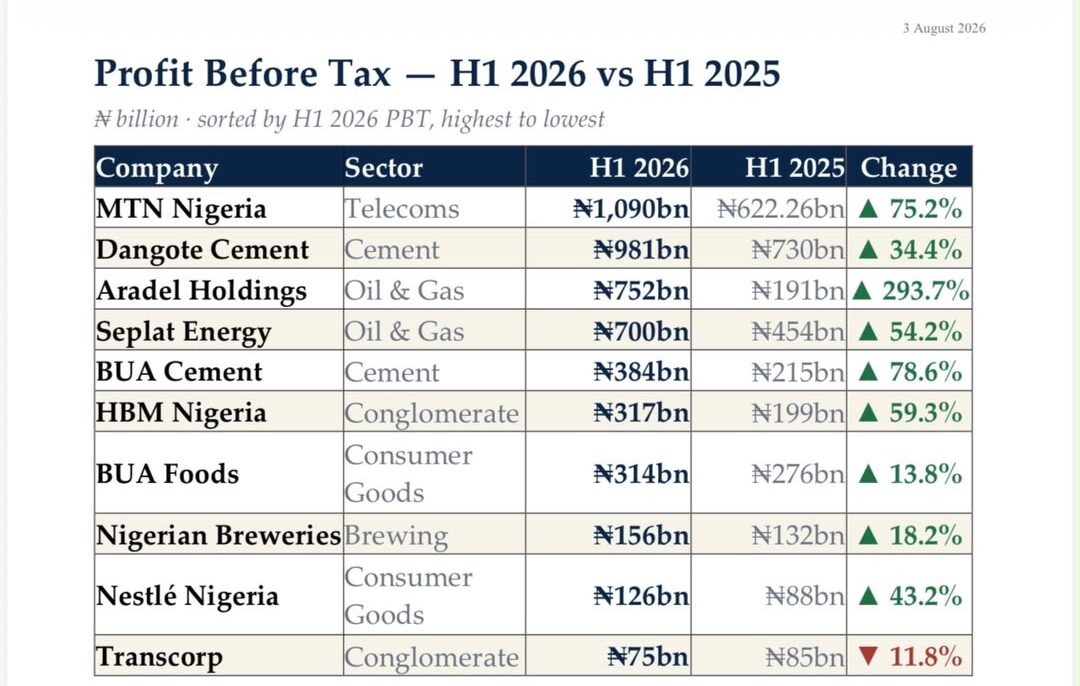
Many companies listed on the Nigerian Exchange have reported strong financial results in the first half of 2026. The presidency says this is due to key economic changes made by President Bola Ahmed Tinubu’s government since mid-2023.
One major change was the unification of the foreign exchange market. By setting a single, market-driven exchange rate, this change helped companies with foreign currency dealings show the true value of their dollar earnings in their reports.
This has particularly helped businesses that depend on exports and earn foreign currency. Companies like Aradel Holdings and Seplat Energy, which link their income to global oil prices and deal in foreign currency, have seen benefits.
The Tinubu government also showed its commitment to boosting investor trust in the energy sector. This was clear when it quickly approved important upstream deals. Notable among these was the Renaissance Africa Energy group's purchase of Shell Petroleum Development Company assets, which includes Aradel Holdings. Another key approval was Seplat Energy’s acquisition of Mobil Producing Nigeria Unlimited's assets.
These approvals have grown the reserve base and production capacity of both companies. They also removed doubts about regulations on two major deals in Nigeria’s oil and gas sector. By allowing the transfer of older onshore assets to well-capitalised local companies, the government built investor confidence and encouraged local involvement in oil production.
This move positioned both Aradel and Seplat to increase production and earnings. President Tinubu’s approval of Naira payments for crude, a practice some other African nations use, has helped local refining. Now, Dangote Refinery is exporting PMS and aviation fuel.
Manufacturing and industrial firms have also gained from better access to foreign currency. Companies like Dangote Cement, BUA Cement, and HBM (formerly Lafarge Africa) can now plan production and buy imported materials more easily. This has led to better capital management under a unified exchange rate, reducing operational issues and supporting higher output, which in turn has boosted revenue.
Another major change was ending the petrol subsidy, which has improved the government’s financial situation. This has increased funds for infrastructure projects and improved revenue collection, helping to stabilize the economy. These changes have created a better environment for big businesses by building investor confidence and expectations of long-term economic health.
Tighter money management and ongoing financial reforms have also helped create a more stable economic setting. Better exchange rate stability, lower inflation, and improved liquidity have made businesses more confident. This allows companies to make long-term investment choices with more assurance.
Recapitalising the banking sector has also strengthened the system's ability to support large corporate financing. At the same time, tax reforms aimed at simplifying processes and expanding the revenue base have improved the business climate and reduced inefficiencies.
Together, these changes have made it easier for capital-heavy and export-focused companies to operate. They have improved market efficiency, strengthened economic stability, and boosted investor confidence. This has led to better operational efficiency, financial transparency, and investment planning. This explains why many companies on the Nigerian Exchange have seen significant increases in revenue and earnings.
These results show that structural reforms can lead to real improvements in how companies perform financially, thanks to stronger market conditions and a more predictable business environment.
Bayo Onanuga
Special Adviser to the President
(Information & Strategy)
August 5, 2026





Comments
No comments yet.