Women Face Challenges in Osun Governorship Race
In the upcoming Osun governorship election, women's representation remains low. Only one female candidate is in the race, highlighting ongoing challenges.
More than two million people can vote in Osun's governorship election on Saturday. The state has 2,339,233 registered voters across 3,763 polling units and 30 local government areas.
This is a 19.67 percent increase from the 2022 election, but it is unclear if this will lead to more people voting on election day.
In this race, women's participation is still very low, following a long-standing trend in a state where no woman has been elected governor since it was created in 1991. This is similar to many other states in Nigeria.
Out of the 15 candidates running for the governor's seat, even with the withdrawal of the APGA candidate, Adesina Adeyemi-Doro, there is only one woman candidate and one female deputy candidate.
The Independent National Electoral Commission (INEC) did not provide information on the gender of registered voters for this election or the past two elections.
In Nigerian elections, there are often very few women candidates. Since Osun State was created in 1991, all governors have been men. Only two women have served as deputy governors: Olusola Obada from 2003 to 2010 and Titilayo Laoye-Tomori from 2010 to 2018.
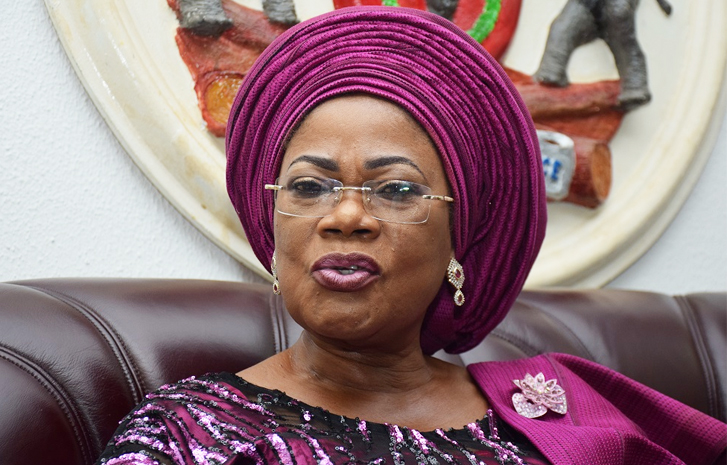
Yemisi Adeagbo, a former school principal, is the governorship candidate for the Action Democratic Party (ADP). Atanda Babatunde is her running mate.
After her announcement, Ms Adeagbo promised that if elected, her government would “move the state from its current position to a model state that others across the federation will look up to as an example of purposeful governance.”
She said the ADP is “the only truly people-oriented party, built on solid structures, free from internal crises, and driven by service rather than personal ambition.”
Ms Adeagbo vowed that her party would show its strength in the election and win.
The other woman candidate is Temitope Agiri from the African Democratic Congress (ADC). She is the running mate to the party’s gubernatorial candidate, Najeem Salaam, a former State House of Assembly Speaker.
Ms Agiri, who hails from Ila-Orangun in the Ila Local Government Area, was chosen for her loyalty to the party and acceptance among members. The party believes her gender and experience as a grassroots politician will improve its chances in the election.
The situation in 2026 is similar to 2022 but was better in 2018. In the last gubernatorial election in 2022, there were no women candidates among the 15 contestants. However, six female deputy candidates were in the race.

In 2018, 48 candidates were cleared to contest, including four women. The women candidates were Adebisi Rufai of the Allied Congress Party of Nigeria (ACPN), Hannah Jegede of the Nigeria Elements Progressive Party (NEPP), Mercy Ayodele of the Restoration Party (RP), and Adebayo Rasheedat of Peoples Alliance for National Development and Liberty (PANDEL).
The 2018 election had at least 16 female deputy candidates.
Leading up to elections, many political groups and advocacy organizations have pushed for legal changes to improve female representation in government. Despite these efforts, many proposals have faced heavy resistance in parliament or failed to gain enough support to move forward.
With the current election situation, it's unlikely that the woman candidate will create a major political upset. The race looks like a direct contest between the incumbent governor, Ademola Adeleke of the Accord Party, and Bola Oyebamiji of the All Progressives Congress. Najeem Salaam of the ADC is also seen as a “third-force” challenger.
The Peoples Democratic Party (PDP), which won the 2022 election, does not have a candidate this time. INEC reported that only 15 parties completed their primaries and submitted their candidates within the deadline. The PDP, despite winning in 2022, did not qualify for this election.
Initially, the PDP seemed ready to defend its seat, with Mr Adeleke buying nomination forms and passing the preliminary screening. But a leadership crisis in the party led to suspensions and counter-suspensions of key officials responsible for primaries and candidate submissions.
This internal crisis pushed the governor to leave the PDP and join the Accord Party for a second term bid.
Jide Ojo, a development consultant, called Nigeria’s failure to elect a female governor a long-standing issue rooted in patriarchy. He described it as a “very sad commentary on Nigerian democratic sojourn.”
He hopes President Bola Tinubu will support gender policies, similar to the backing he has given his wife. Oluremi Tinubu, the First Lady of Nigeria, served three terms in the Nigerian Senate from 2011 to 2023.
Mr Ojo added that advocacy and laws supporting women in politics could change this situation.
He pointed out that the lack of women on ballots is mostly due to the political system. “Political parties like PDP, APC, APGA, ADC, NDC, none of them has a significant number of women in their National Working Committee or State Working Committees,” Mr Ojo said. “That’s where it should start.”


Comments
No comments yet.