Women Leading in Nigeria's Legal System
Women now hold five key positions in Nigeria's legal system, marking significant progress in a traditionally male-dominated field.
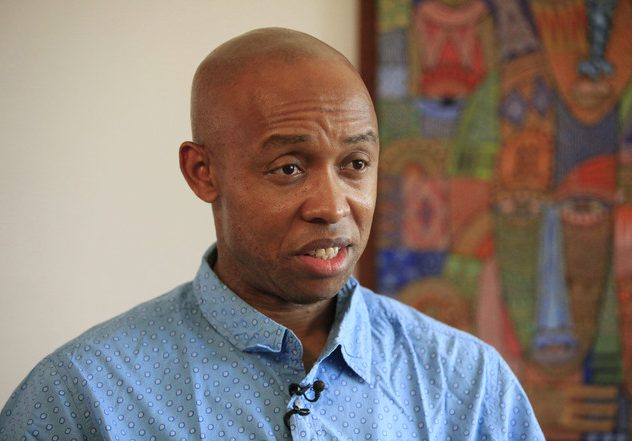
Five key positions in Nigeria's law and justice system are now held by women. This includes the Chief Justice of Nigeria, the President of the Court of Appeal, the head of the Body of Senior Advocates of Nigeria, the Director-General of the Law School, and the President of the Nigerian Bar Association.
> Law and the military are often seen as male-dominated fields. But over the last century, women have made great strides in these areas.
> In 1970, Pakistan had a four-star general as its leader, while India had a woman in charge. This woman’s main qualification was being her father's daughter.
> Yahya Khan was Pakistan’s fifth Commander-In-Chief. He took over after public protests forced General Ayoub Khan to step down in March 1969. Yahya then became Pakistan’s third president.
> In India, Prime Minister Indira Gandhi had been in office for over three years by then. She took office on 24 January 1966, following the sudden death of Lal Bahadur Shastri on 11 January 1966. Shastri had just signed a peace treaty to end the first Indo-Pakistan War. Gandhi’s father, Jawaharlal Nehru, was the first Prime Minister of India until he passed away on 27 May 1964.
> Both nations were part of British rule until they separated in August 1947. This separation divided the territory into three parts and two countries. East and West Pakistan were once one nation. East Pakistan was separated from West Pakistan by nearly 1,000 miles of Indian land.
> The two parts of Pakistan had very little in common except for their religion. The colonial system favored West Pakistan more than the East. West Pakistan had all the political power and most of the military leaders.
> In December 1970, Yahya Khan held elections to move towards an elected government. The Awami League led by Sheikh Mujibur Rahman won 169 seats, all from East Pakistan. Zulfikar Ali Bhutto’s party came second with 90 seats, all from West Pakistan. The Pakistan Muslim League won just 10 seats across both regions.
> This election could have marked the first time East Pakistan produced the leader of post-colonial Pakistan. But Yahya Khan refused to appoint the winners. He instead declared Martial Law and launched a military operation in March 1971 to crush the Awami League.
> As people fled the violence into India’s West Bengal, Indira Gandhi knew she had to take action. As Pakistan threatened to expand its military operations, Yahya Khan let his macho side show. On 25 November 1971, he said, “If that woman thinks she will cow me, I refuse to take it. If she wants a war, I’ll fight it.”
> Indira Gandhi's response was sharp: “That woman! I am not concerned with the remark…” She became widely known as “That Woman” and ultimately defeated General Khan and Pakistan in December 1971. This victory led to the independence of Bangladesh.
> Like the military, law long excluded women. Early female lawyers faced rejection and ridicule.
> In 1873, the US Supreme Court upheld Illinois State's decision to deny women the right to practice law. It stated, “The paramount destiny and mission of woman are to fulfill the noble and benign offices of wife and mother.” This sentiment echoed even in Nigeria 150 years later.
> In 1914, the Court of Appeal in England upheld a similar view that kept women like Gwyneth Bebb from being licensed as solicitors.
> Such attitudes claimed that “there are no ladies at the Bar.” Like Yahya Khan, they could not foresee the future.
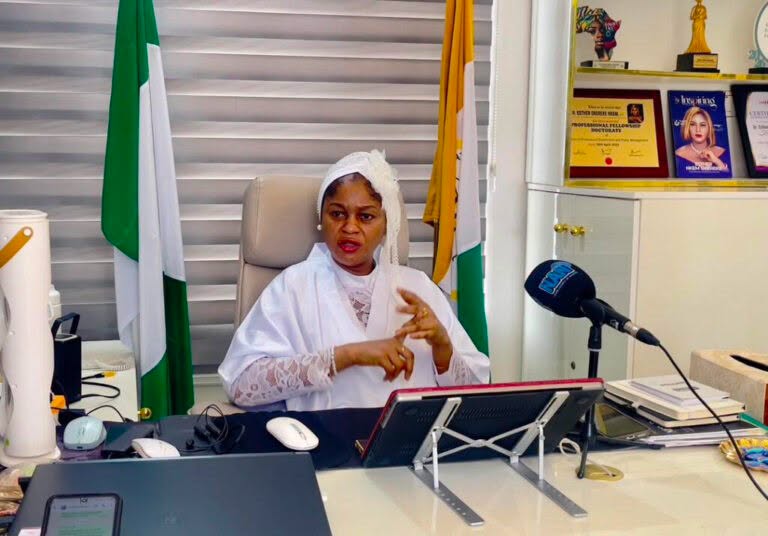
Read also2027: Women can lead Nigeria, says presidential hopeful Esther Okereke

Read alsoTinubu's Steps to Tackle Corruption: A New Approach for Nigeria
> England's first female law graduate was Eliza Orme in 1888. That same year, Nigeria registered Christopher Sapara Williams as its first lawyer.
> It was not until after World War I that Helena Normanton became the first woman to enter an Inn of Court for barrister training on Christmas Eve in 1919. Three years later, in 1922, England admitted its first female barrister and solicitor.
> In 1929, Stella Jane Thomas started her training at the Middle Temple after graduating from Oxford. In May 1933, she became the first woman from Nigeria and West Africa to be admitted to the Bar in England.
> In October 1935, she was the first woman to enroll at the Bar in Sierra Leone. The next month, she also became the first woman on Nigeria’s roll of lawyers. She became Nigeria’s first female judicial officer in 1943 and retired as Chief Magistrate in 1971.
> On 13 November 1969, Modupe Omo-Eboh became Nigeria’s first female judge. It took another 43 years for Nigeria to have its first female Chief Justice, Aloma Mariam Mukhtar.
> Even so, barriers remained in the legal field.
> In 1976, John Atom-Kpera appointed Victoria Uzoamaka Onejeme as the first female Attorney-General.
> In 1992, Priscilla Kuye became the first female president of the Nigerian Bar Association after the previous president resigned to become Attorney-General of the Federation.
> This year, three major barriers have been broken.
> First, Dr Olugbemisola Odusote was named the first female Director-General of the Nigerian Law School in January.
> Then, on 19 July, Oyinkan Badejo-Okusanya was elected as the first female President of the NBA.
> Recently, Nigeria lost its senior-most lawyer, Bandele Alfred Kasunmu, who died at 92. He was a former Attorney-General of Lagos State and a respected advocate. His death means that Mrs Folake Solanke, who joined the Nigerian Bar in 1962, is now the most senior living lawyer. She became a Senior Advocate of Nigeria (SAN) in 1981.
> Gaining this position is no small feat. It takes both hard work and a bit of luck. The fact that this honor now goes to a woman shows that the Bar is no longer just for men. Men and women can now work together.
> This year, five top positions in Nigeria's law and justice system are held by women. This achievement reflects years of work by female pioneers. These accomplishments come with their own challenges. These women have not come to repeat the mistakes of previous generations. Their success should lead to more opportunities and standards for everyone.





Comments
No comments yet.