Bribes, Scandals, and Superstitions: A Diplomatic Tale by Lilian Onoh
In her memoir, Lilian Onoh offers a candid look at Nigerian diplomacy, filled with humor and sharp observations about her unique experiences.
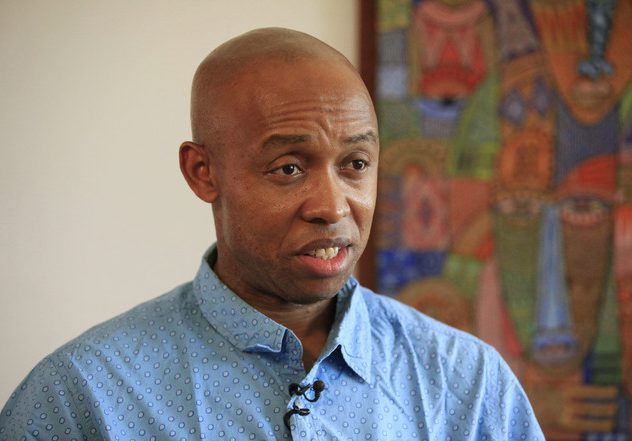
Sir Henry Wotton, a politician and diplomat from England, said that an ambassador is “an honest gentleman sent to lie abroad for the good of his country.” He missed the part about what was happening back home that made the ambassador act this way.
In her newly released memoir, Ambassador Lilian Onoh, a retired diplomat, fills in that gap, at least for Nigeria. There has been nothing like this in Nigerian diplomatic memoirs. Her book, Diplomatic Bedlam, hints at the chaos. The subtitle makes it clear: this story is about “interactions with humans, mutants, variants and quadruple variants.”
While diplomacy often involves some mystery, Lilian Onoh focuses on clarity. She is not one of those diplomats who forgets things on purpose. Instead, she remembers everything. Her storytelling is bold and sometimes cheeky. Her sense of humor is sharp.
Lilian Onoh was not eager to become a diplomat. Her father, a successful lawyer and politician, wanted her to follow in his footsteps. The closest she got to that was studying international and non-proliferation law while earning her degree in politics and international studies.
Her diplomatic journey almost ended before it started. Shocked by the poor conditions during her first week at the induction academy, Lilian ran away to England, looking for other opportunities. Her father found her and made her promise to give the academy a chance for one year. She ended up staying for an extra 29 years, earning a reputation as “one of the best multi-lateral officers” in Nigeria’s foreign service.
Lilian grew up in a family deeply connected to law and diplomacy. They invested heavily in their daughters. Her younger sister is currently Nigeria’s Minister of Foreign Affairs. The man who held that position before her was married to Lilian's elder sister. Another sister earned a PhD in International Law but sadly lost her life in a plane crash.
Lilian's life is filled with the kind of coincidences that are common in Nigerian public life. In 1983, President Shehu Shagari's civilian government recruited over 300 new officers for Nigeria’s diplomatic service. But on the last day of 1983, Muhammadu Buhari overthrew the government.
Lilian’s father was among the politicians removed in the Buhari Coup. A decade later, in 1993, she was one of only 60 officers hired into Nigeria’s diplomatic service during Ibrahim Babangida's regime, the same man who had taken over from Buhari. By the time she became an Ambassador, Buhari was back in power as a civilian. She retired under him, having served as High Commissioner to Namibia and Head of Mission in Jamaica.
For many Nigerian diplomats, the “fear of their children having free access to ganja” made Jamaica a tough place to work. Most diplomats avoided it. But it became Lilian’s first posting as an Ambassador. There, she faced the three main issues that define diplomatic life in Nigeria.
First is bribery. Corruption seems to run deep in Nigeria’s diplomatic practice. It starts right from the orientation at the Foreign Service Academy. New officers often paid for their grades, and many teachers were happy to accept. In Lilian’s class, the top students did not always win the awards for best performance. Those prizes often went to the ones who paid the most.
With the right amount of money, anything could be bought in the foreign service, cushy postings, closeness to ministers, and long stays in prime locations. Under diplomatic immunity, some diplomats skimmed and scammed endlessly. In London, many made enough money to invest in prime real estate. Others spent their money on women. One senior diplomat allegedly used money from his scams to keep multiple women in different posts. He ended up in predictable financial trouble.

The second issue is sex. It was both a tool and a currency in the diplomatic service. While in Vienna as a senior officer, Lilian was told to call the Ambassador, a politician. When she did, he said he needed a female officer who could entertain his political friends; “in short, he was looking for a hooker at Government expense.” Lilian told him she was not skilled in that area. Her posting was canceled. The headquarters sent him a woman who would fulfill his request.
Sometimes, these affairs created diplomatic problems. In the London mission, “Madam True Love” caught a senior Nigerian diplomat in a compromising position with a female colleague. It ended badly. Nowadays, there would be digital proof and viral memes.
At the headquarters, Lilian found a senior diplomat peeping through a hole to watch women.
The environment was filled with notorious characters. One minister earned the nickname “Free Wily.” His assistant was called “Small Wily.” “Big Bum” was a married male operative in Europe known for engaging with both sexes. His rumored partners included a few visiting governors from Nigeria. “Lolita” was a local facilitator of such affairs in Namibia. The full list of characters reads like a list of shameful figures: Chickenpox, The Bat, Shifty-eyed Perv, Jezebel the Delta Variant, Nivaquine Malaria Parasite, Smallpox Pancake, Chewing Gum Rat, and many more.
Third, Nigeria’s diplomatic service seems to have a touch of superstition. Few Nigerian diplomatic posts lack the attention of a Babalawo or Brujo. In Jamaica, a senior staff member kept one on retainer. In London, “everyone knew when ‘Big Bum’ had new instructions from his witchdoctor”; he’d arrive with “the pungent stench of some cloyingly odious incense.” But the biggest prize winner seems to be in Togo. That is where young diplomats go to see if they can handle the local superstitions.
Togo was also where a Nigerian Ambassador displayed not a photo of the Nigerian President but a photoshopped image of himself with the president of a superpower and his Foreign Secretary.
Diplomatic Bedlam is not just about mutants and variants. It is also about real people. A decade after leaving office, Olusegun Obasanjo was invited to an event in Jamaica.
While on vacation in Cuba from her post in Jamaica, Lilian’s landlady called to ask if she was attending the reception for the former president. It was the first time she heard about it. She had less than a day to return from Cuba. Obasanjo had not informed the High Commission, and he was surprised to see two separate reception parties at the airport, including one from Nigeria’s High Commission.
A mini-battle broke out on the tarmac about who would take the former president from the airport. Lilian stepped in front of Obasanjo and motioned him to the car with Nigeria’s flag: “You are the former president of Nigeria; you do not have a choice.” The General had to swallow his pride and obey. Sometimes order manages to come back, even in the middle of chaos.





Comments
No comments yet.