Court orders final seizure of 52 housing units in Lagos to FG

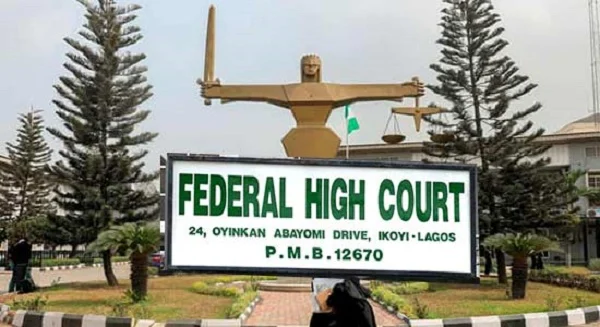
The Federal High Court in Lagos has ordered the final seizure of 52 housing units in the Lekki area. The court ruled that these properties were gained from illegal activities.
Judge Alexandra Owoeye made the ruling on Wednesday. She granted a request from the Lagos Zonal Directorate 2 of the Economic and Financial Crimes Commission (EFCC).
The EFCC shared this information in a statement on Saturday through its spokesperson, Dele Oyewale.
The properties are located at Mercyville Estate, Covenant Way, off New Road, Ilasan, Lekki, Lagos. They were taken from Fielddreams Limited, Ifeanyi Nweke, and Amex Savings and Loans Limited. The EFCC stated that its lawyer, Franklin Ofoma, argued that investigations showed the properties were likely gained from illegal activities. He asked the court to order their permanent seizure.
Nearly a two-year legal process
This ruling ends a process that started in August 2024. The EFCC first got an interim seizure order over the properties from another judge, Akintayo Aluko, after a special application.
The court required the EFCC to announce the interim seizure order in a national newspaper. This allowed anyone with interest in the properties to come to court and explain why they should not be permanently seized by the federal government.
After the announcement, the respondents challenged the application. They filed an affidavit opposing the final seizure.
The EFCC stated that the respondents initially claimed that the funds to build the 52 housing units came from selling 29 other housing units worth N1.9 billion. However, the commission later argued that the respondents contradicted this claim. They said some of the housing units were not finished, even though they had earlier stated that construction was done in 2020 and funded by the earlier sales.
EFCC’s case
While presenting the application, Mr Ofoma told the court that the EFCC met all the conditions of the interim seizure order, including publishing it in a national newspaper.
He also used a 31-paragraph affidavit sworn by Afolabi Oladele, a litigation officer in the EFCC’s Legal Department, to support the application.
Mr Ofoma also claimed that Mr Nweke, the second respondent, is facing criminal charges in two different Lagos State High Courts. He has not shown up for his arraignment.

The EFCC reported that two warrants for his arrest have been issued. He also failed to comply with the administrative bail earlier granted to him by the commission.
Court rejects respondents’ evidence
In her ruling, Mrs Owoeye said the respondents’ affidavit had serious contradictions that made it unreliable.
The judge pointed out that the court could not choose which part of the respondents’ evidence to believe. As a result, the court rejected the entire affidavit opposing the EFCC’s application.
With the respondents' evidence dismissed, the court said there was no valid challenge to the application for final seizure.
Mrs Owoeye ruled that the EFCC had shown enough reasons to suspect that the properties were gained from illegal activities. She then granted the application and ordered the final seizure of the 52 housing units to the federal government.
String of forfeitures
This decision adds to a series of recent court wins for the EFCC in its efforts to recover assets believed to have been gained through illegal means. On Friday, the Supreme Court confirmed the final seizure of luxury properties and over $2 million linked to former Central Bank of Nigeria (CBN) Governor Godwin Emefiele, supporting an earlier ruling from the Federal High Court.
On Wednesday, the Federal High Court in Abuja ordered the final seizure of 48 properties linked to former Attorney General of the Federation and Minister of Justice, Abubakar Malami.
On Thursday, the Federal Capital Territory High Court in Apo, Abuja, ordered the final seizure of properties linked to businesswoman Aisha Achimugu. These properties include jewelry worth N4.6 billion, 11 exotic cars worth N4.23 billion, $50,000, and N30 million.
The courts issued these final seizure orders after the EFCC convinced them that the assets were gained from illegal activities. The owners of the properties could not provide credible proof that they obtained them legally.





Comments
No comments yet.