EFCC recovers N1.23trn and $684.48m from crimes
The EFCC reported recovering N1.23 trillion and $684.48 million from crime between October 2023 and July 2026, benefiting the federal government and other entities.
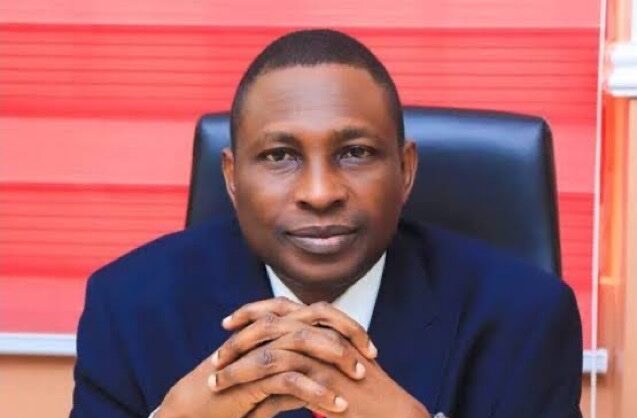
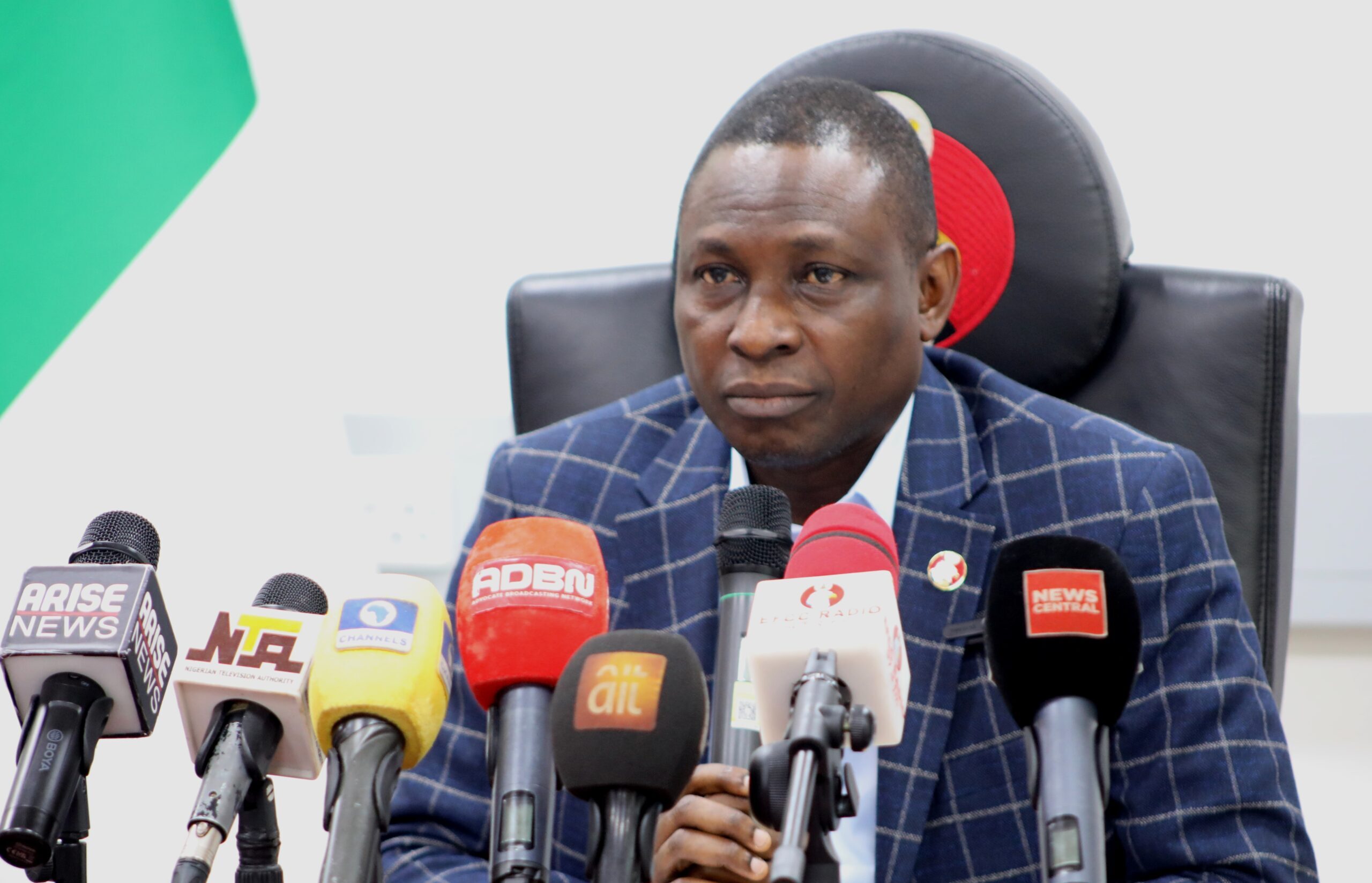
The Economic and Financial Crimes Commission (EFCC) has recovered N1.23 trillion and $684.48 million from crime between October 2023 and July 2026. This was revealed by the agency’s chairman, Ola Olukoyede, during a press briefing in Abuja on Monday.
Mr Olukoyede said that out of the total amount recovered, N397.26 billion was given directly to the federal government. The remaining N836.35 billion was distributed to individuals, companies, government agencies, and other beneficiaries.
This report covers a 34-month period under Mr Olukoyede's leadership. It includes the EFCC’s investigations, prosecutions, convictions, asset recovery, and institutional reforms since he became chairman.
The latest figures show an increase compared to the October 2025 report, where the EFCC announced recovering N566 billion and $411 million in assets. During this period, the EFCC received 49,673 petitions and investigated 39,615 cases. Out of these investigations, 14,476 were taken to court, and the commission secured 10,872 convictions.
Detailed Recovery Figures
This means the EFCC investigated nearly four out of every five petitions it received and won about three-quarters of the cases it took to court. The recovery table shows that the naira figure is over N1.2 trillion (N1,233,612,040,411.11) and dollar recoveries amount to about $684.5 million ($684,478,457.32).
The money was recovered in 16 currencies from five continents. Other recoveries included £373,905.78, €9.34 million, CFA58.73 million, and 463,660 Saudi riyals. Of the total funds recovered, N661.32 billion and $492.37 million were released to beneficiaries through restitution and other recovery methods.
Another N71.01 billion and $18.29 million are still in recovery accounts or with exhibit keepers, waiting for verification of rightful owners. Beneficiaries included the Internal Revenue Services of Edo, Kwara, Oyo, and Sokoto states, which together received N97.98 billion.
The EFCC noted that N114.9 billion in tax recoveries was attributed to state internal revenue services. Federal ministries, departments, and agencies received N257.2 billion and $126.4 million, while public corporate bodies got N2.49 billion. Private companies received N350.4 million and individuals got N1.02 billion.
Recovery Trends
The EFCC recorded its highest annual naira recovery in 2025, with N521.3 billion recovered. The commission stated that total naira recoveries rose by 43 percent between 2024 and 2025. Direct recoveries for the Federal Government increased by 429 percent.
In the first half of 2026, the EFCC recovered N201.9 billion, but they warned that this number has not been annualised. Dollar recoveries for the Federal Government also increased, with $123.7 million recovered in the first half of 2026 compared to $66.7 million from October 2023 to the end of 2025.
Advance-fee fraud and cybercrime made up over 62 percent of the 46,288 offences recorded by the EFCC during this time. Advance-fee fraud accounted for the largest share, with 20,726 offences. Cybercrime followed with 8,222 offences, while money laundering ranked third with 5,620 offences.
Bank fraud accounted for 3,328 offences. Economic governance fraud recorded 3,167 offences and land and property fraud had 2,464. Other offences included extractive industrial fraud, procurement fraud, and tax fraud.
Asset Forfeiture and Court Cases
The EFCC recorded 9,015 offences in 2023, 20,640 in 2024, and 16,633 in 2025. The commission secured interim and final forfeiture orders covering 10,053 assets during the 34-month period. These assets included 8,198 electronics, 1,177 real estate properties, 370 automobiles, and 251 plots of land.
The forfeiture orders also covered 32 schools, factories, hotels, and shops, 25 oil rigs, barges, and other machinery. The EFCC also seized 102 tonnes of solid minerals. Other assets included a N450 million insurance policy, N250 million in Treasury bills, and 40,844,094 shares valued at N1.05 billion and $4.4 million.
Bitcoin, USDT, Ethereum, and other digital assets were also included in the forfeiture. Proceeds from the disposal of assets under final forfeiture orders amounted to N12.07 billion, which the EFCC said had been paid to the Federal Government.
Ongoing Investigations and High-Profile Cases
The EFCC reported 920 specialised cases involving money laundering, bureau de change operations, illegal mining, virtual assets, and terrorist financing. Of these, 680 are still active, while 212 have led to convictions. Money laundering accounted for 612 of these cases, with bureau de change operations at 234, illegal mining at 52, and virtual assets and terrorist financing at 11 each.
The commission noted that 127 money-laundering cases and 73 bureau de change cases resulted in convictions. There were also nine convictions from illegal mining cases, two involving virtual assets, and one in a terrorist financing case.
The EFCC has 36 high-profile cases involving former governors, ministers, senior government officials, banking executives, corporate officials, and a National Assembly official still in court. The list includes former Kogi Governor Yahaya Bello, former Taraba Governor Darius Ishaku, and former Kwara Governor Abdulfatah Ahmed among others.
It also includes former ministers and senior officials like Olu Agunloye, Abubakar Malami, and Hadi Sirika. Others named are former Central Bank Governor Godwin Emefiele and former Accountant-General of the Federation Ahmed Idris.
International Cooperation and Operational Changes
The EFCC linked its activities to Nigeria’s removal from the Financial Action Task Force’s list of countries under increased monitoring in October 2025. Nigeria was placed on the FATF grey list in February 2023 due to weaknesses in its anti-money laundering and counter-terrorist financing systems.
The commission said its work, such as money laundering and terrorist financing investigations, asset freezing, and seizures, contributed to this change. Mr Olukoyede mentioned that the EFCC has made significant changes since he took office.
These include new guidelines on arrests and bail, a review of sting operations, and the establishment of a security department and an Immigration and Visa Section. The EFCC also introduced policies on gifts and hospitality, exhibit-room security, and conflicts of interest.
The commission created the Department of Fraud, Risk, and Assessment Control, the Special Task Force against Naira Abuse, EFCC Radio, a Public Complaints Desk, and a Cybercrime Response Centre. A new EFCC Academy and Cybercrime Research Centre were set up, with new directorates opened in Enugu, Ilorin, Ekiti, Anambra, and Katsina.
The EFCC mentioned that recovered funds support government programs. In August 2024, President Bola Tinubu directed that N50 billion each be allocated to the Nigerian Education Loan Fund (NELFUND) and the Nigerian Consumer Credit Corporation (CREDICORP) from these funds. Recently, NELFUND confirmed receiving this amount.
The Presidency linked EFCC recoveries to both programs and additional funding approved for NELFUND. The EFCC emphasized that its investigations require cooperation with other countries, especially for assets or evidence held abroad. They used mutual legal assistance to gather evidence, trace assets, and support investigations.
During the review period, N105.43 million and $73,735.67 were returned to foreign entities and individuals. Mr Olukoyede also called for stronger judicial cooperation to improve asset recovery and forfeiture.

Comments
No comments yet.