Election Watch: 323 Offences and 38 Security Issues Reported in Osun
Civil society groups have reported 323 electoral offences and 38 security incidents during the Osun State governorship election, raising concerns about the election process.
Civil society groups monitoring the Osun State governorship election have reported 323 electoral offences and irregularities across 726 polling units observed as of noon on Saturday.
Their review raised worries about vote trading, ballot exposure, voter obstruction and other breaches in the election process.
The groups, working under the European Union Support to Democratic Governance in Nigeria Election Observation Hub, also noted 38 security incidents. These included 25 cases of thuggery, 12 attacks on electoral officials and nine instances of voter intimidation, allegedly involving security personnel.
The EU-SDGN EOH includes Yiaga Africa, Centre for Media and Society, International Press Centre, Nigerian Women Trust Fund, TAF Africa and The Kukah Centre.
They deployed 823 accredited observers across the 30 local government areas of the state to monitor the election.
Speaking on Saturday, Lanre Arogundade, the Executive Director of the International Press Centre, shared the group’s preliminary election day statement. He said their findings came from reports by stationary and roving observers throughout the state.
According to the group, the 323 electoral offences included 103 cases of vote trading, 12 cases of multiple voting, 28 cases of bribery involving polling and security officials, 38 cases of campaigning at polling units, 14 cases of voter impersonation, seven cases of misconduct by election officials, 31 cases of obstruction of voters and 85 cases of ballot exposure.
These figures were recorded in 726 of the 823 polling units where the Hub had observers by noon.
Vote trading was the most common offence reported, with 103 cases. This was followed by 85 cases of ballot exposure.
The observers also reported 31 cases where voters were allegedly blocked from voting, while campaigning at polling units accounted for 38 cases.
The Hub stated that these incidents were recorded alongside generally peaceful and orderly voting in most areas.
Security Concerns
The observers expressed concerns over the actions of some security personnel at polling units. Even though an average of three security personnel were present at each polling unit observed and most behaved professionally, the group reported voter intimidation by security agents at three locations.
“Most of the security personnel did their job well during the voting. But there were some cases of intimidation by security agents at PU 29-10-10-005 in Ejigbo, PU 29-26-01-002 and PU 29-30-06-015 at a public space near No 22, Oke Ola Street, Okanla Area, Osogbo,” Arogundade said.
The Hub said these cases need attention because security personnel should protect voters and election workers, not create fear. They urged security agencies to stay neutral and professional while maintaining a visible but restrained presence at polling units and collation centres.
They also called for increased monitoring of areas seen as risky, especially during counting and collation, when disputes over results might happen.
Delays and BVAS Failures
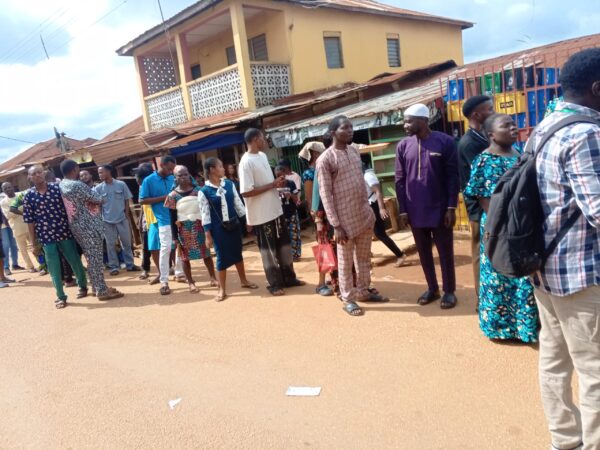

Beyond the irregularities, the observers noted delays in sending election personnel and materials to some polling units. The Hub said that polling officials arrived with all necessary materials in 726 of the 823 polling units they observed.
Among these, 608 polling units, around 83.7 percent, had officials with all materials, including ballot papers, result sheets, BVAS devices, voting cubicles, voter registers, official stamps and ink pads, between 7:30 a.m. and 8 a.m.
Another 75 polling units, about 10.3 percent, had officials arrive between 8 a.m. and 8:30 a.m., while 42 polling units, about 5.7 percent, saw officials arrive between 8:30 a.m. and 11 a.m. One polling unit did not open by 11 a.m. due to the absence of election personnel and materials.
The group also reported that 58 BVAS devices malfunctioned, which is about 7.9 percent of the 726 polling units observed. However, 41 of the faulty devices, around 70.7 percent, were fixed, allowing accreditation to continue.
The Hub urged INEC to send technical support staff and backup BVAS devices to polling units where accreditation failed. They also called on INEC to ensure that polling units that had not started voting received the necessary personnel and materials or reschedule the election as needed.
Women and Persons with Disabilities Participate
Despite the reported irregularities, the observers noted that voter participation was mostly inclusive. They saw significant turnout from women and persons with disabilities.
“The turnout of women was about 59 percent in the observed polling units and over 70 percent of PwDs voted in the 12 designated PwD polling units. Also, women made up 36 percent of polling officials and played key roles as polling agents,” Arogundade said.
He described this participation as a sign of broad engagement in the electoral process. However, they urged INEC to keep monitoring the availability of priority voting and assistive devices for elderly voters, pregnant women and PwDs.
Recommendations
The Hub urged the media to avoid announcing unofficial or projected results before INEC makes a formal declaration at the appropriate polling and collation levels.
They also urged journalists to focus on real-time fact-checking as results come out and to quickly report any attacks or denials of access.
The organisations called on political parties and candidates to reject vote buying, intimidation and other forms of electoral malpractice. They urged parties to address any grievances through election petitions and the courts.
The group reminded parties of the Peace Accord signed on 30 July and called on voters to stay calm as the process moves to the final declaration.
The EU-SDGN EOH said it will release a post-election report after the results are declared to provide a broader view of the election's conduct, credibility and outcome.




Comments
No comments yet.