Falana calls on Tinubu government to punish those behind electoral violence before 2027 elections
Femi Falana emphasizes the need for the government to punish those behind electoral violence to ensure credible elections in 2027.

Human rights lawyer Femi Falana has called on the federal government to take action against politicians who fund electoral violence. He warned that attacks on political opponents and scaring voters could harm the credibility of the 2027 general elections.
Mr Falana, a Senior Advocate of Nigeria (SAN), said the government needs to do more than just arrest suspected political thugs. He stressed that the people who recruit, finance, and arm these thugs must also be held accountable.
He made these remarks during the sixth Frontier Discourse Annual Public Lecture Series and Awards by Pacesetter Frontiers Magazine at Merit House, Maitama, Abuja. The statement was shared with PREMIUM TIMES on Saturday.
In his keynote address titled “Barrel to Ballot: The Naturalisation of Violence, Nigeria’s Polity and its Democratic Circus,” Mr Falana pointed out that political violence stems from deeper issues like bad governance, lack of accountability, and failure to protect citizens’ rights.
“As the 2027 elections approach, the State must protect lives, enforce electoral laws and punish those who sponsor or commit political violence, no matter their status or political connections,” he said.
He accused politicians of recruiting unemployed youths, giving them weapons, money, and drugs to attack opponents and disrupt political meetings. This warning comes as reports show attacks on political figures and their supporters across the country.
The African Centre for Security, Governance and Development (CentreSGD) reported 70 election-related attacks across 19 states and the Federal Capital Territory from January 1 to October 27, 2026. It noted that 27 people lost their lives in 20 of these incidents.
The organisation also mentioned a Yiaga Africa survey which found that 61 percent of Nigerians feared violence could stop them from voting in the upcoming elections.
Mr Falana referred to the October 30 attack on Omoyele Sowore, the presidential candidate for the African Action Congress, and members of his team in Ado-Ekiti, Ekiti State. The accounts of the attack were conflicting. While Mr Sowore said armed men attacked them, the Ekiti State Police Command claimed it was a fight with another group at a restaurant.
Mr Sowore disagreed with the police statement and questioned the identity of those who were arrested.
He also mentioned the attack on Peter Obi's convoy, the presidential candidate for the Nigerian Democratic Congress, in Calabar, Cross River State. Police reported that suspected hoodlums with machetes and sticks attacked the convoy near Watt Market Roundabout on November 4. They later arrested a 27-year-old suspect, Victor Duke, as investigations continued.
Mr Falana highlighted attacks on All Progressives Congress leaders in Kebbi, Katsina, and Nasarawa states, saying these incidents show that no political party has a monopoly on violence.
He emphasized that political competition should rely on ideas and persuasion instead of fear and force. He urged the Independent National Electoral Commission (INEC) to create a unit specifically to investigate and punish electoral offenders.
Mr Falana suggested that INEC should gather reports from the police and other security agencies, investigate any violations, and take offenders to court. “I am suggesting that INEC should have a prosecution unit to get reports from police and other security agencies about electoral offences and then take them to court,” he said.

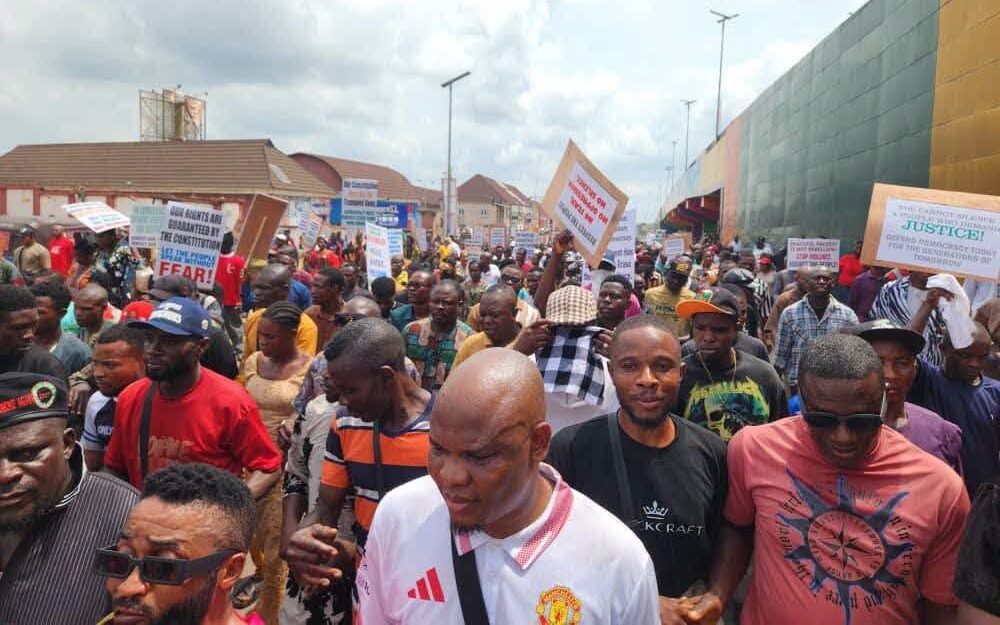
He also criticized the National Assembly for not implementing the proposal for an Electoral Offences Commission. He argued that the lack of a strong prosecution system allows politicians involved in electoral violence to escape justice.
Mr Falana raised concerns about what he called restrictions on opposition parties’ access to campaign platforms. He claimed that some state governments are charging between N150 million and N200 million for political billboards depending on the office being contested.
He said these charges could make it hard for opposition parties to campaign and give an unfair advantage to those already in power. Mr Falana pointed out that Nigeria has laws against violence and armed groups in politics.
He referred to Section 227 of the Nigerian Constitution, which bans the formation and maintenance of private political armies and other groups that use force for political goals. This rule applies regardless of the names used for such groups, including political vanguards and enforcement teams.
He also mentioned Section 228(a) of the Constitution and Section 78 of the Electoral Act 2026, which outline penalties for breaking the law against political violence. According to the Electoral Act, Section 95 requires police to provide adequate security for political rallies, while Section 96 prohibits organizing groups for political force. Section 97 also bans threats of violence meant to force support for or against a political party or candidate.
Mr Falana further cited Sections 120, 129, 130, and 132, which talk about disorderly conduct at political meetings, having weapons to intimidate voters, and using threats to interfere with the right to vote.
He explained that the failure to enforce these laws, especially against those who fund and organize political violence, remains a big issue. “The problem is the gap between the law in the statute book and the law in operation,” he said.
He criticized the trend of arresting political thugs while their sponsors continue to receive political protection. These concerns are not new. A joint election observation report by the National Democratic Institute and the International Republican Institute recorded 586 incidents of election-related violence and 348 deaths during the 2023 election cycle.
The observers also reported attacks on INEC offices, staff, and electoral materials. They raised concerns about the lack of accountability for political actors involved in electoral violence.
Mr Falana stated that the government has a constitutional duty to protect its citizens. He referenced Section 14(2)(b) of the Constitution, which says the security and welfare of the people is the main purpose of government.
He also referred to Sections 33, 34, and 35, which guarantee the rights to life, dignity, and personal freedom. He urged Nigerians to reject vote-buying, electoral manipulation, and incitement while demanding accountability from political leaders.
He said democracy should not just be about how elections are conducted, but also about whether citizens can freely participate and hold elected officials accountable. “We must end political violence, dismantle impunity and restore the ballot to its rightful owners,” he stated.
“The ballot must be more powerful than the barrel. That is the democracy Nigeria deserves and must build together.
Comments
No comments yet.