Gbajabiamila in Trouble Over Alleged Scandal
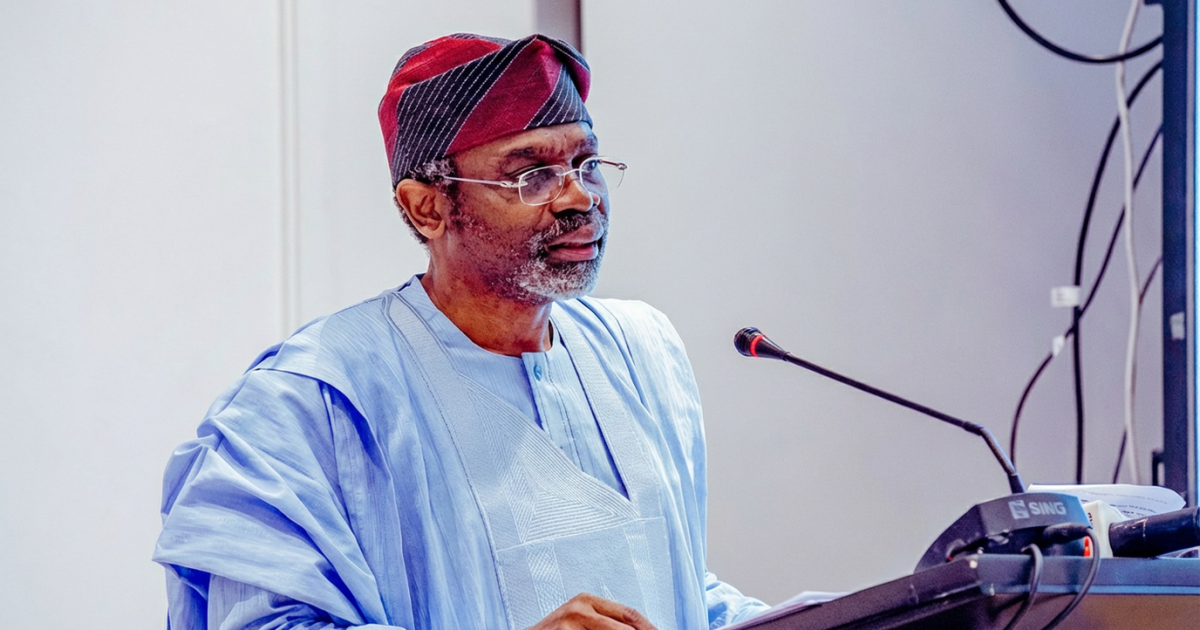
Femi Gbajabiamila is at the center of a scandal that echoes a moral tale from Chief Joseph Odunjo's writings. The implications for leadership are significant.
The late Chief Joseph Folahan Odunjo left behind a story that reflects today’s biggest national scandal. It shows the shame surrounding President Bola Tinubu’s Chief of Staff, Femi Gbajabiamila, and the self-proclaimed Director General of the Presidential Foreign Intervention Promotion Council, Adeniyi Adeyemi. Odunjo is known for his contributions as a writer and educator. His famous Yoruba children’s book series, the Alawiye (Careful Explainer), served as essential reading for kids in primary school from the 1960s to the 1980s. These books taught strong morals to many generations of students, with their lessons lasting for years.
In one popular Alawiye story, Odunjo tells of a man in a village who has a bitter enemy. This man kills his foe in cold blood inside his home. As the victim lies dying, he curses the murderer: “Ìtànsán oòrùn yíó fi ó hàn!” (The ray of the sun will one day expose your evil!).
The murderer does not know that the victim’s young daughter is hiding nearby. She cannot understand the terrible crime or who did it. She grows up only knowing the pain of that day. Years later, the murderer becomes a powerful king and, by strange fate, marries that same girl. One day, as he sits in his palace, a bright ray of sunlight shines through the window and hits his eyes.
The king remembers the crime from his past. The dying man’s warning echoes in his mind. He thinks the threat is too weak to matter now and laughs loudly. Hearing his laughter, the queen asks what is funny. Still laughing, he tells her about the murder and mocks her father’s last words: “Ìtànsán oòrùn yíó fi ó hàn!,” thinking nothing will happen.
The queen, recognizing the details of her father’s murder, vows to make the dying man’s curse come true. She reveals the king’s dark secret to the kingdom, leading to his downfall and execution like a common criminal.
Recent Nigerian history gives another painful reminder of retribution. This happened with the 11th indigenous Inspector General of Police, Tafa Balogun. His shocking downfall shows the Yoruba saying, “Igi kékeré tí a bá f’ojú ré níí gbé’ni subú” (It is the small roadside stump that trips a giant).
In Ibadan, there is a saying about its dark River Kudeti: anyone who thinks of the Kudeti as just a passing flood is destined to be swept away by its hidden danger. In 2005, Balogun used his power to detain an aide he accused of stealing ₦5 million, not knowing he was waking a sleeping Kudeti River right at home. That aide knew about Balogun’s huge illegal gains. After he was freed, he became the whistleblower that exposed the police chief’s corruption.
Today, Nigeria is filled with shock, anger, and disbelief. Citizens, who have been cheated by leaders since independence, are stunned. Political experts say Nigerians are used to trauma, so much so that they no longer feel shocked. But this presidential scandal has shocked even the most hardened citizens. An “impostor” managed to get a “fake” agency ₦1.3 billion in the 2026 national budget. This is outrageous.
This person also held meetings with top government officials, including the EFCC, the National Assembly, and foreign diplomats. He operated bank accounts with the Central Bank of Nigeria. An official letter, dated 7 August 2025, allowed recruitment for 300 staff in this controversial agency, signed by Mimi Abu. Adeyemi also had offices in the Federal Secretariat, which is like trying to get an elephant through the eye of a needle.
In the last 20 years, Nigeria has seen scandals of massive proportions. Just hours ago, the IMF Resident Representative in Nigeria, Christian Ebeke, mentioned that the Tinubu government’s public spending was not recorded in recent budgets. This leaves a big gap between the government’s reported deficit and actual financial needs. This lack of transparency is a hallmark of the Tinubu government. The Gbajabiamila/Adeyemi scandal appears to be another dirty mark on the Tinubu administration, raising the question: is this a mistake or a huge fraud gone wrong?
To grasp how deep this problem runs, we should look back at past scandals that have plagued Nigeria for 27 years of democracy. Each administration has its own scandals, and the Gbajabiamila case is the latest in the Tinubu government’s bag of troubles. Given the background of the Lagos Boys in Abuja, it would be shocking if they did not end up exploiting Aso Rock for personal gain.
This current Gbajabiamila/Adeyemi scandal reminds older Nigerians of a similar corruption case in 1975, the “Cement Armada.” Just as President Tinubu is under scrutiny now because of his Chief of Staff’s ties to a fraudster, General Yakubu Gowon faced a similar situation. After the civil war, he announced a $100 billion development program to rebuild the country.
The Ministry of Defence asked for 2.9 million tonnes of cement annually, but what followed was a scandal of contract fraud. Instead of the requested five million tonnes, greedy officials ordered 20 million tonnes, stealing around $1.4 billion from the treasury. This led to fake companies trying to claim money with false documents, supported by military generals. When Murtala Muhammed’s government took over, they set up a committee to investigate the cement contracts, but even committee members were later accused of taking bribes.
The Gbajabiamila/Adeyemi scandal seems to be a case of a con-man tricking an old political fox, the Nigerian state. It shows a shocking level of fraud at the top of the government. Femi Gbajabiamila is said to be closely linked to Adeniyi Adeyemi, who is described as a career fraudster. Not only did this con happen recently, but it also exposed a deep dysfunction in Nigeria’s leadership. This scandal has shown the rot in the government, revealing a level of chaos in the highest offices.
Nigeria faced a similar scam about 30 years ago. Between 1995 and 1998, a group of Nigerian fraudsters ran one of the biggest advance-fee scams ever. They sold a fake contract for a nonexistent airport to Nelson Sakaguchi, head of a Brazilian bank. The main actor was Emmanuel Odinigwe Nwude, who later became a member of Nigeria’s House of Representatives. He was supported by Christian Ikechukwu Anajemba and others. Sakaguchi was caught when a bank audit revealed massive fraud.
Nuhu Ribadu, the first head of the EFCC, dismantled that fraud ring. Back then, Nigerians questioned how Nwude could trick a foreign banker out of $242 million without anyone noticing. The disgrace was unforgettable.
Today, those same questions arise again. How did a conman get so close to the Nigerian establishment? Did Gbajabiamila help him? Did Adeyemi really pay the Chief of Staff ₦400 million from a ₦600 million bribe through a proxy who has since died?
This total failure of institutions that allowed the Gbajabiamila/Adeyemi scandal recalls a time when certain wrongs were seen as impossible. In Yoruba culture, sacred spaces were protected by taboos. The Yoruba called certain places, like the forbidden forest where elders worshipped, Igbó Àìwò. They believed stealing a king’s sacred trumpet was a shame for the whole community. They often asked, “Olè tó gbé kàkàkí ọba, níbo ni yóò ti fọn ón?” (A thief who steals the king’s trumpet, where will he blow it without being caught?)
Today, bold thieves steal the king’s trumpet and play it in the palace without fear. If the impostor theory is true, then Adeyemi acted just like the thief in that story. He stole the Nigerian presidential trumpet and allegedly made the Chief of Staff dance to his tune. The sacred boundaries of Igbó Àìwò have completely broken down.
When the news broke that Adeyemi had named himself the Director General of the PFIPC, people remembered Emmanuel Nwude and the $242 million airport scam. Gbajabiamila’s statement that the PFIPC was fake, along with Adeyemi’s claim of a ₦600 million bribe and police charges, raises more questions than answers. The fact that the alleged impostor had official documents makes the federal government’s claims hard to believe. If these compromises are proven true, the integrity of Nigeria’s public sector has collapsed.
Recently, President Bola Tinubu made a joke at an event in Aso Rock. He acknowledged the First Lady, Remi Tinubu, and playfully called her the “Ìyá Alákàrà” (the bean cake seller). This humor showed that the president is aware of the public criticism of his wife. She had suggested Nigerian women sell Àkàrà to cope with the economy. The president’s joke hinted that he knows about the public anger towards him and his government regarding the ongoing scandal.
Many Nigerians are skeptical that the truth of the Gbajabiamila-Adeyemi scandal will come out. There are claims that Gbajabiamila did not act alone, and some believe the scandal will fade like others before it. Rumors suggest a strong connection exists between Gbajabiamila and Tinubu, like the edan in the Ogboni fraternity. In Yoruba culture, the edan, a joined staff showing two figures, represents unbreakable solidarity.
Some are worried that the public might forget this scandal as soon as the government distracts them with other news. Soon, a less harmful scandal may be thrown into the media to divert attention, just like throwing corn to a distracted hen.
Still, for Gbajabiamila and the presidency, this scandal could be their downfall. Many believe this administration is just a continuation of the same corrupt system that has robbed the nation for years. Rumors suggest that the hidden financial wrongdoings of the last 38 months are much larger than this impostor scandal.
For Gbajabiamila and the presidency, whether they can put out this fire or it burns them, many think this scandal is their reckoning. People believe the current government, especially Aso Rock, is just a repeat of the same political thieves from Lagos who have drained the state’s resources for 27 years.
Nigerians are betting that nothing will come from this scandal. In better places, the Chief of Staff would have been removed by now. But here, the leaders seem unconcerned. The “impostor” will likely be a scapegoat while his partner in power continues to thrive. With a leadership like this, Nigerians should know that their rulers have hearts as hard as stone. Nothing seems to move them from their wicked ways.
Adding to this is the claim that Femi Gbajabiamila is a man who has had many mouths buzzing around him like flies on rotten meat. Even before this scandal, rumors were swirling that Aso Rock is a hub for appointment corruption. If these claims are true, it paints a grim picture for an administration already known for corruption. If the Ìtànsán oòrùn, the ray of the sun, has finally broken through the darkness, it has revealed the mess in Aso Rock. And Adeniyi Adeyemi, like Balogun’s aide, could be the small stump that leads to Gbajabiamila’s downfall.





Comments
No comments yet.