Gov Sani gives tips for other states to adopt Kaduna's peace plan
Governor Uba Sani emphasizes the importance of understanding local security challenges for states looking to implement Kaduna's peace model. He highlights community ownership as key to success.
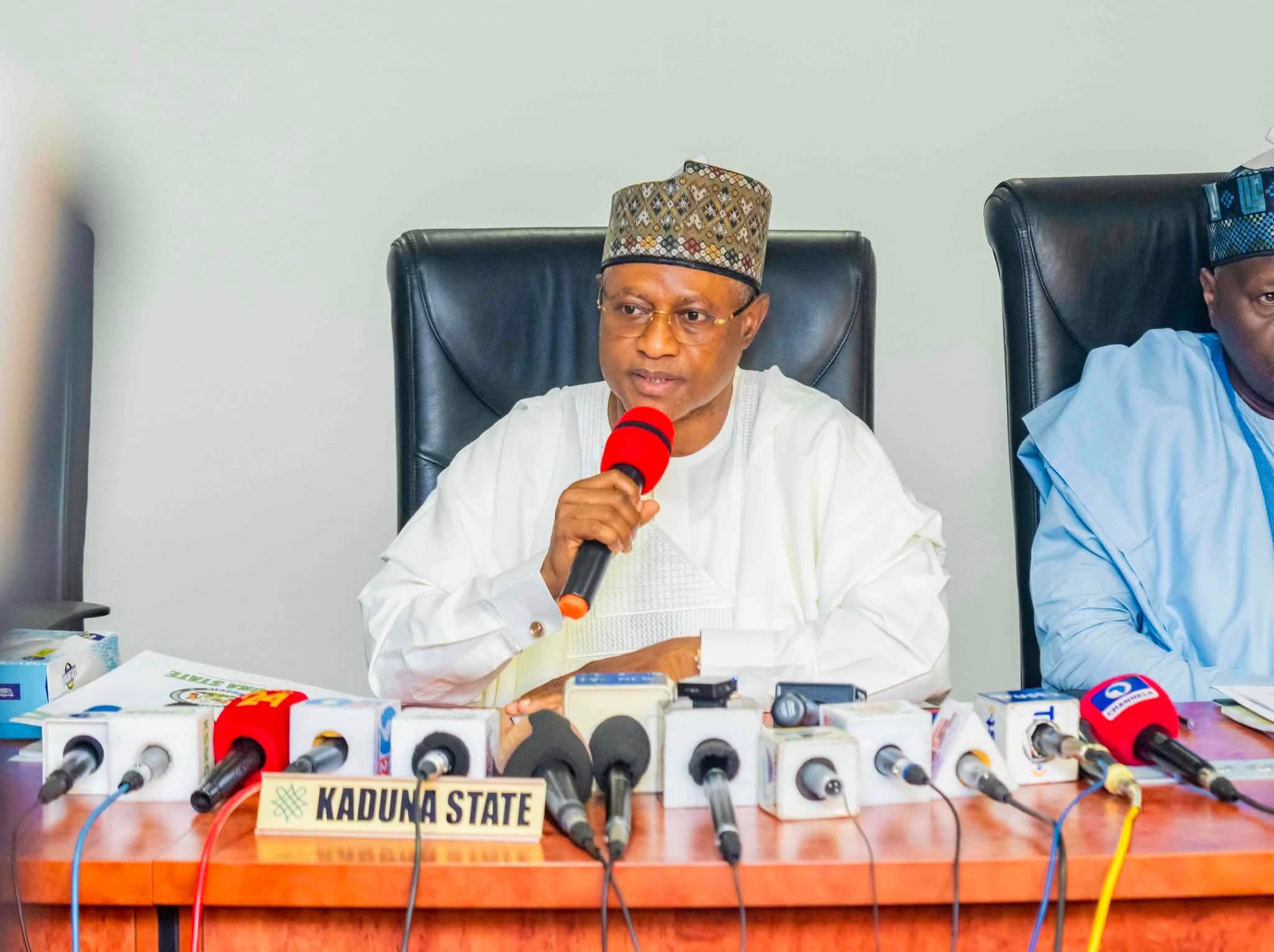
Governor Uba Sani has told other states looking to copy the Kaduna peace model to first understand their unique security problems. He believes this is key for success.
The governor said that after identifying these issues, states should let their communities take ownership of the peace model. He emphasized that the communities must believe in it and drive it to see good results.
He shared this advice when the Implementation Monitoring Committee of the National Economic Council visited him at Sir Kashim Ibrahim House.
Governor Sani noted that when he took office, there was a major trust gap between the government and the people. He said, "This was the first thing we addressed."
He pointed out that the second area he focused on was justice, fairness, and equity. He mentioned that many politicians were exploiting these issues for their own gain.
The governor explained that in the past, some people hid behind religion and ethnicity to create conflict in Kaduna State. He said that the state used to face two main security challenges: ethno-religious crises and banditry.
"From our statistics and data, we realized that we lost more lives as a result of the religious crises in Kaduna State than even banditry. And that is the reason why we sat down and looked at the situation," he added.
According to him, his government has tackled the issue of ethno-religious crisis in Kaduna State by promoting inclusion and fair development across all 23 local governments.
"I make bold to say that there has never been any incidence of ethno-religious crisis in Kaduna State since I became Governor on May 29, 2023," he said.
He stated that the Kaduna peace model has significantly reduced banditry and kidnapping because it is community-driven. The governor noted that many states have contacted him wanting to replicate the Kaduna peace model.
"What do we tell them? You have to relegate politics and focus on governance. When we came in, we said the issue of politics is over. We focused on governance; it has nothing to do with political affiliation, religious affiliation, or geography," he said.
"Today, as we are speaking, we have reclaimed over 500,000 hectares of land that were abandoned because of insecurity. Now our farmers have gone back to their farms."
He added, "When we came in, over 100 schools were abandoned in some frontline local governments because of insecurity. As we are speaking, we have opened all our schools."
Governor Sani mentioned that more than 150 primary health care facilities were closed due to insecurity. He said, "Today, as we are speaking, all of them have been opened. And they are operational."
The governor highlighted that his administration is focusing on four key areas: education, healthcare, agriculture, and infrastructure development.
On education, he emphasized that his government is not only focused on formal education but also on skills acquisition and development.
"Kaduna State is leading in skill-based education in Nigeria. The Vice President, if you can recall, three months ago, sent a circular urging other states to copy our policy on skill-based education."
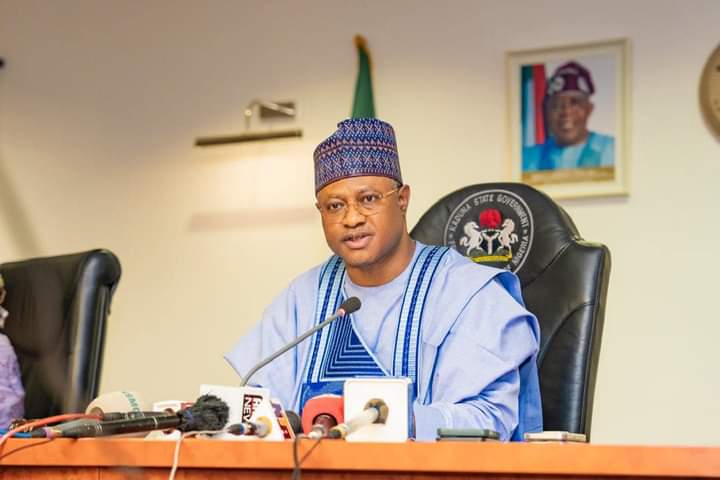
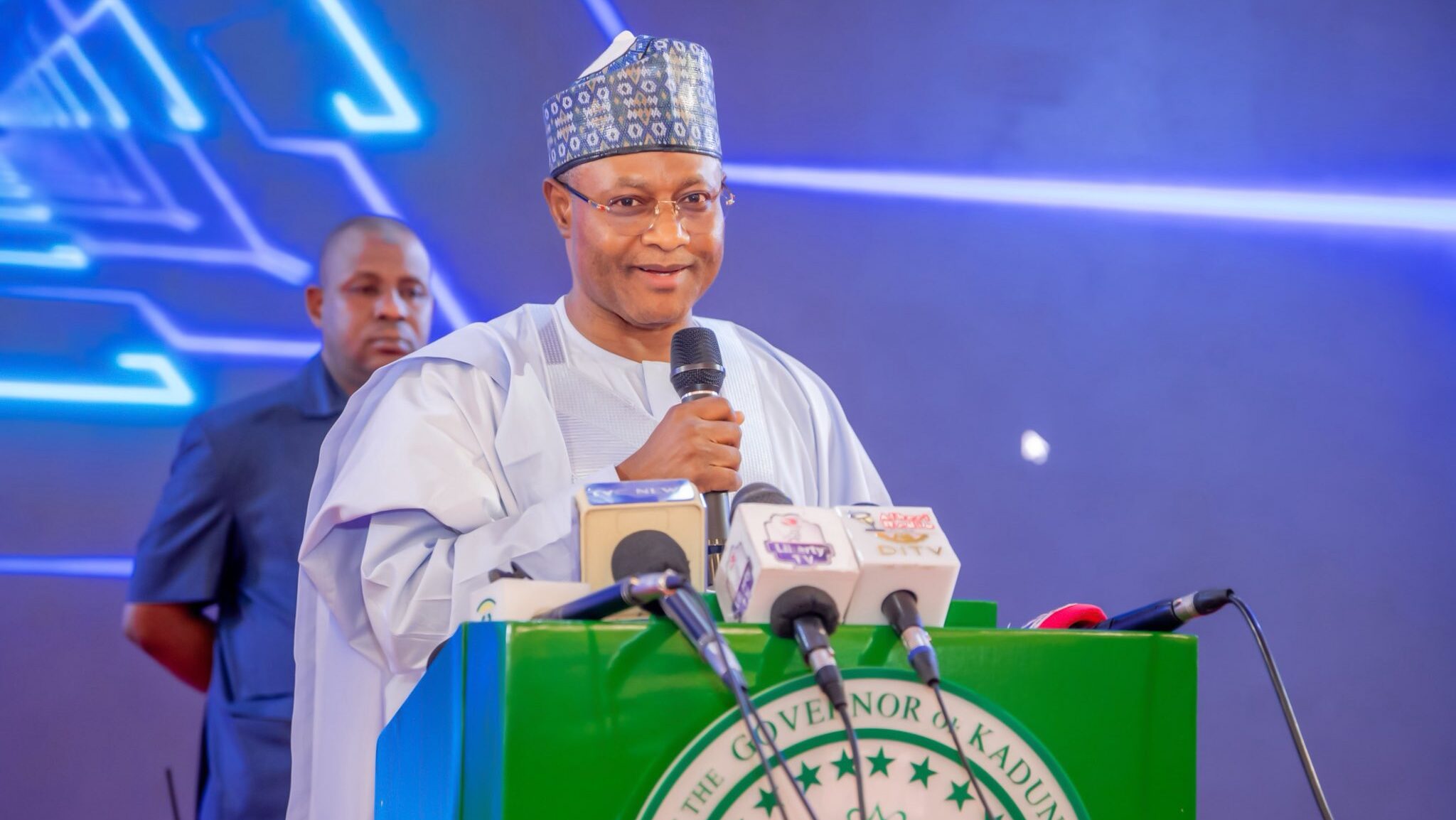
He added, "In line with that, the Honourable Minister of Education also made it clear that our Institutes of Vocational and Skill Development are more equipped than any University of Technology in Nigeria."
Governor Sani said they have graduated about 4,300 trainees in their Institute of Vocational here in Kaduna. He noted that all of them received certification from the National Board of Technical Education, allowing them to work anywhere in Nigeria and beyond.
He recalled that there were about 550,000 out-of-school children when he took office. He mentioned that, according to UNICEF and Bureau of Statistics records, "we have taken back at least 300,000 of them back to school."
"Education is one of our major priorities, and that’s the reason why we always budget at least 26% of our budget to education since we came in," he said.
The governor affirmed that quality healthcare is a right for everyone in Kaduna State, especially the less privileged.
He added that Kaduna State is the only subnational entity to have moved all its 255 Primary Healthcare Centres to level 2 status in the country. He said these PHCs are staffed by qualified personnel.
"When we came, we had about 20 secondary health care facilities that were completely moribund, obsolete, and were not really functional. We have been able to remodel and equip 16 of them," he said.
The governor revealed that he invited President Bola Tinubu to commission a 300-bed hospital last year, which he described as the best health facility in the northern region.
He pointed out that agriculture is the backbone of Kaduna State’s economy, employing 60% of the workforce and contributing 43% to its Gross Domestic Product.
"When we came in, the budget for agriculture was about N1.4 billion. That’s what we inherited in 2023. Today, our budget in agriculture is about N123 billion. It has surpassed the Malabo Declaration."
He explained that in 2014, there was a Malabo Declaration, where it was agreed that states should allocate no less than 10% of their budgets to agriculture, but in Kaduna, they are allocating 13%.
"We are leading, as of today, in maize production in Nigeria, we are leading in tomato production in Nigeria, we are leading in ginger production in Nigeria," he disclosed.
The governor said his government has been supporting smallholder farmers. He added, "Last year, we distributed 900 trucks of free fertilizer to over 240,000 of them. No state has done this in Nigeria."
"In the next one week, I want to repeat the same thing, at least to support nothing less than 240,000 smallholder farmers again with fertilizer," he said.
Governor Sani also mentioned that Kaduna State was the first subnational to launch a Special Agro-Processing Zone, which he believes will change the game in the agriculture value chain.



Comments
No comments yet.