How Can Tinubu's Government Make Life Better for Nigerians?
This article examines the potential actions of Tinubu's government to enhance the lives of Nigerians, focusing on recent economic reforms and ongoing challenges.
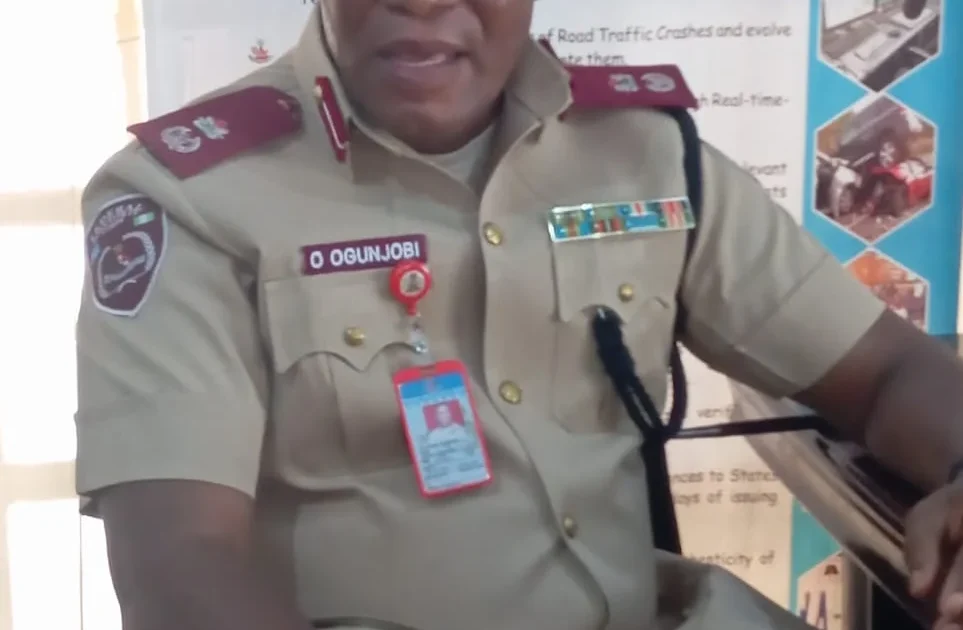
There was one question in Zacch Adedeji's interview on Channels Television on Sunday, 9 August, that stands out from all the talk around it.
"Anybody who says he is coming," the Executive Chairman of the Nigeria Revenue Service said, "just ask them, 'What will you do differently?' It is not just saying buffer. Buffer as what?"
This question is striking. Maybe it is better to ask it of the government itself.
What can Tinubu's government do differently now?
Some major economic changes have already taken place in the last three years. The petrol subsidy was taken away. The foreign exchange market has changed a lot, tax collection has been improved, and local refining has grown. States are also starting to manage their own electricity markets.
The World Bank says Nigeria has made good progress in getting its economy stable. Inflation is easing, and the country's fiscal and external positions are getting stronger. But the World Bank also says that household incomes have not fully bounced back and poverty is still a big issue.
The IMF's view is similar. It praised the reforms for better economic results and building resilience, but it also said that many Nigerians still face tough conditions with poverty and food insecurity.
Adedeji's comments about revenue show the change. He said monthly allocations from the Federation Account have jumped from about ₦700 billion when the government started to around ₦4.5 trillion today. This comparison should be made carefully because the distributable revenue depends on oil earnings, exchange rates, and other factors. But it is clear that the revenue pool has grown a lot.
For states that once had a hard time paying salaries, this gives them much more room to act.
The same goes for tax revenue. Better collection means the government has more money to spend, but Nigeria is still a low-tax country. The challenge is to turn this extra revenue into services, investments, and social support without letting government costs rise too much.
The change in the foreign exchange system has removed some of the worst problems from the old system. When the official and parallel market rates were very far apart, businesses could not figure out the real cost of transactions. The new exchange rate system is more market-oriented and has improved transparency. Still, the naira is under pressure and the changes have brought some costs.
In May, S&P Global Ratings raised Nigeria's sovereign rating from B- to B. The agency said this was due to higher oil production, more local refining capacity, and the 2023 exchange-rate changes that support better growth and balance-of-payments outcomes. It also noted that the debt-to-revenue situation has significantly improved.
Nigeria's refining story is perhaps the best example of change. For years, Nigeria exported crude oil and imported most of the petrol it used. The subsidy system made it harder and more expensive to maintain. Taking away the subsidy was tough, but it also changed the environment where local refining could succeed.
Adedeji said local refining capacity has grown from about 30,000 barrels per day in May 2023 to about 700,000 barrels per day. Nigeria recorded its first net petrol export in March.
The 700,000 barrels per day number needs more context. The Dangote refinery, which is responsible for much of this increase, reached that level during a performance test, exceeding its stated capacity of 650,000 barrels per day. The key point is that Nigeria now has a much larger refining base than it had when the government took office, and more refined products are being sourced locally.
This is a big change, but just having refining capacity doesn’t mean petrol will be cheap. Supply issues, pricing, and distribution still need to work well. If refineries cannot get enough crude oil at reasonable prices, having capacity on paper won’t mean reliable production.
The real test is whether local refining can lower the foreign exchange burden, create job opportunities, and cut energy and transport costs.
The National Bureau of Statistics reported a real GDP growth of 3.89 percent in the first quarter of 2026, up from 3.13 percent in the same quarter of 2025. Nigeria also had a merchandise trade surplus of ₦7.55 trillion in the first quarter.
Stronger foreign reserves have given Nigeria a better shield against outside shocks. The IMF said the gross international reserves stood at US$46 billion at the end of 2025, up from US$40 billion a year before.
The tough question is when Nigerians will really start to see these improvements.
This is the point Dr Yemi Kale made in an article I wrote last year, where I looked at his views alongside those of Dr Ngozi Okonjo-Iweala.
Kale said that when economists say an economy is "stable," it does not mean that people are comfortable. Stability can mean that inflation, exchange rates, and growth are no longer wildly fluctuating in the wrong direction. It can mean that the boat is no longer rocking violently, while the passengers are still far from shore.
Okonjo-Iweala made a similar point after meeting President Tinubu. She praised the President and his team for working hard to stabilize the economy, but she immediately added that Nigeria now needs growth, along with social support to help people through tough times.
Those points are still important. Stability is necessary, but the next phase of reform should focus on how regular Nigerians feel the changes.
The important numbers are not just GDP, reserves, and revenue. They also include food, transport, electricity, and housing costs, small-business income, workers' buying power, and young people's chances for good jobs.
Dr Joe Abah's contribution to the debate is helpful, not because all his suggestions must be taken, but because he brings the discussion back to the immediate cost of living.
His main point is that more government revenue should now allow for measures that relieve pressure on families. There is only so much fiscal pressure an ordinary family can handle before they start to struggle.
Food is the clearest example. The government does not control every food price, and it would be wrong to think that it does. Security issues, weather, transport costs, input prices, exchange rates, storage, and market inefficiencies all affect the final price of food.
The government can lower some of these costs by improving roads from farms to markets, providing more reliable electricity, better storage, agricultural financing, and more efficient transport. Cutting unnecessary import barriers during times of severe supply issues can also help.
The World Bank has identified food inflation as one of Nigeria's biggest problems and called for action on trade barriers, agricultural inputs, security, logistics, power, storage, and cold chains.
Infrastructure raises a similar question. The Electricity Act 2023 has started a new phase where states can manage their own electricity markets. By May 2026, 15 states had started regulating their electricity markets.
Abia is a good example. Governor Alex Otti's administration set up a state mini-grid regulatory framework in 2025 to encourage private investment in electricity generation and distribution for communities without power.
A manufacturer needs electricity, as do barbers, hospitals, and cold-room operators. If reliable electricity cuts what businesses spend on diesel and petrol generators, this will lower production costs, make businesses more competitive, and possibly create more jobs.
The Tinubu government has started major road, rail, and power projects, with thousands of kilometers of federal highways being built or repaired.
These investments are necessary. Nigeria cannot grow a productive economy without infrastructure. But infrastructure policy also needs to consider timing and priorities. A road becomes useful when it cuts travel time, opens markets, lowers logistics costs, or connects productive areas.
This is where Abah's advice about balancing long-term infrastructure with immediate household needs should be considered. The argument is not that Nigeria should stop building large roads. A country can build a major highway while millions still cannot afford to use it.
The Nigerian Education Loan Fund shows another example. NELFUND reports that over 1.5 million students across many tertiary institutions have benefited, with more than N282 billion distributed.
The key point is that not being able to pay immediately should not mean that someone cannot get a higher education. But the longer-term test will be what happens later.
Do students finish their studies? Do they gain skills that are useful for the economy? Can they find good jobs? Can they pay back the loans without creating more problems?
A recent example of what "doing differently" could look like came from Oyo State.
At Agodi-Gate Market in Ibadan, Governor Seyi Makinde opened new lock-up shops, open stalls, a motor park, and roads. He then directed that 177 roadside traders be moved into the new facilities free of charge.
The traders were already making a living by the roadside. The government wanted to stop roadside trading because of the issues it caused, but provided a place for them to continue their businesses.
This approach reflects what Makinde said earlier about restrictions on commercial motorcycles. His view was that it would be morally wrong to impose a blanket ban without considering how those who depended on motorcycles would survive.
When the government changes the rules of an economy, it must think about the people whose lives depend on the old rules. That is what Nigeria's broader reform program requires.
Removing subsidies might have been economically needed, but the taxi driver who now pays more for fuel is not thinking about fiscal reform. He is thinking about what he has left after filling the tank.
The foreign exchange reform might have corrected a major mistake, but the importer who needs dollars to bring in machinery still has to deal with what those dollars now cost.
Electricity tariffs may be moving towards a more sustainable market, but for small business owners, the immediate concern is still how much the electricity bill is and what it does to their business costs.
A good reform can lead to a bad immediate experience if the transition is not handled well. The challenge is to support people while the reform works its way through the economy.
The first phase was mostly about fixing issues. The subsidy had to be tackled, the foreign exchange market repaired, revenue improved, and the fiscal position made more credible.
The next phase should focus on what these fixes make possible, better public services, more investments, stronger energy security, reliable power, lower transport costs, and a more skilled workforce.
The government also needs to show how revenue connects to public value more clearly.
If citizens are asked to pay more tax, they should see what the extra money is being used for. If the Federation Account allocations increase, states should show what the added resources have achieved. If public borrowing pays for infrastructure, the economic reasons should be clear.
And if the government asks people to tighten their belts, it must also show restraint in its own spending.
Abah's point about the size and cost of government fits here. Reform also depends on whether citizens believe that those making decisions understand the sacrifices being asked.
Nigeria now has more room to maneuver than it did three years ago. Revenue has improved, oil production has bounced back, domestic refining has grown, capital inflows have strengthened, and the trade position has improved.
The chance is to use this stronger position to tackle what people feel the most. These include food, transport, electricity, jobs, affordable credit, education, and the quality of public services.
This brings Adedeji's question back into the discussion. What can the government do differently now with the gains it has secured?
The reforms have moved Nigeria a good distance from the instability that made them necessary. The next job is to ensure that people who have borne much of the burden can feel some of that improvement.



Comments
No comments yet.