Taraba State is losing over ₦10 billion each year to illegal mining, even with three executive orders aimed at stopping these activities. This situation shows how hard it is for the government to tackle a thriving underground economy. Weak enforcement, tough terrain, foreign demand, and alleged local support make it difficult to control.
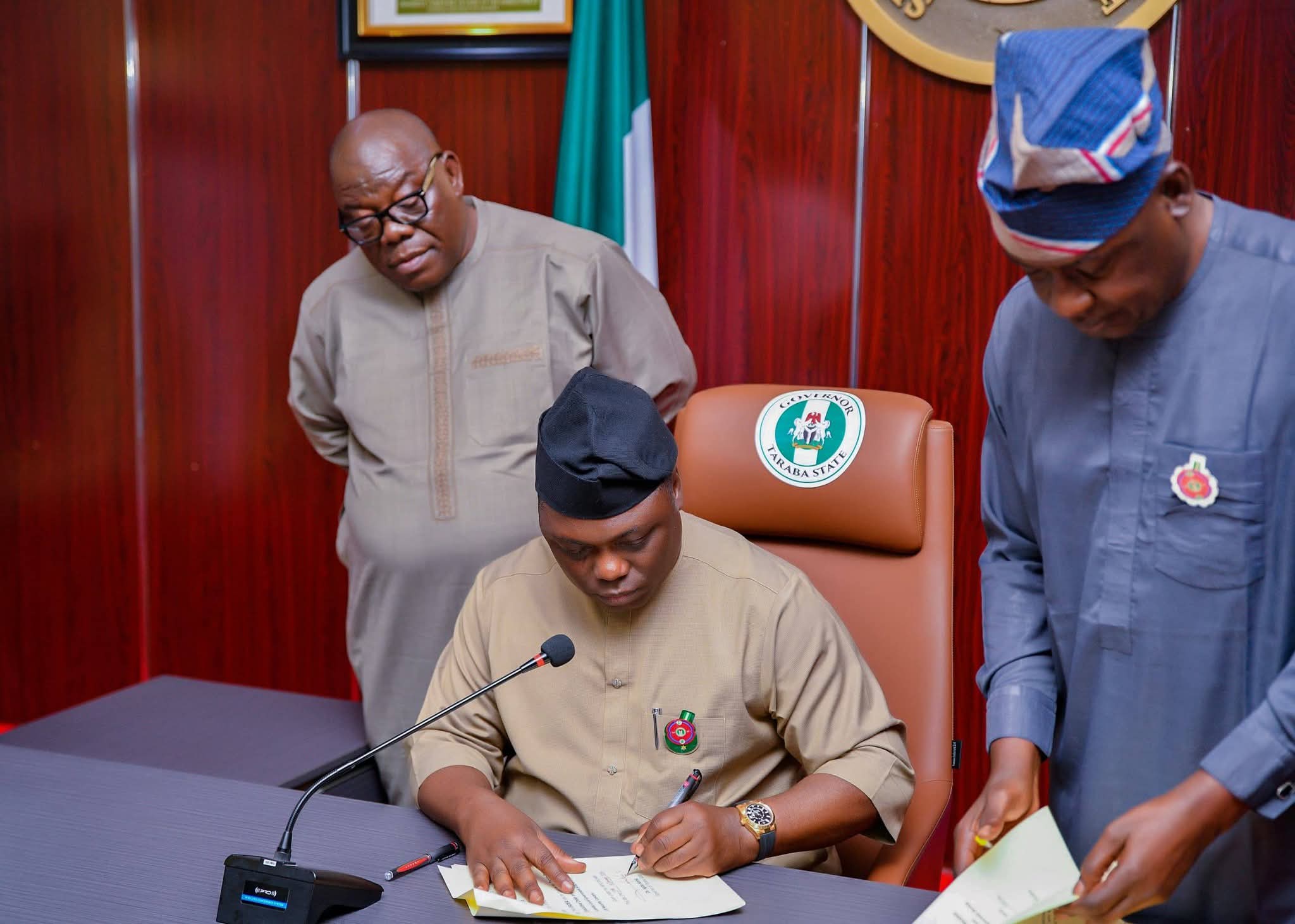
The latest order was signed by Governor Agbu Kefas in June 2026. This was the third attempt to stop illegal mining since he took office in 2023. Each order paused activities, and mining camps shut down. But as soon as enforcement teams leave, the miners return, and the flow of gold, sapphire, and other minerals starts again.
This ongoing issue raises an important question. Why is Taraba, rich in minerals, finding it hard to stop illegal mining that costs them billions every year?
A booming illegal market
The losses in Taraba reflect a bigger issue in Nigeria. The House of Representatives Committee on Solid Minerals says Nigeria loses about $9 billion yearly to illegal mining. The Nigeria Extractive Industries Transparency Initiative (NEITI) reported that the solid minerals sector contributed only ₦401 billion, which is 0.72 percent of the GDP, in 2023. They blame this poor performance on weak regulation, unclear licensing, and criminal networks.
Taraba is a clear example of these problems. A previous investigation showed that illegal mining around Mayo Sina in Nguroje, Sardauna Local Government Area, created a booming underground market. Blue sapphire worth between ₦60 million and ₦100 million was sold daily, mostly to foreign buyers from Senegal, Mali, Guinea, and Cameroon.
The investigation found that miners worked without licenses while middlemen ran the trade. Many local communities depended on this mining for their livelihoods. Interviews with miners, local residents, and officials suggest that illegal mining has formed a strong network that survives despite government crackdowns.
In December 2024, another investigation revealed that illegal miners returned to Abujan Leda in Jamtari Ward, Gashaka Local Government Area, after security forces had shut down their camps. Labourers told reporters they often got tips before raids, allowing them to leave temporarily and then return to extract sapphire, quartz, and other minerals. Residents said unclear mining rules and local collusion allowed illegal miners to keep coming back.
In September 2023, the Taraba State Environmental Protection Task Force raided a site at Mayo Sina, seized 22,373 kilogrammes of blue sapphire, arrested over 100 suspected illegal miners, and took mining equipment. This was one of the largest gemstone seizures in Taraba's history. An official at the Taraba State Bureau for Solid Mineral Resources, who wished to remain anonymous, said illegal mining has gone on for years in Sardauna, Karim Lamido, Bali, Gashaka, Kurmi, Ussa, and Yorro local government areas despite government efforts.
Why crackdowns are not working
Interviews with miners, residents, and officials, along with earlier reports, show that illegal mining has become a strong network that can survive government actions. To avoid clashes with security forces, these operators are mobile, use local information, and have well-established supply chains.
Court records from January 2025 showed that suspects arrested at a mining site in Gashaka came from Plateau, Bauchi, and Niger states, in addition to Taraba. This shows the interstate nature of illegal mining. The Chairman of the Environmental Protection Task Force, Jeremiah Faransa, said the task force also arrested suspects from Cameroon, Burkina Faso, Mali, and Chad, highlighting how the trade attracts people from other countries.
Most miners use basic tools. But repeated seizures of explosives and detonating cables show that some have started using more dangerous mining methods. Taraba's geography adds to the challenge of enforcing the law. Many mining sites are hidden in forests and valleys, making it hard to monitor them. Security officials say operators often hear about raids before they happen, allowing them to escape before enforcement teams arrive.
This pattern happened again in July 2026 when the Taraba Anti-Illegal Mining Taskforce raided a gold mining site at Mayo Kam in Gantu village, Bali Local Government Area. Despite weeks of intelligence gathering, most miners fled into the forests before security arrived, and only two were arrested. Community members also mentioned that local miners have a tough deal with foreign buyers.
Sources have said that many artisanal miners do not know the international prices for gemstones. This allows buyers from Guinea, Senegal, Sri Lanka, Thailand, China, and Europe to set the prices before exporting the minerals.
Government actions
After taking office in 2023, Governor Kefas suspended mining activities through an executive order. He cited environmental damage, water pollution, and the exploitation of local communities. This order created the Taraba State Task Force on Environmental Protection, Public Safety, and Prohibition of Deforestation, led by Mr Faransa, and set up a Special Mobile Court to punish offenders.
According to Mr Faransa, the task force arrested over 3,000 suspected illegal miners and found more than 20,000 mining sites across the state. But illegal mining continued, leading to two more executive orders. The latest one in June 2026 shifted focus to security concerns after reports linked illegal mining to rising insecurity in some areas.
This order also formed a second enforcement group, the Anti-Illegal Mining Taskforce, chaired by Emmanuel Jamu. Governor Kefas has emphasized that the government is targeting illegal miners, not legitimate investors. "Our actions are directed at illegal operators whose activities continue to undermine security, destroy the environment, and deny the people of Taraba the benefits of their natural resources," the governor said after signing the latest order.
Concerns over enforcement
While many residents support the crackdown, some have raised concerns about the enforcement operations. Questions arose when excavators and mineral detection equipment, said to belong to the Taraba State Government, were destroyed during actions in Akwana, Wukari Local Government Area.
Matsai David, the Permanent Secretary of the Bureau for Solid Mineral Resources, said he had only moved the equipment on the governor’s orders and did not know what happened after that. Civil society groups like Taraba Concern Citizens criticized the destruction, saying the equipment could have been used again for lawful mining.
The state government has not shared any updates on investigations into the incident.
Communities suffering
The ban on mining activities has hurt communities that depend on artisanal mining. In Sardauna Local Government Area, members of the Women Miners and Multi-Purpose Association said they lost their main source of income when the Mayo Sena mining site was shut down. The president, Bagu Kabri, explained that many members are indigenous Mambilla women who relied on mining to support their families and pay school fees.
Licensed miners have also complained. Salisu Maizare, the North-east Zonal Secretary of the Association of Nigerian Miners, criticized the arrest of licensed miners near the Taraba-Adamawa border, even though they had valid licenses. While he again condemned illegal mining, he asked the government to differentiate between licensed miners and criminal networks to not discourage lawful investment.
What’s next?
The Taraba Government claims that the repeated suspensions of mining are only temporary while they plan broader reforms. Officials say a new Executive Order No. 6 will enhance protections for host communities, improve border checks, promote local processing, and set clearer licensing rules for artisanal miners.
It remains unclear if these reforms will be effective. For more than ten years, illegal mining in Taraba has survived changes in government and repeated crackdowns. Its survival shows not only the huge profits of the trade but also weak regulations, open borders, difficult terrain, and increasingly skilled criminal networks.
Until these issues are fixed, Taraba's mineral wealth will likely continue to benefit illegal miners instead of driving economic growth. As the government prepares more reforms, the key challenge will be not how many orders they issue but whether they can dismantle the networks that have let billions of naira slip away year after year.

Drop your comment
No comments yet — be the first to drop the gist 👇