ISWAP Makes Money by Targeting Military Supplies in Nigeria
ISWAP targets military supplies to fund its operations. New research shows how they pay fighters based on the weapons and gear captured during attacks.
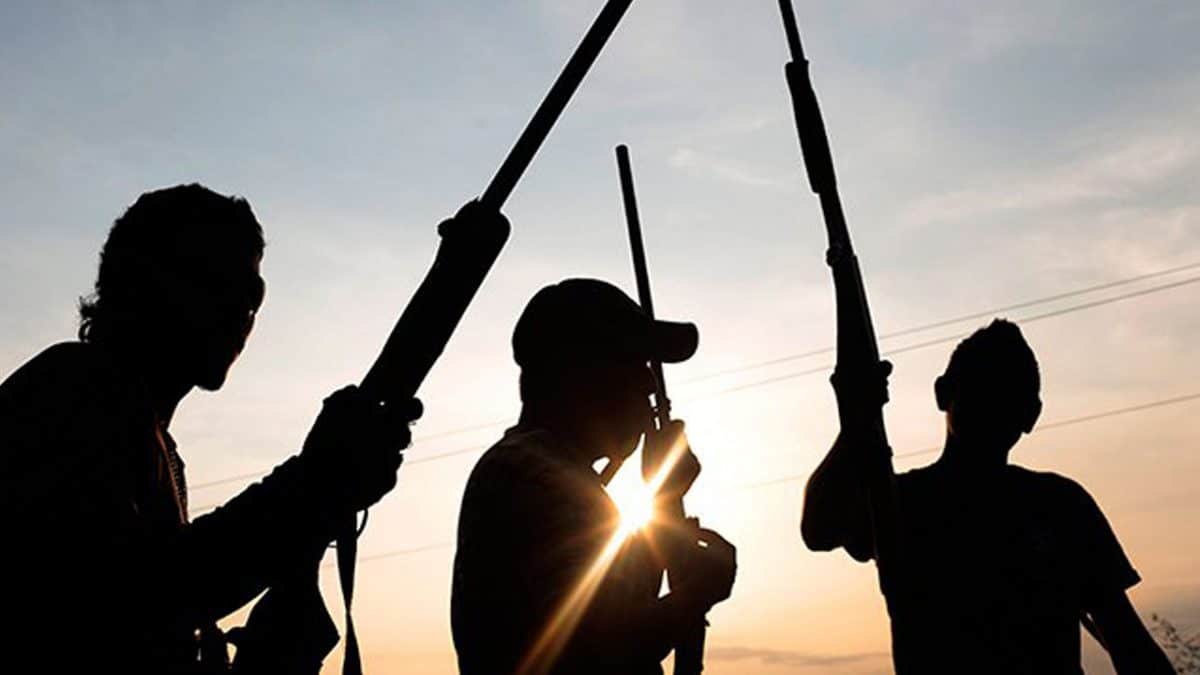
Islamic State West Africa Province (ISWAP) pays its fighters based on the weapons and military gear they capture from attacks on Nigerian military bases and others in the region. The Islamic State sets a fixed price list for payments that includes amounts for weapons, ammunition, and military vehicles. This information comes from new research by the Institute for Security Studies (ISS).
The ISS has shown before how ISWAP raids military bases to loot supplies, unlike their rival group, Jama’tu Ahlis Sunna Lidda’awati wal-Jihad (JAS), which mainly targets civilians. ISWAP aims to gather weapons, cut down on arms smugglers, and strengthen its control in the Lake Chad Basin.
These reasons still hold true. But new details reveal a payment system that supports ISWAP’s goals.
Sources with knowledge of ISWAP’s finances and operations, including former fighters, told ISS how the finance department tracks what they capture, known as ghanimah. The group keeps one-third of the total loot and shares the rest with those who took part in the attack.
For example, an AK-47 is worth $750, while a rocket-propelled grenade costs $1,000. A box of ammunition can bring in $500 to $1,000, depending on the size. A pickup truck with a heavy weapon, like those shown in ISWAP’s propaganda after attacks, is valued at $30,000. These payments are made in naira, and these amounts are significant in the Lake Chad Basin economy.
In the four countries of the region, Cameroon, Chad, Nigeria, and Niger, monthly minimum wages range from $53 to $108. Gross domestic product per person falls between $775 and $1,972. In areas where Boko Haram operates, real incomes are much lower. Years of conflict and climate issues have left these communities struggling economically.
The way ISWAP uses financial incentives makes its attack methods unique. This explains the focus on specific military bases instead of random ambushes. On the other hand, JAS fighters mainly earn money through direct attacks on civilians. ISWAP does not allow this among its members.
ISWAP carefully controls weapons. Members usually don’t carry arms unless they are on an operation. This means there are fewer chances to rob civilians. In contrast, JAS has no such rules and often attacks camps for displaced people.
The income methods of each faction of Boko Haram shape how they interact with local civilians. This affects which group can maintain support from the community.
Both groups have found ways to pay their fighters, showing they understand the need for financial rewards. Besides ghanimah, ISWAP also pays some fighters salaries of ₦75,000, which is a bit more than Nigeria’s national minimum wage of ₦70,000, or $53, from its own funds.

Former fighters told ISS that the pricing system for ghanimah helps attract and keep members when belief alone is not enough. Without it, ISWAP would struggle to keep newer fighters, especially those recruited through pressure or financial reasons.
Interviewees added that making fighters hand over weapons, and paying them, helps reduce the chances of internal problems and maintains order.
ISWAP’s approach has clear effects on how responses are created. The money flows through a known route. The Islamic State sends money via Dubai to Kano in Northwest Nigeria or N’Djamena in Chad, using currency exchange networks. Local couriers then carry the cash to hideouts around Lake Chad, as ex-fighters told ISS.
In June 2026, the United States designated a Nigerian currency exchange operator, Mukhtar Muhammad, and three of his companies for providing financial help to ISWAP. In 2021, the United Arab Emirates arrested and convicted six Nigerians for moving funds from Dubai to Boko Haram in Nigeria. The US imposed sanctions on them in 2022.
All those convicted in the UAE and later sanctioned by the US had addresses in Kano. Former fighters said Alhaji Surajo, who worked between Dubai and Kano, was a key player. ISS could not confirm if this was Surajo Mohammed, who was convicted in the UAE for sending $782,000 from Dubai to Boko Haram and is now reportedly unreachable by ISWAP.
Financial intelligence units need to track ongoing transactions and suspicious currency exchange activities along the UAE-to-Kano and UAE-to-N’Djamena routes to disrupt the payment process.
By building a finance department that supports its operations, ISWAP has created systems that can survive the loss of leaders. When Bukar Mainok, an ISWAP leader, was killed in the US-Nigeria strikes in May 2026, the group kept functioning. This highlights the need to go beyond just targeting leaders to finding the networks that help ISWAP stay strong.
Improving military bases and boosting response capabilities against ISWAP attacks are also necessary to lessen the financial reasons for these attacks.
As Africa faces more global jihadi violence, it is crucial to better understand the financing networks that help groups like ISWAP.


Comments
No comments yet.