Kebbi's Security Crisis: Understanding the Recent Attacks from Maga to Makuku
A recent attack in Kebbi State resulted in the deaths of ten police officers and two civilians. The situation highlights the ongoing security challenges in the region.
On Monday, 10 August, ten police officers and two civilians were killed in a clash with a large armed group near Makuku in Sakaba Local Government Area of Kebbi State. The police later confirmed that a vigilante was also killed during the incident.
Police in the state told PREMIUM TIMES that officers intercepted a heavily armed group along the Rafin Makuku axis around 9:25 a.m. The group was moving between Zamfara and Kebbi states at the time.
Police spokesperson Bashir Usman reported that at least 17 suspected bandits were killed and four motorcycles belonging to the attackers were destroyed. Two police officers sustained injuries. He warned that casualty assessments were ongoing as security forces chased after the fleeing members of the group.
Later police reports indicated that over 200 armed men attacked a security camp at Makuku at about 6 a.m. This led to reinforcements being sent in, supported by the army and air force. The gun battle reportedly lasted more than two hours.
The police confirmed that one vigilante was killed, in addition to the ten police officers and two civilians. They believed that at least 17 attackers were also killed during the clash. Mr Usman explained to PREMIUM TIMES that both accounts were about the same attack.
He stated that the attackers approached Makuku in three groups from different directions, trying to surround the community and the security camp at its entrance. He added that an attack on the camp was part of a larger assault on Makuku because “the camp is located just as you enter the village.”
Mr Usman's explanation clarifies the broader descriptions of the attacks on the security camp and engagements around Rafin Makuku. But he did not explain how the air force operation fit into the timeline.
The Makuku attack was not an isolated incident. Nearly nine months earlier, on 17 November 2025, armed men invaded the Government Girls’ Comprehensive Secondary School in Maga, Danko/Wasagu LGA. They abducted 25 schoolgirls, killed the school’s vice-principal, Hassan Makuku, and injured another staff member.
Though the girls were eventually freed, the attack highlighted serious security gaps around schools and led to widespread closures. Kebbi ordered secondary and tertiary institutions to shut down temporarily due to security concerns. The federal government also closed 47 Federal Unity Colleges following the school attacks in Kebbi and Niger.
The situation worsened when Governor Nasir Idris revealed that soldiers stationed near the Maga school pulled back just before the attack, despite having prior intelligence about a possible raid. The Minister of State for Defence, Bello Matawalle, later said the army was investigating why the soldiers withdrew.
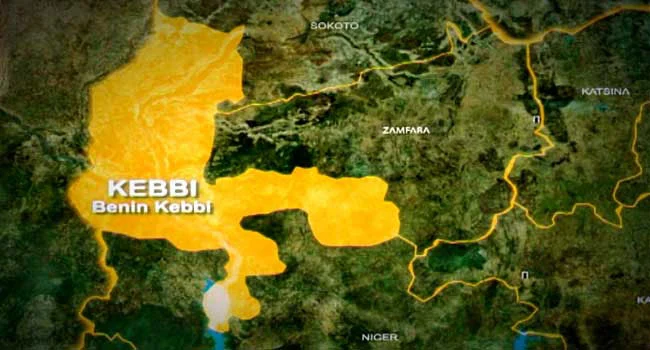
Since then, the situation has changed significantly. Attacks and security operations have impacted various communities across Kebbi, including Danko/Wasagu, Sakaba, Shanga, Bagudo, Dandi, and Bunza.
Different groups have been involved in these incidents. Authorities have labeled some groups as bandits or Lakurawa terrorists, while the affiliations of some kidnappers are still unclear. Security forces have also responded to armed movements across state and even international borders.
Evidence does not show one organization operating uniformly across Kebbi. Instead, there are overlapping security threats from various actors targeting different areas.
Pressure on Security
The spread of insecurity in Kebbi is not new. A report from the European Union Agency for Asylum in November 2025, using ACLED data, recorded 70 security incidents and 156 deaths in Kebbi from 1 January 2024 to 31 August 2025.
Out of these incidents, 40 were classified as violence against civilians while 28 were battles. The incidents were noted in 18 of Kebbi’s 21 LGAs. Danko/Wasagu had the highest number of incidents with 19, followed by Arewa with 12 and Shanga with nine. Suru and Augie each had five incidents.
The data does not confirm that the same armed groups were responsible across those areas. But it highlights that insecurity was already widespread before the recent incidents reported by PREMIUM TIMES.
Kebbi South has been a recurring problem. Danko/Wasagu, Sakaba, and nearby areas are close to states with long-standing issues of banditry. Local officials have described some insecurity as a cross-border issue rather than violence stemming solely from within Kebbi.
This concern was raised again at the end of July after armed men attacked Tudun Bicci in Danko/Wasagu. Four people, including two local forest guards and two civilians, were killed while a soldier was reported missing. The council chairperson, Hussaini Bena, said the attackers struck farmland before security personnel intervened.
Mr Bena attributed the ongoing violence in the area to armed-group camps in nearby Zamfara and Niger states, from where attackers crossed into Kebbi communities. The Makuku attack occurred less than two weeks later.
Initial reports on 10 August indicated that security forces detected a large armed group moving from Zamfara towards Makuku. The Air Component of Operation FANSAN YAMMA reportedly launched strikes against the advancing group. Estimates of the group's size and casualties from the air operation have varied and have not been confirmed independently.
Mr Usman later explained that security personnel were facing a coordinated assault with armed men approaching Makuku from three directions. The exact sequence of events during the ground engagements and the reported air operation remains unclear.
Previous Attacks on Makuku
The August attack was not the first time a large armed group targeted Makuku. In June 2025, the Kebbi State Government confirmed an armed group attacked a temporary Mobile Police post at Makuku.
Officials said Mobile Police officers engaged the attackers but were overwhelmed and forced to retreat. The attackers burned a patrol vehicle and took several rifles before the state government requested support from the Nigerian Air Force. No deaths were reported then.
At that time, reports described Makuku as part of Zuru LGA. However, Mr Usman clarified to PREMIUM TIMES that Makuku is under Sakaba LGA, though it is also part of the Zuru Emirate Council.
He noted that this relationship might explain why it was described earlier as Zuru. More importantly, the police spokesperson confirmed that both the June 2025 and August 2026 incidents involved the same Makuku community.
After the June incident, the security base was strengthened with more personnel and additional structures, including the deployment of the police’s Special Intervention Squad. However, Mr Usman stated that the August attack was not just a repeat of the previous incident.
The attackers approached the community from three directions while security forces engaged them at different points to stop them from entering Makuku. That clarification changes the accountability question.
The issue now is not whether a fortified police base was simply overrun again. The tougher question is whether the additional resources and specialist forces put in place after the 2025 attack were enough to handle another large-scale threat without heavy losses.
It also raises questions about what intelligence was available before the August attack, how soon the approaching groups were detected, and how fast reinforcements and air support arrived.
But Kebbi South is just one part of the state's wider security challenges. In March 2026, suspected Lakurawa terrorists ambushed security personnel in Shanga LGA after they mobilized in response to a potential attack on a community.
Nine soldiers, one police officer, and a civilian were killed. Governor Idris later visited injured personnel, and the Emir of Yauri, Muhammad Abdullahi, called for better intelligence and surveillance.
Five months later, the government was again reinforcing security in the Yauri area. On 7 August, just three days before the Makuku attack, Mr Idris visited newly deployed army personnel in Yauri and thanked the Chief of Army Staff for sending extra troops. He linked improved security to farmers being able to return to their fields safely.
Further west, Bagudo faced its own challenges. In November 2025, three immigration officers were killed when suspected Lakurawa terrorists attacked their camp near the Benin Republic border. Another officer was injured in the same attack.
Earlier that month, a Customs outpost in the same area was attacked, resulting in one officer's death. In June 2026, attackers struck Tsamiya in Bagudo, burned an NSCDC outpost, and abducted a resident. Police later announced more deployments in the area.
The pressure on security was again visible soon after the Makuku incident. On 11 August, troops of Sector 2, Operation FANSAN YAMMA, stopped an attempted attack by suspected Lakurawa fighters on Ungwan Hassan in Dandi LGA.
TVC News reported that troops acted on intelligence about the group's movement, set an ambush, and forced the fighters to retreat. They recovered motorcycles, mobile phones, communication radios, and a Nigerien identity card.
This incident highlights the geographical challenges: within about a day, security forces were dealing with suspected bandits in the Zamfara-facing Sakaba axis and suspected Lakurawa fighters in Dandi, closer to the international border.
Officials have linked some incidents in Shanga, Bagudo, and Dandi to Lakurawa or suspected terrorists, while other attacks in Danko/Wasagu and Sakaba have been classified as banditry. These terms should not be used interchangeably.
In June, the police reported that they arrested 11 people suspected of connections to Lakurawa, bandit groups, and alleged Boko Haram elements during operations across the state.
Various Targets
The targets of these attacks have varied widely. In Maga, schoolchildren were kidnapped. In Tudun Bicci, farmers, civilians, and local guards faced violence. Border-security installations in Bagudo were also attacked. In July, gunmen abducted Kebbi State High Court judge Faruku Bunza from his home in Bunza LGA.
Police confirmed that the kidnappers demanded ransom, though details about his eventual release remain unclear. Security forces have also faced heavy losses. The March ambush in Shanga killed nine soldiers and one police officer, while the Makuku incident resulted in another ten police personnel being killed.
These events raise a more specific question than whether armed groups have changed their strategies: are they becoming more capable of attacking security personnel in Kebbi, either through ambushes or direct confrontations?
While the incidents highlight serious risks for security personnel, they alone do not establish a trend in tactics. To confirm that, a detailed comparison over several years would be needed, looking at attacks on security formations and personnel, their locations, the involved actors, casualty levels, and whether the frequency or severity of such incidents has changed.
What has been established is that security authorities have frequently reviewed or adjusted their responses.
Changes in Strategy
In early June, Governor Idris held an emergency security meeting after renewed attacks and ordered a review of the state’s security strategy. This meeting included senior officials from military, police, intelligence, civil defense, and vigilante groups. The governor expressed concern about renewed violence in Wasagu Chiefdom and parts of Argungu Emirate.
He stated that the government was ready to introduce further measures to tackle the issue. Less than two months later, another emergency security meeting was held.
On 5 August, security chiefs gathered again to review “emerging security challenges” and improve coordination among agencies. Commissioner for Home Affairs and Internal Security Haliru Wasagu said the talks focused on refining the security structure and enhancing collaboration.
Two days later, Mr Idris visited additional army personnel deployed in Yauri. Three days after that visit, the police suffered the tragic losses at Makuku.
After the Makuku attack, Inspector-General of Police Olatunji Disu ordered intensified security operations in Kebbi. He sent a team led by a deputy inspector-general of police to meet with state authorities and reinforce efforts to prevent more attacks. The police said the response would involve increased intelligence-led and coordinated operations.
This sequence does not automatically prove that government efforts failed. Security deployments can disrupt armed groups or prevent attacks that do not make the news, and measuring their impact can be challenging based solely on media reports.
The Makuku attack itself shows that authorities made changes after the prior incident. The police stated that the base was fortified, personnel increased, and a Special Intervention Squad deployed after the June 2025 attack.
But repeated reviews, reinforcements, and tactical adjustments create an obligation for accountability. Authorities should be able to demonstrate whether these measures improved early warning systems, response times, community protection, and the ability to stop armed groups from entering vulnerable areas.
There are signs that the security landscape is shifting in another part of the state. Daily Trust reported that nine checkpoints previously manned by police, military, and Customs personnel between Unguwar Jeji and Bunza have been abandoned, along a wider route leading towards Kalgo and Kamba at the international border. However, the police disputed claims that this worsened the security situation.
Mr Usman stated that some static checkpoints had been “collapsed,” while others were strengthened as part of a tactical shift towards mobile and intelligence-led patrols due to bandits and suspected Lakurawa fighters increasingly targeting fixed positions.
This differing view provides a clear test of the security redesign officials say is in progress. In cases where static checkpoints have been consolidated for mobile patrols, the measure should not simply be whether roadside posts remain visible. It’s about whether the new approach reduces attacks, improves response times, and maintains or enhances protection for residents, motorists, and border communities.
Public statements after the June and August meetings included broad commitments to better coordination, intelligence sharing, and support for security agencies. They included less information on whether these interventions are leading to measurable improvements.
The statements reviewed by PREMIUM TIMES do not offer a consolidated set of figures showing how attack frequency or fatalities have changed since the June security review, average response times to distress calls, the communities covered by new deployments, the number of people still held by kidnappers, or how many security-related arrests resulted in prosecutions. They also do not provide comparable civilian-impact indicators covering farming access, school attendance, or displacement.
Such figures would provide a stronger measure of progress than the number of security meetings held.
The Hidden Costs of Insecurity
Deaths and abductions are the most visible signs of insecurity. But they do not capture the entire cost. The attack in Maga disrupted education beyond the 25 girls who were taken. Following the incident, Kebbi temporarily closed secondary and tertiary institutions, reflecting concerns about whether schools could safely remain open.
Agriculture is another critical area affected. The attack in Tudun Bicci occurred around farmland. In Yauri, Governor Idris linked security operations to making affected areas safe enough for farmers to return to their crops.
The scale of this disruption remains unclear. The lack of consolidated data on displacement is not new. The EU Agency for Asylum's November 2025 review found no figure for conflict-related internally displaced people in Kebbi as of August that year.
However, the report noted that residents were displaced to camps in Kangiwa after attacks in Arewa Dandi and that reports indicated hundreds were displaced in Zuru and Danko/Wasagu in June 2025.
The report also found no information on conflict-induced returns in Kebbi during the reviewed period. This ongoing issue raises questions about whether Kebbi’s emergency management authorities now have a consolidated register showing how many residents have been displaced by armed violence, where they came from, and how many have returned safely.
The same issue applies to agriculture and education. Recent government statements and public security briefings do not give a current figure for the number of farming households unable to access their land or how much farmland has been impacted.
Government announcements can indicate whether a school has officially closed or reopened. They do not reveal if parents quietly withdraw their children, if teachers seek transfers, or if students move to schools further away from exposed areas.
Understanding Kebbi’s security situation goes beyond just counting deaths, arrests, and military operations. It requires tracking displacement, access to farmland, school attendance, and disruptions to markets and public services.
Financial Oversight
The response to insecurity also has a financial aspect. Kebbi’s 2026 approved budget is about ₦642.93 billion. The official Citizens’ Budget allocates ₦20.56 billion to the Ministry of Home Affairs and Internal Security, providing a clear budget line through which part of the government’s security response can be scrutinized.
This figure does not represent Kebbi’s total security spending. Security-related expenses may also go through the Governor’s Office, local governments, emergency interventions, and other ministries and agencies, while part of the ministry’s allocation could cover administration rather than operations.
The accountability question is not just about how much was budgeted, but how much has been released and spent, what interventions the money funded, and what measurable outcomes followed.
Insecurity may also influence public revenue and the operational capacity of enforcement agencies. Assistant Comptroller-General of Customs and Zone B Coordinator Nsikak Umoh stated that insecurity affecting Customs formations in Kebbi, Sokoto, Katsina, and Zamfara forced some commands to scale back operations or take more cautious approaches, leading to reduced revenue collection.
She noted that these constraints had led to lower revenue collection and that Customs was encouraging greater use of intelligence-led operations to minimize personnel exposure. However, the service did not provide a Kebbi-specific figure, so it is unclear how much revenue collection or operational activity has declined in the state.
The government has often announced support for security agencies, including vehicles, logistics, and other assistance. A more thorough assessment would need to match these expenditures with identifiable interventions and results.
Distinct Threats
One risk in analyzing Kebbi’s insecurity is treating different incidents as one story. Evidence does not show that the armed men who abducted the Maga schoolgirls, those responsible for the Shanga ambush, the attackers in Bagudo, the kidnappers of Justice Bunza, and the armed group involved in Makuku were all part of the same organization.
Officials have used various descriptions, including bandits, Lakurawa terrorists, and unidentified kidnappers. Their motives also seem different. Some incidents focus on kidnapping and ransom. Others target security formations or border installations. Still others attack farming communities.
The regional environment is also becoming more complex. An Africa Centre for Strategic Studies analysis published on 12 August noted that fatalities linked to militant Islamist groups operating in north-western Nigeria increased from zero in 2024 to 136 in 2025 and 504 in 2026.
The centre also reported signs of collaboration between Sahelian militant networks and Nigerian armed groups, including Lakurawa and criminal gangs. These figures do not provide a Kebbi casualty count and do not confirm that the bandit groups and suspected militant actors involved in the incidents reviewed by PREMIUM TIMES operate under a unified command.
Nonetheless, they give context for why authorities need to differentiate between actors while also investigating potential overlaps in weapons, fighters, intelligence, or logistical networks.
Many Kebbi incidents share a significant geographical feature: the potential for movement across state or international borders. This makes cross-border intelligence and operational coordination vital for an effective response. Armed groups do not stop operating when they cross an administrative boundary. Yet, state governments, police commands, local governments, and many civilian institutions remain organized around those boundaries.
The effectiveness of Kebbi’s response may depend not just on how many personnel are stationed in the state, but on how well intelligence and operations are coordinated across neighboring commands and affected areas.
From Maga to Makuku
The attack in Maga revealed the vulnerability of schools and children. The Shanga incident highlighted the dangers faced by soldiers and police responding to threats in their communities. Bagudo exposed the weaknesses in border-security infrastructure, while Tudun Bicci brought violence to farmland and local protection personnel. Dandi presented another example of pressure along the international border.
Makuku adds another layer. The same community faced a major armed attack on a temporary police post in June 2025. The police say they enhanced the base with more personnel and structures, including deploying the Special Intervention Squad.
Approximately 14 months later, police headquarters stated that more than 200 armed men carried out another assault on Makuku. This confrontation resulted in the deaths of 10 police officers, one vigilante, and two civilians.
The repeat of such an attack does not mean the post-2025 security measures were ineffective. Police assert that the attackers were engaged before they could enter the community, and that the fortified base was not simply overrun again.
But it raises a tougher question about effectiveness: whether the additional manpower, specialist deployments, intelligence, and reinforcement capacity introduced after the first attack were enough to manage a threat of that scale without heavy losses.
Elsewhere, authorities are also reorganizing static security positions in favor of mobile, intelligence-led patrols. Overall, the evidence does not show one organization expanding uniformly across Kebbi or that every part of the state is facing the same threat.
It highlights a more complicated picture: insecurity is present across most of the state’s LGAs, known vulnerable areas are under recurring pressure, different armed groups are exploiting various routes, and security agencies are changing how and where they deploy.
For Governor Idris’s administration and federal security agencies, progress cannot simply be measured by deployments or emergency meetings. The more significant tests are whether attacks become less frequent and less deadly, known vulnerabilities become more challenging to exploit, kidnappings decrease, schools remain safely open, farmers can access their fields, and security personnel can operate without suffering heavy losses.
The state's next challenge is not just to react to the latest attack. It is to show that its security system is adapting as quickly as the armed threats change across its borders and vulnerable areas.





Comments
No comments yet.