Lessons for INEC from US Elections on Logistics
The long waits for election materials in Nigeria highlight ongoing logistics issues for INEC. Lessons from US elections could help improve future processes.
I witnessed the FEDECO elections up close, and what stands out is the long wait by voters at polling stations. Voters waited. Officials waited. Whole communities waited for election materials that seemed to be always on their way but never arrived. The frustration was real, and it had nothing to do with politics. It was all about logistics.
More than 40 years later, Nigeria has changed its electoral management bodies many times, from FEC to FEDECO, NEC, NECON, and now INEC. Despite these name changes and shifts in structure, the issues of electoral credibility, transparency, and integrity still linger. The name has changed, but the problem remains.
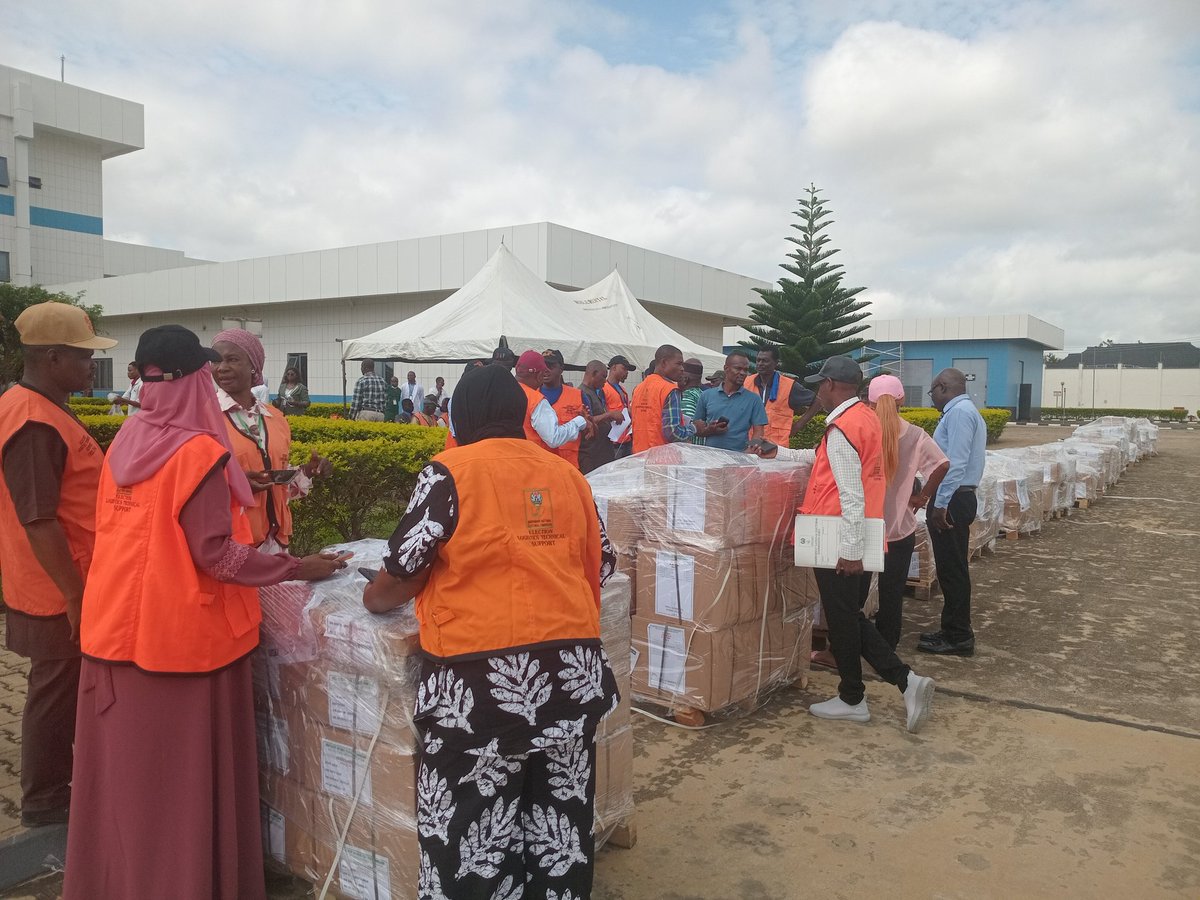
Today, Nigeria is a much bigger country. It has over 176,000 polling units, and the Independent National Electoral Commission (INEC) plans to deploy about 1.4 million ad hoc staff for the upcoming general election. Yet the old complaint continues. Election materials still arrive late in many places, and every late arrival raises the same uncomfortable question: whose vote was lost because of the delay?
To his credit, INEC chairman, Professor Joash Amupitan, has acknowledged this issue. In October, he set up an Electoral Logistics Committee for the 2027 elections and stated that no Nigerian should be denied their vote because materials arrived late. He also mentioned that an election is only as strong as its logistics. With the polls less than three months away, the commission has time to tackle one more serious question. It is the one I want to ask this week.
How can an election management body ensure that every vote is collected, protected, transported, and counted on time, no matter how remote or challenging the community is?
That is the burning question on my mind for this edition. Riverine communities in the Niger Delta, island settlements, rural roads that become impassable in the rains, insecurity, and sheer distance all make moving people and materials complicated. An answer, or at least part of one, came from an unexpected place on November 3, during the American midterm elections.
In Los Angeles County, the Sheriff’s Department used eight helicopters, landing at seven helipads, to collect sealed ballot containers from places like Lancaster, Palmdale, and Van Nuys and flew them to the county’s central processing facility in the City of Industry. LAist, a news organization in Los Angeles, reported that officials aimed to cut transport delays and avoid giving communities closer to the center an advantage in early results.
The helicopters represent a partnership between the Registrar-Recorder/County Clerk, which manages elections, and the Sheriff’s Department, which provides transport and security. This relationship is not new. A 2012 report by electionline Weekly quoted a Registrar’s official saying the Sheriff’s Department had been supporting ballot transport from Catalina Island for over 30 years, using boats or aircraft depending on the weather. The election office chose the method. The Sheriff confirmed it three weeks before polling day.
The rules for custody are as important as the aircraft. Ballot containers are sealed, and their contents are recorded before they move. Departure times and container numbers are sent ahead to the processing center, and the numbers are checked again upon arrival. No one is allowed to be alone with ballots or equipment.
Two things stand out. First, the election authority never gave up its control. The Sheriff provides transport; the Registrar keeps the ballots, manages the process, and counts the votes. Second, the system does not rely on just one mode of transport. Fog has diverted ballot helicopters in previous Los Angeles elections, and ground routes continued. Having backup plans is part of the design. There is no evidence of a single countywide agreement governing all this. What exists is a long-standing operational partnership with clearly defined roles, which is more useful to copy than a document.
Los Angeles is not alone. In Hawaii, Maui County arranged charter flights with Kamaka Air to bring ballots from Molokaʻi and Lānaʻi, with sealed containers, signed handovers, and election officials on board. The flights are planned in advance, not thrown together on election night. In Arizona, Coconino County moved ballots out of Supai, the Havasupai village at the bottom of the Grand Canyon, by mule train, with riders from both major parties. In Ohio, the Erie County elections board, the Sheriff’s Office, and the US Coast Guard work together to bring ballots back from Kelleys Island on Lake Erie, ensuring seals are checked and each transfer is recorded in the presence of both parties.

Sky, canyon, and lake. Three different places, three different vehicles, one design: established relationships with other public agencies, planned transport, and documented custody at each handover. That is the principle, and it can be applied elsewhere. Nigeria does not need helicopters for the Niger Delta any more than Arizona needed them for the Grand Canyon. It needs the structure, with transport suited to the terrain.
Here is what I am not saying. I am not asking INEC to copy America. I want it to finish what it has already started.
INEC’s own review of the 2023 general election pointed out transportation, procurement, reverse logistics, and security as areas needing improvement. The commission involved the National Union of Road Transport Workers, the National Association of Road Transport Owners, and the Maritime Workers’ Union of Nigeria in discussions. Its recommendations were clear: revise agreements with transport unions to address vehicle conditions, driver control, and the return of materials; collaborate with the Federal Road Safety Corps on roadworthiness checks; enforce penalties when providers fail; and improve supervision of transport agreements at the local government level. European Union observers also noted late deployment as a weakness of the 2023 elections.
These are not outside suggestions. They are INEC’s own findings. The question is whether they have become standard practice or just entries in a report. A recommendation is not a reform, and a reform is not a practice until it has been budgeted, assigned, and tested under pressure.
The new Electoral Logistics Committee and the Inter-Agency Consultative Committee on Election Security give INEC a natural place for this work. What is missing is a formal framework that makes cooperation predictable. Call it an Election Logistics Partnership Framework, based on four requirements.
First, written agreements that define roles: INEC for planning and custody of materials; the Police for protection; the Road Safety Corps for roadworthiness; maritime agencies and boat operators for waterways; transport unions and operators for vehicles and drivers; emergency agencies for contingencies. Second, advance planning. Classify every polling unit by accessibility, match transport to terrain, contract it early, and rehearse it. Third, a standard record of custody for every movement of sensitive materials, with a unique reference number, container count, seal numbers, times of departure and arrival, and the names and signatures of the releasing and receiving officials, plus a formal incident report for any broken seal or unexplained delay. Fourth, public reporting and an independent post-election review, so that failures are counted as carefully as votes.
A word of caution. In Nigeria, involving security agencies in handling election materials will always raise questions of neutrality, and rightly so. The American examples should not be seen as a push for giving security agencies more power over elections. In Los Angeles, the Sheriff moves the ballots; he does not count them. In Nigeria, INEC officials must stay responsible for materials at all times. Security personnel should protect without taking custody. Party agents and accredited observers must be able to witness important handovers. Faster transport does not replace the need for transparency in counting and timely publication of results.
INEC does not need to buy helicopters or bring in American procedures. It needs to act on its own findings, assign budgets, designate responsible individuals, and build partnerships that make these actions routine.
At the end of the day, democracy is judged not just by the right to vote but by a country’s ability to protect that vote and bring it home.

Comments
No comments yet.