Everything to know about the new house rent law in Abuja
The new house rent law in Abuja seeks to limit advance rent payments and protect tenants from illegal practices. It establishes a framework for rental agreements.

For many people living in the Federal Capital Territory (FCT), finding a place to live can cost hundreds of thousands, even millions, of naira at once.
On top of yearly rent, new tenants often face agency fees, agreement fees, and caution fees. Those already renting may find their rent increasing, pushing them to cheaper areas that are further away.
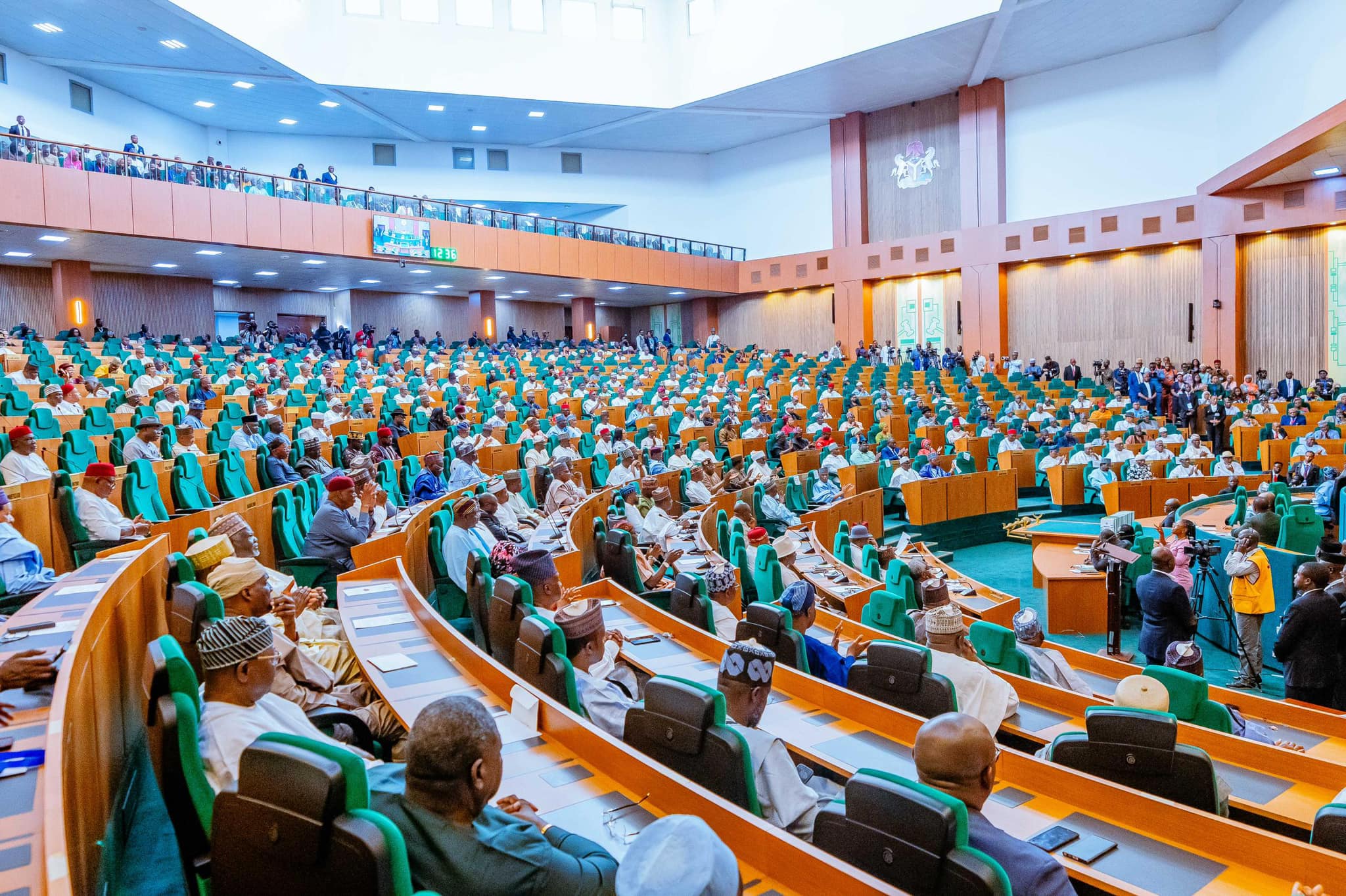
In light of this, the House of Representatives is considering a new bill to manage advance rent payments and protect tenants from what it calls illegal rental practices.
The Federal Capital Territory Advance Rent Regulation and Tenants’ Protection Bill, 2026 (HB.2839), sponsored by Paul Nnamchi (APC, Enugu) and Ahmed Doro (PDP, Katsina), had its first reading on Thursday, 22 October.
But this bill is not just about telling landlords how much rent they can charge.
A close look at the 17-page bill shows that it aims to create a full framework for rental agreements in the FCT. This includes advance payments, written contracts, agents, complaints, refunds, eviction methods, penalties, and how to resolve disputes.
What does the bill say?
The main point is in Section 4 of the bill.
Section 4(1) states that a landlord, estate agent, or property manager “shall not demand, receive or compel a tenant to pay more than twelve months’ rent in advance” to get or renew a tenancy.
This means they cannot make a tenant pay more than one year’s rent upfront. The bill does not stop advance rent or force monthly rent payments. It sets 12 months as the most a landlord can ask for in advance.
A landlord can still collect one year’s rent up front if that is what both parties agree on. But if they try to demand two or three years as a condition for tenancy, that will be illegal if the bill becomes law.
The bill also tries to stop landlords and agents from finding loopholes around this rule.
It lists things like intermediaries, hidden fees, mandatory service charges, and other tricks meant to collect more than 12 months’ rent as ways to evade the law.
Tenants can still choose to pay more
The bill does allow for exceptions. Section 4(4) states that a tenant can willingly pay more than 12 months’ rent in advance if “the tenant initiates the offer” and is not pressured by the landlord. The agreement must be in writing, and whoever receives the payment must prove they followed the rules.
This part could lead to disagreements during the legislative discussions.
While the bill tries to show the difference between voluntary and forced payments, it might be hard to prove a tenant really offered to pay several years’ rent when the landlord controls access to the property.
The bill covers more than just advance rent
The proposed law also aims to make the relationship between landlords and tenants clearer.
Section 5 requires landlords or their agents to give written tenancy agreements that include rent, payment schedules, the length of the tenancy, refundable deposits, fees, and the rights and duties of both sides.
“A landlord or agent shall not impose a fee, premium, charge or other compulsory payment unless its nature, amount and lawful basis were disclosed to the tenant before the tenancy agreement was concluded.”
Landlords and agents must also explain any compulsory fees before a tenancy agreement is signed and must provide receipts or electronic records for payments.
The bill also protects tenants from retaliation if they refuse to make illegal payments or if they report violations.
A landlord or agent cannot threaten or wrongfully evict such a tenant or impose extra charges.
Tenants can ask for refunds
The bill brings in a way for tenants to get back unlawfully collected rent.
Section 7 allows a tenant who has paid rent over the proposed 12-month limit to apply to the new FCT Rent Regulation and Tenants’ Protection Authority for a refund.
If the authority finds that the rent payment broke the law, it can order the landlord to refund the excess amount within 30 days.
The bill also allows for appeals to the FCT High Court if someone disagrees with the authority’s decision.
“7(1) A tenant who has paid rent in contravention of section 4 may apply to the Authority for a refund order. (2) Where the Authority determines that a payment was received in contravention of section 4, it may order the recipient to refund the unlawful amount within thirty days after service of the order.”
Setting up a new authority for rent regulation
Section 8 of the bill proposes creating the Federal Capital Territory Rent Regulation and Tenants’ Protection Authority.
This authority would take complaints, monitor landlords, estate agents, and property managers, issue compliance notices, help with mediation, order refunds, and report suspected crimes to law enforcement.
It would also set up complaint offices and electronic reporting methods across the FCT, including satellite towns, and publish regular reports on rental practices and enforcement results.
The governing board would include people from various sectors, including the FCT Administration, the federal ministry for housing, the federal ministry for justice, tenants, landlords, and property valuers.
The president will appoint the chairperson and board members, with Senate approval. The president will also appoint the director-general, again with Senate approval.
What happens if landlords break the law?
The bill suggests financial penalties for offenders.
Anyone found guilty of demanding or receiving illegal advance rent could face fines between ₦500,000 and ₦5 million.
Companies could be fined between ₦5 million and ₦20 million.
The court might also order refunds, compensation for losses, and payment of legal costs.
Not following a compliance notice from the proposed authority could lead to fines up to ₦1 million.
Estate agents and property managers are also covered under this law. If someone commits an offence through an intermediary, anyone who helped or authorized it could also be held responsible.
Stopping unlawful evictions
The bill does not only focus on rent amounts. It also looks at how some landlords might try to take possession of properties.

It bans violence or threats, cutting off essential services, damaging a tenant’s property, changing locks without permission, and other unlawful actions.
At the same time, it makes clear that tenants must pay rent legally due and landlords have the right to recover rent through legal means.
This is important because the bill aims to protect tenants while still respecting landlords’ existing property rights.
Will the bill lower housing costs?
This is a key question lawmakers need to answer.
The bill controls how much rent can be demanded upfront, but it does not limit how much landlords can charge as rent.
There is no cap on rent increases when renewing a tenancy.
A landlord who cannot demand two years’ rent upfront can still set a high yearly rent.
The bill does not tackle the shortage of affordable housing, building costs, mortgage access, or other reasons for rising rents.
Its success will depend on how well it is enforced.
The proposed authority must monitor landlords and agents, investigate complaints, and enforce its decisions across the FCT.
The bill also states that the authority should start working within six months after the law takes effect.
What the bill doesn’t cover
Even with its limits on advance rent, the bill does not fully regulate other charges that tenants face when renting in Abuja, like agency fees, agreement fees, and caution deposits. In Abuja, these charges can be random, with some tenants paying up to 40 percent of their rent for them.
Although Section 5 asks landlords and agents to reveal the nature and amount of these charges, it does not set a maximum percentage or amount for agency or agreement fees. It also does not define a standard limit for caution deposits. While refundable deposits must be stated in tenancy agreements, it does not give a clear formula for calculating them.
This means tenants may understand what they are paying for but still face high costs.
Section 4 stops landlords and agents from using fees not related to services to get around the 12-month advance rent limit. But this does not provide a complete regulation of legitimate agency fees or other rental costs.
So, tenants may still face large upfront payments even if the bill becomes law. A landlord might not be able to force a tenant to pay two years’ rent, but the tenant could still have to pay agency, agreement, and other fees, as long as those fees follow the law.
Another big issue not addressed is how salary earners will pay.
Many Abuja residents earn monthly salaries but are expected to pay a full year’s rent upfront, with some landlords asking for two years’ rent from new tenants. For workers who get paid monthly, gathering such a large sum can be hard, even if they can pay the rent over a year.
The proposed law would stop landlords from forcing tenants to pay over 12 months’ rent in advance. But it does not require landlords to accept monthly or quarterly payments.
So, a landlord could still demand full rent for a year upfront, as long as it does not exceed the proposed limit.
This means the bill deals with the length of compulsory advance rent but does not fully solve the financial issues caused by the yearly payment system.
A tenant who can’t raise 12 months’ rent at once may still struggle to find a place to live, even if the landlord is no longer asking for two years’ payment.
This is not the first time lawmakers have tried
This latest proposal is part of a longer effort by lawmakers to tackle rent practices in Abuja.
In January 2022, the Senate introduced a bill sponsored by Smart Adeyemi, then representing Kogi West, to manage rent payments in the FCT. This bill passed its second reading in February 2022.
At that time, PREMIUM TIMES reported that the proposal aimed to lower advance rent for new tenants from the usual one or two years to three months, followed by monthly payments.
Mr Adeyemi argued that the current system was too heavy on low-income residents, especially those who could not easily gather one or two years’ rent at once.
Supporters said advance rent was putting pressure on residents, while Chimaroke Nnamani, then senator for Enugu East, disagreed, saying rent payment should be driven by market forces, including land availability, building costs, and income.
He suggested that the government should focus on housing projects, mortgages, and housing credit instead of regulating private landlords.
Still, the Senate voted strongly for the bill at its second reading and sent it to the Committee on Housing and Urban Development for more work.
Unfortunately, the bill did not pass and expired before the end of the 9th National Assembly in May 2023.
Under Nigerian law, any bill that does not finish all stages of passage before the end of a four-year parliamentary term must be reintroduced.
The difference between the two bills is significant.
While Mr Adeyemi’s bill wanted to replace the yearly advance payment system with an initial three-month payment and monthly payments after that, the 2026 proposal allows landlords to keep asking for up to 12 months’ rent in advance.
This new bill does not go as far as the 2022 proposal in helping salary earners. It tries to stop compulsory payments beyond one year but keeps the yearly payment system.
This is important because limiting advance rent to 12 months does not make it easier for workers who get paid monthly to find homes.
What’s next?
Having passed its first reading in the House of Representatives, HB.2839 is still in the early stages of the legislative process.
The next step is the second reading, where lawmakers will discuss the bill's main ideas and decide if it should move on to detailed examination.
If it passes, the bill will go to the relevant House committee for review. At this point, lawmakers may look at each part of the bill, invite input from government bodies, landlords, tenants, estate agents, and housing experts, and hold public hearings to hear from affected groups.
The committee will then present its findings and recommendations to the House at a meeting. Lawmakers will review the report and any proposed changes before the bill goes to the third reading, where they will vote on its final version.



Comments
No comments yet.