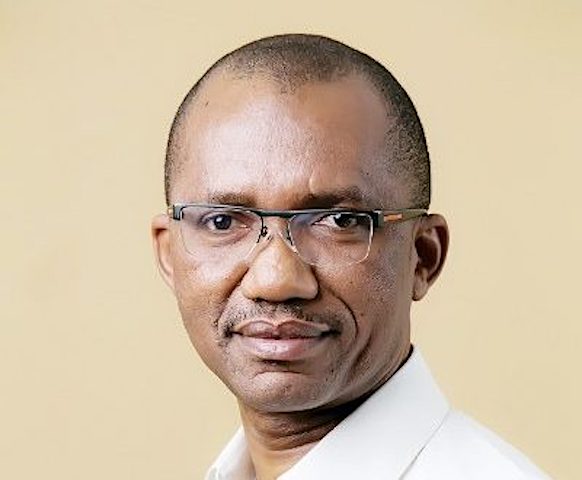
When Professor Ishaq Oloyede became Registrar of the Joint Admissions and Matriculation Board (JAMB) 10 years ago, the board was not just facing issues. It was in serious trouble. People were wishing JAMB would disappear because it was failing the candidates it was meant to help. Admission into higher institutions had become a nightmare. Many candidates who worked hard and had good WAEC grades felt their efforts were useless.
Cheating became a common thing. Fraudulent coaches, sometimes with help from JAMB insiders, set up "miracle centres". These centres advertised loudly, promising to help students pass exams without actually taking them. It’s funny to think about now, but back then, it was no laughing matter.
Before JAMB was created in 1978, universities managed their own admissions. But once JAMB took over, schools lost a lot of their power over admissions. As more people sought higher education, both public and private schools sprang up, but the quality suffered. Instead of serving the candidates, JAMB started serving its own interests, making things worse for desperate students.
This was the situation Oloyede faced when he took the job as JAMB registrar. In an article I wrote nearly a decade ago, I pointed out that the failing admission system only helped about 25 percent of qualified students each year. The registrars and admission officers only made things worse by playing with cut-off marks.
Things were bad inside JAMB too. In an article I wrote last year, I talked about one of the biggest scandals in JAMB's history that happened two years after Oloyede started. He had a good track record as vice-chancellor of the University of Ilorin, but the mess at JAMB was shocking.
Oloyede’s time has shown that big changes can happen. Over the last 10 years, the board has turned from a place of corruption and poor management into one of Nigeria’s better-run public institutions. To encourage fairness and transparency, JAMB has brought in independent professionals to help monitor and assess its work, especially during the UTME exams.
JAMB started using computerised exams in 2014, but the system faced many problems. There were delays, confusion, and fraud with scratch cards. Oloyede ordered an investigation and discovered serious issues, including staff who were stealing money from scratch card sales.
One clerk, Philomina Chieshe, “swallowed” ₦36 million from scratch card sales and claimed a snake had eaten the money. Seven years later, neither she nor any of her accomplices have faced justice. This was the chaos Oloyede had to deal with, an institution that was failing yet full of shocking scandals.
The idea behind JAMB was to help manage admissions, as many candidates were getting multiple offers. This caused problems for those who were qualified but did not get in. JAMB was created out of necessity.
I have always been against centralised systems because they often lead to corruption. Even early in Oloyede’s time, I thought JAMB was beyond repair. I believed we could only manage the situation until it eventually collapsed.
But Oloyede’s time has shown that big changes can happen. Over the last 10 years, JAMB has improved from a place of corruption and mismanagement into a more responsive public institution. It has changed how decisions are made, bringing in independent people to ensure things are done properly.
Oloyede’s time has also shown that public service can lead to positive outcomes. His successor will have a better start, but that can easily turn into a challenge if not managed well.
Some issues remain, like impersonation and the use of Artificial Intelligence (AI) for cheating. Parents are also getting involved in exam fraud. The cost of managing exams is rising and could reach four times the current cost of ₦4 billion when the government changes civil servant allowances in October.
The new registrar, Professor Olusegun Aina, will soon find that JAMB might face a financial crisis due to rising costs. If things don’t change, it could go from remitting over ₦55 billion to the federal treasury, compared to less than ₦60 million the year before Oloyede took over, to struggling to survive financially.
As Oloyede leaves, he leaves a legacy of turning a failing institution into one that is fair and transparent. The use of biometric controls, CBT centres, e-PINS, USSD, and digital payments has made a difference.
Today, JAMB is one of Africa’s largest university admissions systems, recognised for improving efficiency and transparency. Even though I still have my doubts about centralising admissions in a country like Nigeria, Oloyede has shown that with determination, change is possible.
His time has shown that public service can indeed lead to the common good. His successor has a strong foundation to build on, but that can quickly become a burden if not handled properly.



Drop your comment
No comments yet — be the first to drop the gist 👇