NASS to finalize state police law by December, Senate Leader
Senate Leader Opeyemi Bamidele says the National Assembly will complete the state police law process by December. This follows resolutions from state assemblies.
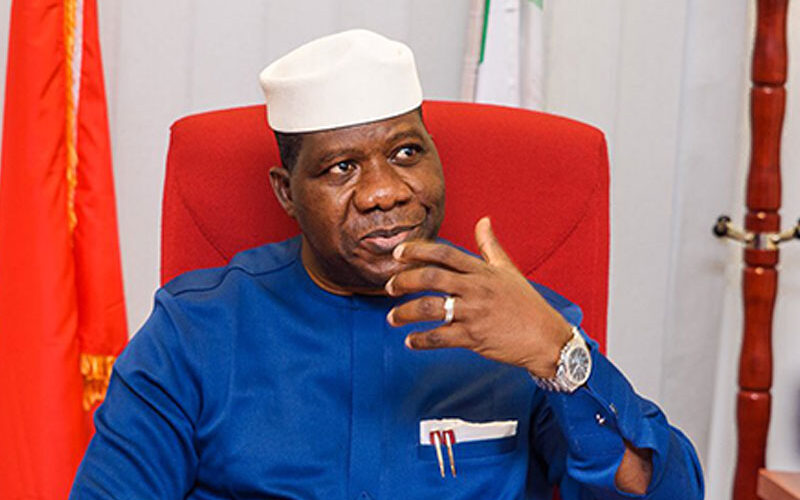
The Senate Leader, Opeyemi Bamidele, has stated that both chambers of the National Assembly will look at the resolutions from state assemblies on the planned state police system and finish the process before December.
Mr Bamidele, who is from Ekiti Central Senatorial District, mentioned that lawmakers would review the resolutions passed by state Houses of Assembly on the proposed change to the constitution before sending the final resolution to President Bola Tinubu for approval.
He made this known on Thursday while giving a lecture at the Senior Executive Course 48 program organized by the National Institute for Policy and Strategic Studies in Kuru, Plateau State.
“We have set a clear timeline for ourselves. We intend to conclude all these legislative stages, consideration of reports, passage of resolution, and transmission for presidential assent, on or before December 2026,” he said.
In September, the Senate and the House of Representatives passed the proposed state police framework and sent it to state Houses of Assembly for their consideration as part of the process to amend the 1999 Constitution.
The proposal aims to create state police services that will work alongside the current federal police system.
According to the proposed framework, state governors would appoint police commissioners, but these appointments must be confirmed by their respective Houses of Assembly. Governors would also have the power to direct state police on issues related to insecurity.
The Inspector-General of Police would continue to lead the federal police, while each state police service would be headed by a commissioner appointed by the state governor and confirmed by the state House of Assembly.
The proposal, however, states that existing local security outfits cannot turn into state police services or have police powers under the new framework. It also bans these outfits from carrying guns.
Examples of such outfits include Amotekun in the South-West, Ebube Agu in the South-East, and Hisbah in parts of northern Nigeria.


Under Section 9 of the 1999 Constitution, a proposed constitutional amendment must get approval from at least two-thirds of the 36 state Houses of Assembly, which means 24 states, before the National Assembly can move forward with the final steps of the amendment.
Reports say about 30 state assemblies have approved the proposal, which is more than the required number and allows the National Assembly to consider their resolutions and proceed with the remaining legislative steps.
Mr Bamidele said the approvals from the state assemblies have brought Nigeria closer to having state police after over 15 years of trying to introduce this system.
He said this shows the National Assembly’s dedication to focusing on the security of lives and property.
“What this means is that State Police is no longer a campaign promise or a subject of endless debate. It is now a constitutional reality. It means that the security of lives, private property and public assets occupies a prime place in the legislative agenda of the 10th National Assembly,” he said.
He added that the proposed system would help Nigeria create a policing structure that understands local areas, speaks local languages, respects local situations and stays accountable to local communities.
“It is not about creating state armies, but about creating state-led, community-anchored policing within clear constitutional safeguards, operational standards, oversight mechanisms and human rights protections,” he said.
Mr Bamidele also noted that the National Assembly, under the leadership of Senate President Godswill Akpabio, is committed to putting in place state police.
“The National Assembly, under the leadership of the President of the Senate, Senator Godswill Akpabio, remains committed to delivering on the establishment of State Police. We will not falter until every Nigerian, whether in Kuru, in Iyin-Ekiti, in Gusau or in Yenagoa, can sleep with both eyes closed,” he said.




Comments
No comments yet.