New Survey Shows Voters Support Women, Youth, and Disabled Candidates
A recent survey reveals that Nigerian voters are willing to support women, youth, and disabled candidates in the upcoming elections, challenging previous beliefs.
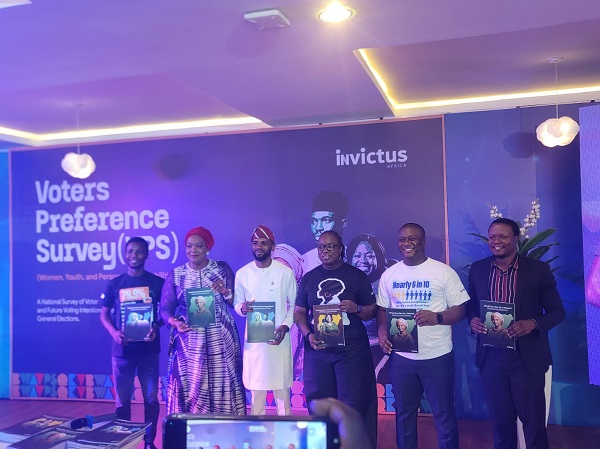
A new survey has challenged the belief that Nigerian voters do not want to elect women, youth, and people with disabilities. It says the real issue might be the lack of chances for these groups to become candidates and get noticed.
The survey, done by Invictus Africa, found that many voters are ready to support candidates from these underrepresented groups for the 2027 General Elections. But many said they never voted for them because they did not know these candidates were on the ballot.
Bukky Shonibare, the Executive Director of Invictus Africa, shared the results on Tuesday at the launch of the organisation’s Voters’ Preference Survey (VPS) Series (Pre-Election, 2026).
The survey included 11,196 eligible voters from all 36 states in Nigeria and the Federal Capital Territory.
Ms Shonibare pointed out that the findings show we need to shift the discussion away from why Nigerians do not vote for women, youth, and people with disabilities. We should instead look at whether political parties give them a fair chance to run for elections.
"We asked voters about their previous voting behaviour, their views of women, youth, and people with disabilities as candidates, and their plans for the 2027 General Elections. The findings challenge some long-held beliefs, but they also raise important questions," she said.
Women
The survey revealed that 69.1 percent of respondents never voted for a woman in an election. However, 51.1 percent of those who had not voted for a woman said it was because they had not seen a woman on the ballot.
This finding is different from the voters’ willingness to support women in future elections. The survey showed that 64.4 percent of respondents said they would vote for a woman in 2027. Also, 55.1 percent said a woman’s achievements would be enough for them to vote for her.
Ms Shonibare said the results suggest that the lack of women in elected positions is not just about voters’ views on female candidates. "We need to go beyond whether Nigerians are willing to vote for candidates from underrepresented groups. We also have to ask if these candidates are given a fair chance to come forward."
She explained that we must look into how political parties decide who gets nominated, who makes it through party primaries, and who gets the resources and visibility needed to compete. It starts with who is encouraged to run for office, who can afford nomination fees, and who gets support to become known as a credible candidate.
Youth
The survey showed a similar trend for young candidates. It found that 79.9 percent of respondents who had never voted for a young candidate said they did not know of any young candidate on the ballot. But 74.3 percent said they would vote for a young person in 2027.
Interestingly, middle-aged voters were slightly more likely to support young candidates than the young voters themselves. About 77.2 percent of middle-aged respondents were willing to support them compared to 74.5 percent of young respondents.
Almost six in 10 voters thought merit alone was enough to earn support for a young candidate. Ms Shonibare said this shows that political parties and candidates need to focus on skills, credibility, and achievements and not just on identity.
Persons with disabilities
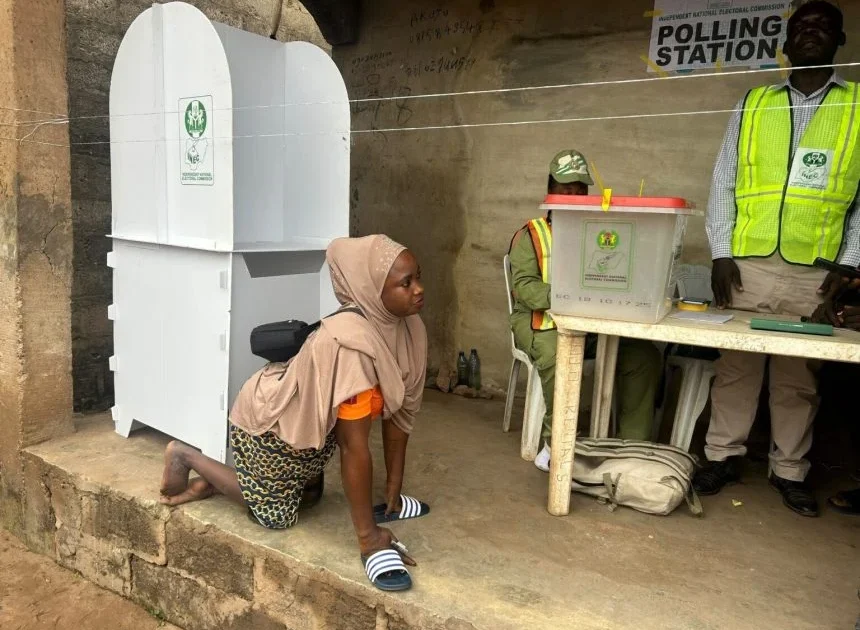
For people with disabilities, the survey showed that the challenge goes beyond just visibility. It found that 61.3 percent of respondents who had never voted for a candidate with a disability said they did not know any such candidate was on the ballot.
Only 8.7 percent said they had ever voted for a candidate with a disability, but 38.7 percent said they would support one in the 2027 elections. Voters with disabilities were more likely to support candidates with disabilities, at 59.2 percent compared to 37.7 percent among voters without disabilities.
The survey found more willingness to support candidates with disabilities at lower levels of government. About 71.3 percent said they would support a candidate with a disability for councillor, but this dropped to 48.9 percent for president.
According to Ms Shonibare, one in three voters remained undecided about whether they would vote for a person with a disability. While 80.1 percent of reasons given for supporting candidates with disabilities were merit-based, 87.9 percent of respondents prioritized qualifications, honesty, and experience over identity. Still, 12.1 percent considered party and ethnic ties.
Ms Shonibare said these numbers suggest that limited visibility is not the only challenge for people with disabilities. Perceptions about disability and leadership could also affect voter choices.
Calls for quotas, reforms
Ms Shonibare called for laws that require political parties to set minimum quotas for women and other underrepresented groups. She mentioned the Reserved Seats Bill and the Gender Equality and Equal Opportunities Bill.
She also urged the government to speed up stalled legislation and fully implement existing laws that promote equality and inclusion. She wants to see more women, young people, and people with disabilities in executive roles like ministers, commissioners, and special advisers. These positions would help them gain experience, visibility, and achievements before elections.
Ms Shonibare called for political parties to change their primaries and nomination processes. This includes fees, costs, and delegate systems that might keep underrepresented groups out. She also wants to see more women, young people, and people with disabilities on executive tickets. Voters are more open to supporting them for legislative roles.
She urged parties and the media to make candidates’ records visible through radio, television, and social media. She also encouraged political leaders to publicly support credible candidates.
Ms Shonibare stressed that candidates should not just depend on their identity. They need to show skills, integrity, qualifications, and accomplishments. "Women, young people, and persons with disabilities are asking for fair chances to run, to be seen, and to be judged fairly," she said.
She urged INEC, civil society, and the media to step up voter education based on the factors that the survey found influence voter choices. The survey comes at a time when there are still barriers that make it hard for women, young people, and persons with disabilities to participate in politics.
Beyond voters’ attitudes, candidates from these groups face challenges at the party level, including the cost of nomination forms and internal party structures. These obstacles, along with cultural expectations and the concentration of political power in male networks, make it tough for women to secure party tickets.
These issues have led to calls for affirmative measures like the proposed reserved seats bill, which aims to create specific legislative seats for women to address their ongoing underrepresentation in the National Assembly.
Comments
No comments yet.