Niger Delta Excluded from Key Projects, Says PANDEF Chairman Igali
Dr Godknows Igali of PANDEF highlights the Niger Delta's environmental challenges and calls for urgent cleanup and infrastructure development.
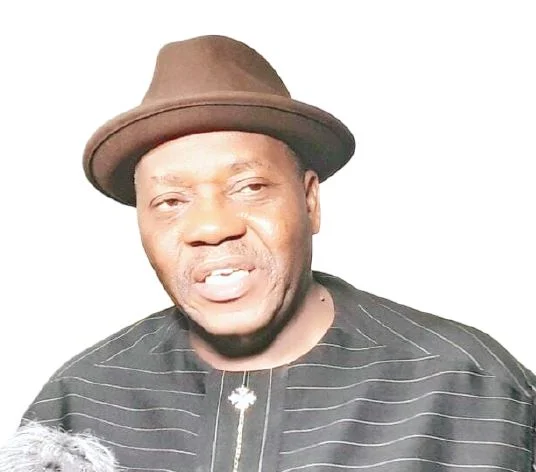
The National Chairman of the Pan Niger Delta Forum, Dr Godknows Igali, spoke in an interview about the forum’s views on resource control, appointments in government agencies, and the political choices for the 2027 elections.
The Niger Delta's biggest problem has always been the environment. After 70 years of oil production and 68 years of oil exports, the region is badly polluted. Gas flaring went on for nearly 50 years. Most communities where oil was found have suffered greatly.
The United Nations Environment Programme says our environment is the most polluted land in the world. So, we need a regular and serious plan for cleaning it up. We must take action to fix our environment.
Currently, the government is focusing on cleaning up Ogoni land because of the UNEP report, which called attention to the area. But every community in the Niger Delta has been impacted. The government must take responsible actions by starting cleanup programs in all the states. This is about our future and survival as a people.
Another major challenge for the Niger Delta is infrastructure development. The area has one of the most difficult terrains in Nigeria. Other regions have their own ecological problems, but the Niger Delta's situation is particularly tough. The Willink Commission Report of 1958 noted that the region consists mainly of deltas and waterways. To build a road in Bayelsa or parts of Rivers and Delta states, you need to pile sand up to five to six meters deep. This makes development very expensive.
Projects like the East-West Road are hard to complete because many bridges are needed. Building a 500-meter bridge in this area costs more than building five kilometers of road in some other parts of Nigeria. So, we lag behind in infrastructure, even though the oil that funds the country comes from our region. These issues upset our people, but many are afraid to speak out because of politics.
The Niger Delta Development Commission (NDDC) was set up to promote development in oil-producing communities. It took over from the Oil Mineral Producing Areas Development Commission. In the beginning, there was a focus on development because there was a board, a Presidential Advisory Council, and a management team.
But for many years, the NDDC ran without a board or management and became a one-person operation reporting to a minister. They acted without checking with others. Recently, under the current government, a board and management have been put in place. They seem to be working well together, and things are more organized now. This structure is what the law requires, and it should continue to ensure good governance and focus on long-term projects. The infrastructure gap in the region is still very concerning.
However, one thing is still missing, the Presidential Advisory Council, which should advise the board and help keep it on track. This council has not been set up yet, and it needs to be created to complete the governance structure.
The NDDC also needs to work more closely with state governments. I have seen some good examples, like the construction of the Nembe-Yenagoa Road in Bayelsa. In Delta State, they recently signed an agreement with the state government for a major coastal road. We need more of these partnerships.
I believe better cooperation between the NDDC and state governments is essential. Improving infrastructure will help reduce crime, especially sea piracy and oil theft. These crimes thrive where security forces cannot reach. Once roads are built, security agencies can access those areas more easily.
In June, there was a Federal Executive Council meeting. The Minister of Finance and the Minister of Works announced 26 road projects across Nigeria costing N3.9 trillion. Out of these, only one project is close to the Niger Delta, linking Cross River and Benue states, and it doesn't even go through core Niger Delta states.
What have we done to deserve being left out when the resources for these projects come mainly from our region? Also, when President Bola Tinubu went to London and got a £746 million loan to improve the Lagos and Apapa ports, we appreciated it. But why were the Niger Delta ports excluded? Ports like Port Harcourt, Onne, Koko, and Warri are among the oldest ports established during colonial times.
Are we not part of Nigeria? Do we deserve to be treated as second-class citizens? The Constitution clearly states that governance should reflect all parts of the country. If ports are being fixed, it is fair that those in the eastern region, which serves big markets, should also be upgraded.
Right now, many businesses have to go through Lagos, which hurts the national economy. We hope the Federal Government will take notice. The Niger Delta deserves a fair share of infrastructure projects.
We wrote to the Presidency, the Minister of Marine and Blue Economy, and other relevant authorities. This was not a complaint, but an appeal. Just as the Federal Government helped the Lagos ports, it should also consider the ports in our region. Sadly, we received no response.
Building a nation should be based on solid outcomes and processes. Our founding fathers realized the complexity of our nation’s diversity in terms of ethnic groups, religions, and languages. They agreed that Nigeria should be a federation.
From the Arthur Richards Constitution of 1946 to the Macpherson and Lyttleton Constitutions, they decided on a federation where regions controlled resources. This allowed the South-West, under Chief Obafemi Awolowo, to introduce free education and build great projects like Cocoa House and the first television station in Africa.
In the North, there were groundnut pyramids that played a big part in the economy and made Nigeria the world leader in groundnut production. Palm oil also brought in a lot of money before crude oil took over. The competition among regions was healthy and spurred development across the country.
Today, finance commissioners go to Abuja every month to share revenue. Our founding fathers had a different view on resource control because they understood its importance. It is in the interest of the whole country to discuss this issue like they did.
The problem now is that many Nigerians avoid dialogue. When you suggest a national discussion, people often say, “No, we don’t want dialogue; go to the National Assembly.” But our founding fathers spent about 10 years discussing the country’s structure at conferences before independence.
In every diverse country, how to share resources is a key issue. The military changed the system with Decrees 34 and 43 and imposed a central structure. We might not like the term “resource control,” but we should not get caught up in words. We should focus on the principle behind it.
Every state is represented in the Federal Executive Council, so I can say the President is following the Constitution. But in some appointments meant to reflect the country’s diversity, some Niger Delta states are still not well represented. In the oil and gas sector, for example, the Niger Delta has the most professionals, but we are still underrepresented. I hope future appointments in this sector will consider our people more.
PANDEF is not political, and I do not belong to any party. But I urge our people to carefully evaluate candidates seeking their votes and support those who truly represent the Niger Delta’s interests.
We know there are those who do not support the Niger Delta and those whose emergence would not help us. Our people must be alert and vote for candidates at the national level who are committed to our region's progress.
At the state level, I believe our people have learned valuable lessons by electing leaders who work hard rather than those who just make promises. At the National Assembly, they should choose representatives who will speak up for and defend the Niger Delta's interests.
Get more stories like this on your home page
How this story developed
- Niger Delta Left Out of Major Projects, PANDEF Chairman Igali
Niger Delta Excluded from Key Projects, Says PANDEF Chairman Igali (this story)
Comments
No comments yet.