Nigeria’s economy grows 4.43% in Q2 2026
Nigeria's economy grew by 4.43% in the second quarter of 2026, according to the National Bureau of Statistics. This marks a significant improvement over the previous year.
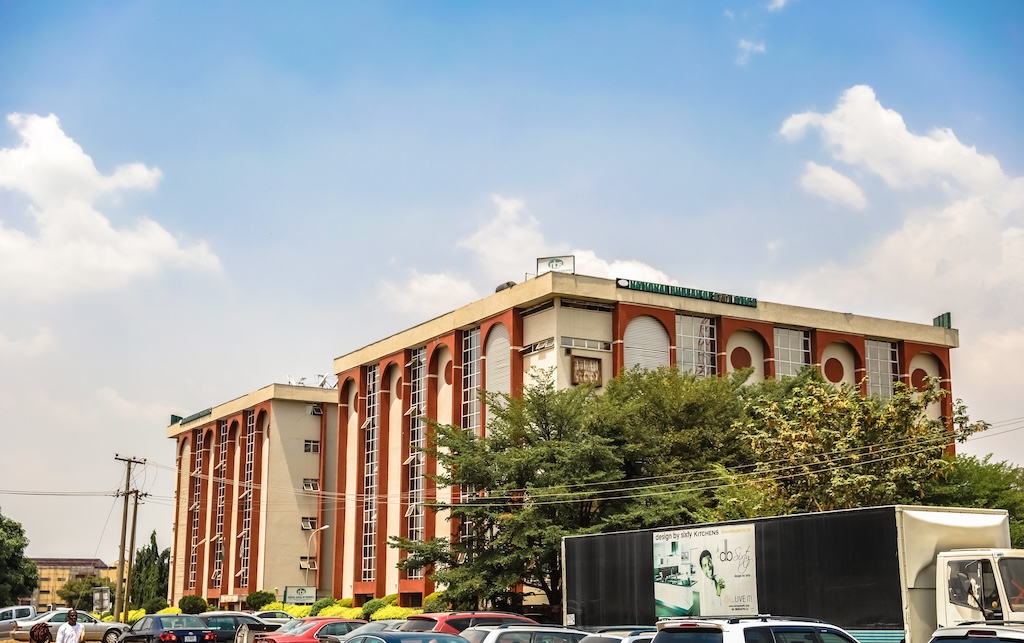
Nigeria’s economy grew by 4.43 percent year-on-year in real terms in the second quarter of 2026, according to the National Bureau of Statistics (NBS).
This growth rate is higher than the 4.23 percent recorded in the same quarter of 2025 and shows improvement from the 3.89 percent recorded in the first quarter of 2026.
The NBS shared this information in its Gross Domestic Product Report for the second quarter of 2026, released on Monday.
The new figure shows that economic activity continued to grow during the quarter, following a gradual recovery seen over the past year.
Nigeria’s economy grew by 3.87 percent in real terms in 2025, compared to 3.38 percent in 2024, according to NBS data.
This latest quarterly performance was also the best growth since the third quarter of 2024, when the economy grew by 3.86 percent, based on NBS quarterly records.
In nominal terms, Nigeria’s GDP was ₦119.29 trillion in the second quarter of 2026, while real GDP was estimated at ₦53.47 trillion.
Services remain dominant
The services sector was the largest contributor to Nigeria’s real GDP during the quarter, making up 56.62 percent of total output.
It also saw real growth of 4.60 percent, up from 3.94 percent in the same quarter of 2025.
Agriculture contributed 26.15 percent to real GDP and grew by 4.39 percent, a big jump from the 2.82 percent recorded in the second quarter of 2025.
This improvement in agriculture is important, as it provides jobs and income for millions of Nigerians. Farmers still face issues like insecurity, high costs, climate change, and poor infrastructure.
But the industrial sector saw slower growth.
Industry grew by 3.96 percent in the second quarter, down from 7.46 percent in the same period of 2025. It accounted for 17.23 percent of real GDP during the quarter.
The slowdown means that the strong GDP figure was not the same across all major sectors of the economy.
Oil production rises
Meanwhile, the oil sector showed better performance during the quarter, thanks to higher crude oil production.
Nigeria’s average daily oil production rose to 1.72 million barrels per day (bpd) in the second quarter, up from 1.55 million bpd in the first quarter of 2026.
This production level was also higher than the 1.68 million bpd recorded in the second quarter of 2025.
The increase in production matched the stronger growth seen in the oil sector.
The sector grew by 7.31 percent year-on-year in real terms, compared to 2.57 percent in the first quarter of 2026. On a quarter-on-quarter basis, oil-sector growth was 10.91 percent.
Despite this improvement, oil still makes up a small part of Nigeria’s overall economic output.
The sector contributed 4.16 percent to real GDP in the second quarter, up from 4.05 percent in the same quarter of 2025 and 3.92 percent in the first quarter of 2026.
In contrast, the non-oil sector accounted for 95.84 percent of real GDP.
The non-oil sector grew by 4.31 percent in real terms during the quarter, compared to 3.64 percent in the second quarter of 2025 and 3.94 percent in the first quarter of 2026.
According to the NBS, activities like agriculture, information and communication, real estate, trade, financial and insurance services, manufacturing, and construction helped boost non-oil growth during the quarter.
Growth improves but remains moderate
The latest GDP figures suggest that Nigeria’s economy is gaining speed, but the growth rate is still moderate compared to the country’s development needs.
President Bola Tinubu’s administration aims for 7 percent annual economic growth by 2027. The 4.43 percent quarterly growth is below the pace needed to reach that target if sustained annual growth is the goal.
The economy has shown gradual improvement since the downturn and weak growth rates in previous years.
The annual growth rate increased from 0.95 percent in 2021 to 4.32 percent in 2022, then dropped to 3.04 percent in 2023. It went up to 3.38 percent in 2024 and 3.87 percent in 2025, according to NBS data.
These latest figures show a continued, though still gradual, strengthening of economic activity.
But stronger GDP growth does not automatically mean that families are seeing better living conditions.
GDP measures the value of goods and services produced in the economy and does not show how income is shared or if families can afford basic needs.
For Nigerians, the effect of this growth will depend on whether it leads to more jobs, higher incomes, increased investments, and lower living costs.
The ongoing strength of services and the better performance of agriculture highlight the growing importance of the non-oil economy to Nigeria’s growth story.
At the same time, the slowdown in industrial growth shows that challenges like power supply, financing, infrastructure, logistics, and production costs are still impacting productive sectors.
The latest NBS figures provide more proof that the Nigerian economy is growing faster than a year ago.
The bigger question will be if this growth can be maintained and spread across productive sectors and lead to real improvements in the lives of Nigerians.





Comments
No comments yet.