Nigeria’s economy shows signs of growth, but relief for families and businesses is slow
Nigeria's economy is showing growth with a 4.43% increase in GDP for Q2 2026. However, families and businesses are still struggling with high food prices and job concerns.
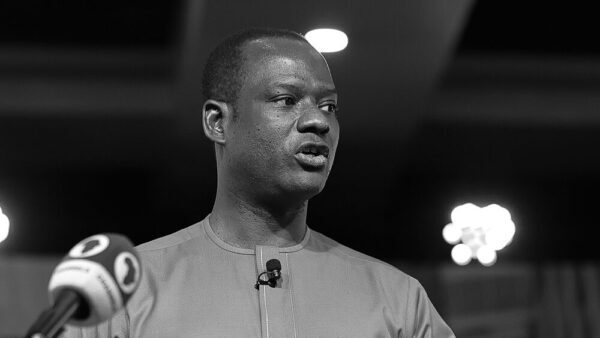
Nigeria’s economy saw some growth in the second quarter of 2026. But this growth has not yet brought enough relief for families and businesses.
Taiwo Oyedele, the Minister of Finance and the Coordinating Minister of the Economy, shared this update on Monday during the 162nd meeting of the National Economic Council (NEC).
Stanley Nkwocha, who is the Senior Special Assistant to the President on Media and Communications, provided details from the meeting in a statement on Monday.
During the meeting, Mr Oyedele said Nigeria’s economic indicators are improving. He noted that the real Gross Domestic Product grew by 4.43 per cent in the second quarter of 2026, compared to 4.23 per cent in the same period of 2025.
He also pointed out that headline inflation fell for the fifth month in a row to 14.06 per cent in October 2026. This is the lowest it has been since September 2020.
Moreover, Nigeria’s external reserves were reported at $54.87 billion as of 12 November.
The minister added that Nigeria’s trade surplus rose from N10.2 trillion in the first half of 2025 to N20.1 trillion during the same period in 2026.
He mentioned that net revenue shared through the Federation Account Allocation Committee increased by 44 per cent, from N15.2 trillion in 2024 to N21.9 trillion in 2025.
But Mr Oyedele noted that these better economic numbers have not yet brought enough relief for families and businesses. He specifically mentioned food prices and jobs as areas of concern.
“Oyedele observed that the improving economic indicators had yet to translate sufficiently into relief for households and businesses, particularly in the areas of food prices, electricity costs, access to affordable credit and employment,” the statement said.
He highlighted that food inflation is still high at 19.13 per cent in October. High lending rates and energy costs continue to pressure families and businesses.


In his opening remarks, the Chairman of the Council and Vice President, Kashim Shettima, said the future of Nigeria’s economy and the success of President Bola Tinubu’s reforms depend on building strong institutions.
He emphasized that ministries and the 36 states must consider the people affected by government policies as they work.
“While His Excellency, President Bola Ahmed Tinubu, GCFR, makes the difficult reforms to stabilize the economy, we must all participate in establishing institutions capable of sustaining the benefits of those reforms,” the Vice President said.
According to Mr Shettima, to gain from the economic reforms, ministries and states must deal with their responsibilities while remembering the people affected.
“To achieve this, we must cooperate. We must allow a good practice in one area to inform decisions in others, while respecting the differences in capacity and situation across the country. The quality of our cooperation will shape the inheritance we leave,” he stated.
Mr Shettima urged Council members to think of Nigerians who will rely on their decisions years from now.
Since taking office in May 2023, Mr Tinubu’s government has rolled out several economic reforms aimed at stabilizing the economy, boosting government revenue, and attracting investments.
These reforms include removing the petrol subsidy, unifying the foreign exchange market, implementing stricter monetary policy, stopping deficit financing by the Central Bank of Nigeria (CBN), and reforming the tax system.
The government has completed a recapitalization of banks to strengthen the financial sector. It has also implemented the Electricity Act 2023 to encourage state participation in electricity generation and distribution. New initiatives have been introduced to improve access to student loans and consumer credit.
While these policies have been praised by international development agencies, many Nigerians are feeling the effects through rising prices of petrol and other essential goods and services.





Comments
No comments yet.