Positive Signs for Nigeria's Economy
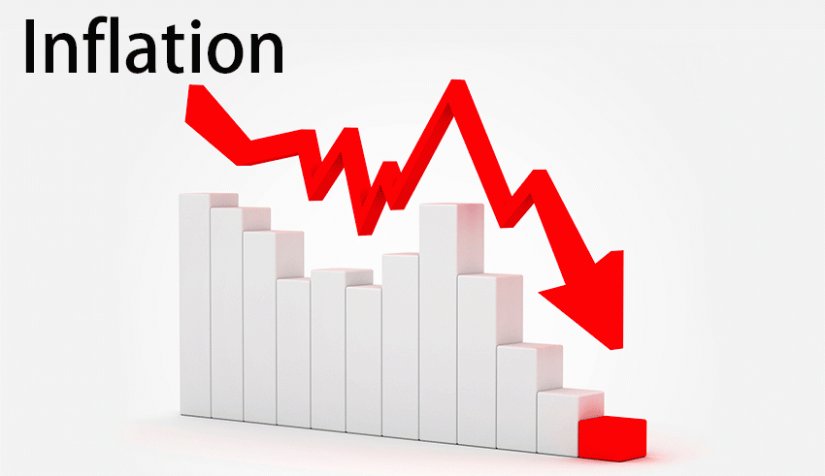
Nigeria's economy is showing positive trends with decreasing inflation and interest rates. GDP growth is also on the rise, indicating a potential turnaround.

A lot is happening in the Nigerian economy. It is not as bad as some people say. Those of us who watch the economy closely should point out what is going well. We are at a turning point. But we must keep our excitement in check. Life is tough everywhere, including Nigeria. We need to check our hopes and expectations for what makes sense. Right now, many good things are happening at the macro level, waiting for the micro to catch up. In fact, the micro is already benefiting some parts of the economy. It is also important to remember that no country is alone; we are all part of a global system. We cannot just complain about job losses here while other countries face issues with AI. Instead, we should think hard and adapt. Here are about 20 factors currently showing promise at the macro level:
- Inflation is down to 14.63 percent. We aim for single digits by 2027.
- Interest rates are also falling. We hope for single digits. The Central Bank has already indicated this with a 3 percent interest rate cut.
- GDP is growing at 4.43 percent. We expect it to reach 5 percent or more by year-end.
- Naira GDP has increased from ₦250 trillion five years ago to ₦531 trillion today. This is important because we spend in Naira. Comparing dollar GDP to Nigeria's can be misleading. A dollar here has less buying power than in the US.
- Our Dollar GDP has also improved from $253 billion in 2024 to $377 billion today.
- ₦130 trillion or $100 billion has been added to the Nigerian stock market, with 94 percent of investors being locals. This shows Nigerians are investing back into the country. A stock market that grows means healthy businesses in all sectors.
- Nigeria recapitalized banks with 80 percent local funds, totaling ₦4.75 trillion.
- Insurance companies were recapitalized with local funds, reaching up to ₦1.5 trillion.
- Nigeria has recorded three years of balance of payment surpluses. That's $12 billion for the first half of 2026 and $6 billion for all of 2024.
- Nigeria has seen 13 straight quarters of trade surpluses since Bola Tinubu took office. We are selling more than we are buying, which is significant.
- The Naira is stable to strengthening. Market experts believe the Naira is undervalued and could reach ₦1,200 to the dollar by the end of the year. Even the IMF values the Naira at ₦1,127 to the dollar.
- Foreign reserves are at an 18-year high of $56 billion, with a chance to surpass the 2007 record of $62 billion, showing economic stability.
- There has been a strong capital inflow of $6 billion in the first half of 2026.
- No states are owing salaries, unlike 27 under Buhari, 20 under Jonathan, and 10 under Obasanjo.
- Pension debts are being settled at both federal and state levels.
- Our debt to GDP ratio is low at 38 percent, indicating we are not heavily borrowed compared to others.
- States are investing in local infrastructure like roads, bridges, agriculture, and water projects.
- Re-industrialization is happening with Nigerian companies stepping up. Local firms are involved in FMCGs, car assembly, lithium and solar panel production, and more. About 55 percent of Nigeria's crude oil production is now managed by local companies like Seplat and MRS.
- E-commerce and payment systems are improving, helping many Nigerians with better business opportunities. Our fintechs are even expanding into Europe.
- There is a rise in investments in agriculture for food security, with private sector involvement in mechanized farming in states like Niger, Jigawa, and Kano.
- The real estate and construction sectors are booming. Many people have complained about rising rent and property prices, suggesting a new middle and upper class is forming.
At the micro level, in people’s homes and businesses, some progress is being made. Certain sectors are already benefiting from this positive change:
- Civil servants are now getting paid on time. Millions of them and their families are doing better.
- Students are benefiting from NELFUND, which helps their parents who used to struggle with school fees. This program saves parents close to ₦400 billion in school fees. About 1.6 million students receive ₦20,000 monthly, totaling ₦32 billion, which helps landlords, small food vendors, and markets around schools.
- Universities and polytechnics are getting their fees on time, allowing them to meet their obligations to teachers and staff. This means fewer strikes and delays for students.
- Exporters of commodities and fast-moving consumer goods, including local car companies, benefit from a weaker Naira and are doing well.
- Workers, regulators, and contractors in the oil and gas sector earn more when crude prices rise. There are at least a million of them, and each usually supports about 10 dependents.
- Banks, telecoms, and fintech companies are profiting. These firms report trillions in yearly profits. Our fintechs are aggressive and breaking records globally.
- Manufacturing companies and their workers are thriving again. A few years ago, they struggled to import machinery and spare parts. Now, they are back on track.
- Companies using technology, especially those online, are making good money. Many Nigerians benefit from the new economy without leaving their homes, like online deliveries.
- Media workers, including broadcasters and on-air personalities, are making money in the information age, often by sharing news about Nigeria.
- State contractors are getting paid quickly now because states have more funds. Many contractors prefer state jobs now. Reports from the World Bank and NBS show infrastructure development is booming at the state level.
- Transporters using compressed natural gas are making big profits.
- Young Nigerians working remotely for foreign companies in the outsourcing space are thriving.
- Tech experts are also making waves.
- The real estate sector is seeing massive deals, with properties selling for billions.
- Entertainers, event planners, and caterers are doing great too. One local caterer recently bought land worth about ₦300 million. Another just finished a building worth over ₦1 billion.
The worst seems to be behind us. The years 2023 and 2024 were for adjustments. By 2025, inflation should remain low. From 2026 onwards, we will see the sectors that are thriving and positively impacting people's lives. Globally, hard work, smart choices, and tech are the focus now. No one should sit back waiting for opportunities, especially if you are young and educated. Get involved! Stay positive, and good things will come. More benefits are on the way. Each policy I mentioned opens new opportunities.


Comments
No comments yet.