Nigeria’s Power Minister Shares Plans After 100 Days in Office
Nigeria's Power Minister Joseph Tegbe shares his vision for the future of the electricity sector after 100 days in office, emphasizing necessary reforms and infrastructure.
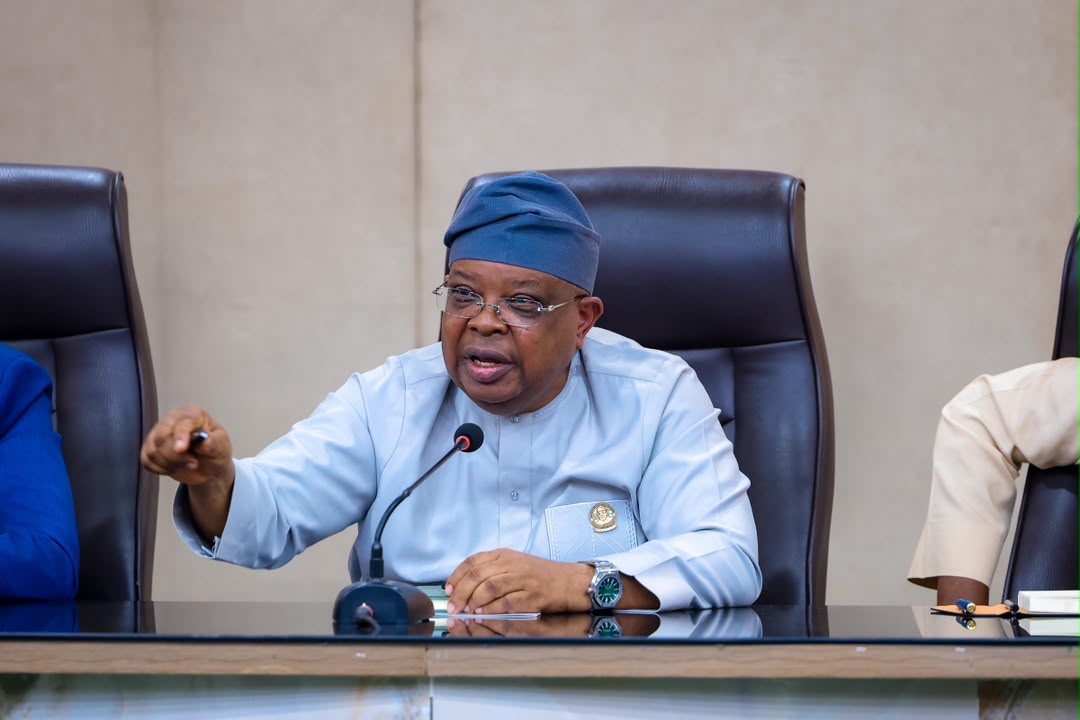
Nigeria's Minister of Power, Joseph Tegbe, has announced new plans for infrastructure and investment as the Federal Government shifts focus from immediate power sector fixes to building a stronger electricity system for the future.
Mr Tegbe shared this update during a program in Abuja on Tuesday to celebrate his first 100 days in office.
In June, President Bola Tinubu appointed Mr Tegbe as Minister of Power, along with Sola Enikanolaiye as Minister of State for Foreign Affairs. Their appointments came after the resignations of former Foreign Affairs Minister Yusuf Tuggar and former Power Minister Adebayo Adelabu.
While screening for his Senate confirmation, Mr Tegbe warned that Nigeria's electricity crisis needs serious and clear reforms and said there are no quick solutions. He emphasized that the government's approach to the power sector must change.
"We will not do things the way we used to do before. I will not promise what I cannot deliver," he stated.
Previously, Mr Tegbe was appointed by Mr Tinubu in 2025 as Director-General of the Nigeria-China Strategic Partnership. He mentioned that electricity is crucial for national confidence and pointed out that decades of reforms have not given the expected results.
He promised to focus on actions rather than just talk, highlighting power distribution, metering, transparency, and local government involvement as key areas to work on. "We must close the metering gap and ensure Nigerians can track performance through a transparent public dashboard. The sector must be properly structured, and the people deserve to see real improvement," he said.
He added that local governments would be encouraged to produce electricity to ease the burden on the national grid. "We will come with clear milestones. If results are not visible in three months, they won’t be in six," he noted.
On Tuesday, Mr Tegbe explained that the Ministry's main focus in his first 100 days was to stabilize the current electricity system, restore lost generation capacity, and strengthen the commercial and governance structures needed to attract long-term investment.
He mentioned that the next phase of the government's plan will concentrate on four priorities: deeper grid stabilization, development of the Transmission Super Grid, better use of existing resources, and preparing for future electricity demand.
According to him, Nigeria's recent power mission to China secured commitments from Chinese companies and financiers to speed up priority electricity projects based on set completion timelines. He said these talks were meant to go beyond financing discussions to include partnerships involving capital, technology transfer, and project delivery.
Mr Tegbe revealed that CMEC reaffirmed its role in the 1.9GW Presidential Power Initiative (PPI), with the first transmission lines expected to be ready in the first quarter of 2027. CNEEC has also moved ahead with financing plans for the $116 million Zungeru power evacuation project, with approvals aimed before the year ends.
TBEA committed to a proposed $500 million industrial park for power equipment manufacturing and a three-year delivery plan for the East-West Super Grid. HengFei Cables promised to supply cables for PPI Phase Two and suggested setting up a cable assembly plant and training center in Nigeria.
Mr Tegbe said these initiatives will connect infrastructure growth with local production and technical skills. The Ministry has started technical audits along the Lagos and Abuja transmission lines to identify weaknesses and guide investments toward effective solutions.
He pointed out the Lagos, Enugu-Port Harcourt, and Abuja-Kaduna-Kano corridors as vital to the government's grid stabilization plan. The Ministry will also begin working on the Transmission Super Grid while continuing efforts to stabilize the corridors through the PPI and related programs.
Nigeria's electricity sector still faces many problems in generation, transmission, and distribution, which limits power availability for homes and businesses. Issues like unreliable gas supply, low generation output, old infrastructure, transmission blockages, debt in the sector, vandalism, metering gaps, and tariff shortfalls continue to affect electricity supply.
Due to these ongoing problems, many households and businesses across Nigeria rely heavily on petrol and diesel generators and solar systems to supplement power from the national grid. Mr Tegbe mentioned that the Federal Government has signed a deal with Huawei Technologies for grid digitalization, loss reduction, SCADA gap assessment, and technical training.
He believes that better digital visibility and system control are crucial for improving the management and performance of the national electricity network. Mr Tegbe also welcomed Nigeria's success in the arbitration concerning the Mambila Hydropower Project, stating that the Ministry is now working with Energy China on the project.
He said the contractor has been instructed to find the best way to deliver the project, including possibly implementing it in phases. Larger hydropower projects, like Mambila, and smaller ones for agricultural areas will be part of Nigeria's electricity strategy for the medium and long term.
The minister also talked about the launch of the Renewable Asset Management Company (RAMCO), created to fund renewable energy projects and infrastructure. RAMCO aims to engage skilled operators for metering, billing, collection, and maintenance, targeting to mobilize ₦3 trillion over the next few years to support long-term investment and enhance the viability of public renewable energy assets.
Mr Tegbe said the Ministry's first 100 days focused on establishing a foundation for expanding the electricity sector. "Stabilization is the essential first stage of expansion," he said.
He added that the Ministry will keep collaborating with development partners like the World Bank, African Finance Corporation, African Development Bank, Sustainable Energy for All, and UK PACT on financing, technical assistance, hydropower, and electrification projects. In the next six months, he aims to turn ongoing repairs, investments, and reforms into noticeable improvements for electricity users.
"Our original commitment to visible, incremental improvements remains the benchmark," Mr Tegbe said. He reaffirmed the Ministry's dedication to a disciplined approach in tackling the sector's challenges, reforming the national grid, improving electricity supply, and being more open with Nigerians.

Comments
No comments yet.