Nigerian Journalist Wins Award for Reporting on Drug Resistance
Mariam Ileyemi of PREMIUM TIMES has won an award for her report on gender and antimicrobial resistance. Her work highlights the risks women face in healthcare.
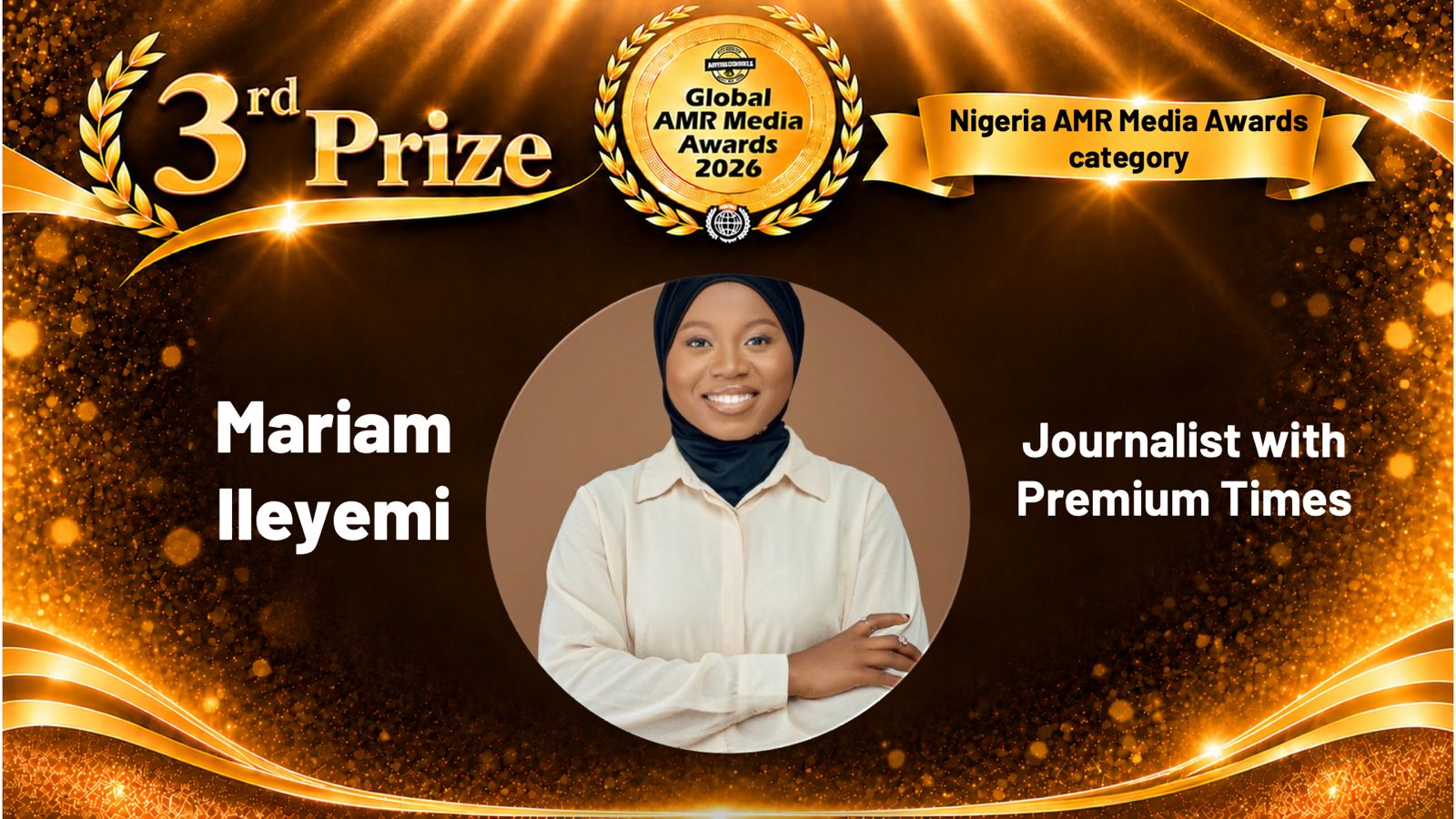
PREMIUM TIMES journalist Mariam Ileyemi has won third place in the Nigeria AMR Media Awards (NAMA) for her work on antimicrobial resistance (AMR).
The NAMA is part of the 2026 Global AMR Media Awards (GAMA). These awards recognize journalists and media professionals who raise awareness of drug-resistant infections and push for action against this serious public health issue.
This year, the awards received 382 entries from four global regions. Africa had the most submissions with 193. Asia-Pacific followed with 134 entries, while Europe and the Americas had 28 and 27 entries respectively. Nigeria submitted 96 entries, making up about a quarter of all submissions.
Ms Ileyemi was honored for her report on the gender aspects of AMR. She focused on how gender-based violence, social inequality, and barriers to healthcare put women at risk for drug-resistant infections and limit their treatment options.
In the report published in March 2026, she noted calls from health experts for policies that consider gender to tackle antimicrobial resistance.
This recognition adds to her previous work on AMR. In November 2024, she worked with Nike Adebowale-Tambe, the Head of Health and Development Desk at PREMIUM TIMES. They investigated the struggles of Nigerians dealing with drug-resistant infections and the issues they face when treatments do not work.
In the NAMA category, first place went to Kazeem Biriowo of Nigerian Tribune, while Julian Adetinuyo of News Scope Africa came in second.
Seven other journalists got special mentions. They are Folashade Akpan from the News Agency of Nigeria, Chioma Obinna from Vanguard, Helen Oji Emmanuel from Blueprint, Fatima Saka from DistinctNews, Chinyere Okorafor from Nigeria Health Times, Laide Akinboade from Daily Asset, and Odimmegwa John Peter from New Africa Horizon.
The winners will receive certificates and cash prizes, thanks to the Art for Health Initiative, a non-profit organization.
The awards were announced on 11 November during the Sixth Global Media Forum on AMR. This happened just before World Antimicrobial Resistance Awareness Week, which runs from 18 to 24 November each year.
Nigeria will host the Fifth Global High-Level Ministerial Conference on AMR in Abuja from 6 to 8 December 2026. This will be the first time this conference is held in Africa. It aims to bring together government representatives and other stakeholders to enhance global action against antimicrobial resistance.
After the announcement, Shobha Shukla, chairperson of the Global AMR Media Alliance, praised Nigerian journalists. She also commended Ojoma Akor, founding chairperson of the Nigeria AMR Media Alliance, for emphasizing the effects of AMR and boosting media efforts to tackle this issue.
Ms Shukla mentioned that AMR is not just a health or scientific problem. It is also a social and development challenge that needs action beyond hospitals and labs.


"We need an informed public, accountable governments, and responsible practices across human, animal, and environmental health," she said.
She added that the media can connect these issues, highlight the experiences of affected communities, and turn public awareness into real action.
Ms Shukla encouraged journalists to report on AMR beyond just health news and to help build public support for responsible use of medicines and stronger health systems.
Ms Akor described the first NAMA awards as a big step for health and science journalism in Nigeria. She pointed out that AMR has not received enough coverage in newsrooms, even though it affects public health, healthcare delivery, food security, and national development.
She said these awards help show journalism's role in making a hidden public health threat visible. They also translate complicated scientific evidence into easy-to-understand information, amplify the voices of affected communities, and hold institutions accountable.
"As an alliance, we are dedicated to helping journalists improve their skills, encourage investigative reporting, and ensure that AMR gets the attention it needs," she said.
Chidera Rosecamille Aneke, founder of the Art for Health Initiative, mentioned that AMR is one of their main focus areas. She explained that their support for the NAMA awards aims to promote creative storytelling.
"AMR is one of our focus areas, and we support the NAMA awards to encourage innovative storytelling to communicate AMR in ways that everyone can understand," she said.
She added that the initiative works at the crossroads of storytelling, media, and the arts to raise public awareness and action on important health issues.
Antimicrobial resistance happens when bacteria, viruses, fungi, and parasites change over time and no longer respond well to medicines that treat infections. This makes infections harder to treat and raises the chances of severe illness and death.
The problem impacts human and animal health, food production, and the environment, making it a One Health issue.
Nigeria’s National Action Plan on Antimicrobial Resistance 2024, 2028 states estimates that 64,500 deaths in the country were directly linked to AMR in 2019, while 263,400 deaths were related to it. The country also noted gaps in surveillance that make it hard to understand the full extent of drug-resistant infections.





Comments
No comments yet.