Nigeria's Violence is Worse Than We Think, Expert
Frans Vierhout discusses a study revealing that armed militias cause more civilian deaths in Nigeria than Boko Haram and ISWAP combined.
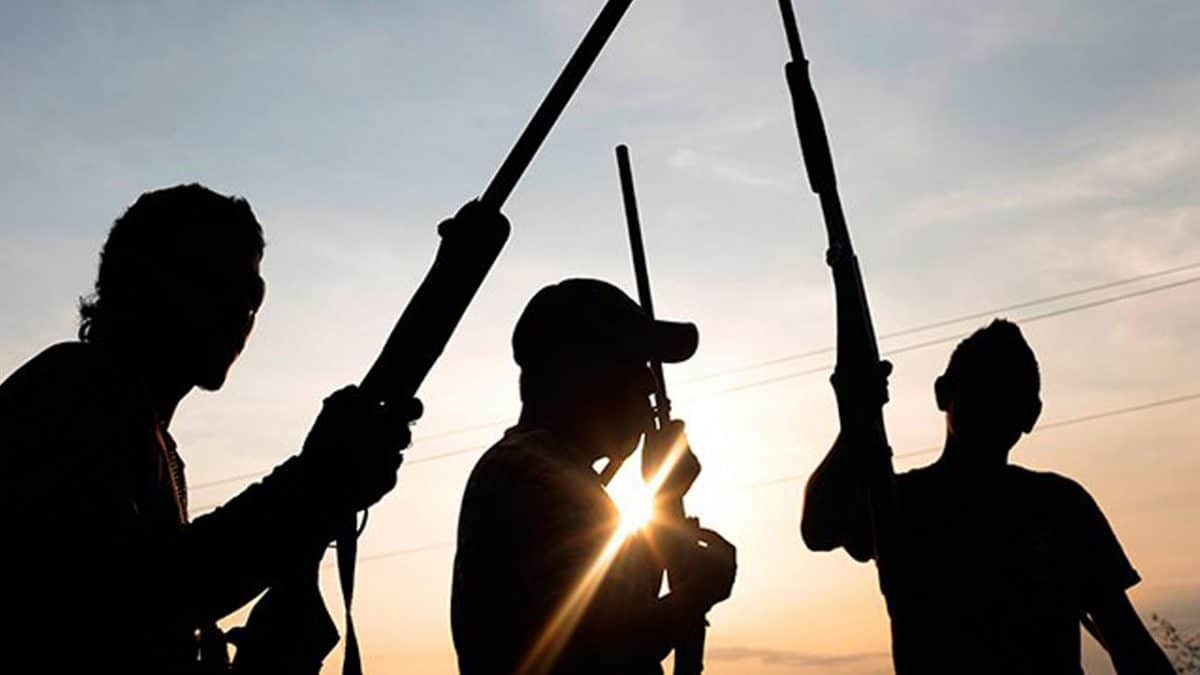
Frans Vierhout, a senior research analyst at the Observatory for Religious Freedom in Africa (ORFA), says the international community does not understand what drives violence in Nigeria.
Mr Vierhout shared insights from a six-year study on attacks from 2020 to 2025 during a peace summit in Jos on Monday. He said focusing too much on groups like Boko Haram hides a much worse situation on the ground.
“Our data leaves little room for ambiguity,” he stated. “When we look at who is dying, where attacks happen, and how violence changes over time, the evidence points one way. Boko Haram is not the main cause of civilian deaths in Nigeria.”
According to ORFA’s findings, 79,323 people were killed in violence linked to terror during this period. That is about 36 deaths every day. Out of this number, 42,033 were civilians, while security forces and armed groups made up the rest of the deaths.
Mr Vierhout believes the results challenge long-held beliefs. He said Boko Haram and the Islamic State West Africa Province (ISWAP), often seen as Nigeria’s most dangerous groups, were responsible for only 12 percent of civilian deaths together. Boko Haram caused eight percent, while ISWAP was behind four percent.
“In contrast,” he explained, “armed militias we call Fulani Terror Groups caused 44 percent of all civilian deaths. That is four times the civilian death toll linked to Boko Haram and ISWAP combined.”
Mr Vierhout emphasized that ORFA’s classification focuses only on armed militias, not on the Fulani ethnic group as a whole. “Most Fulani people are not involved in violence, and the data makes this very clear,” he added.
A Hidden Pattern of Violence
Beyond the number of killings, Mr Vierhout mentioned that ORFA’s analysis shows patterns that global reports often miss about Nigeria.
The study indicates that Christians suffered more, with 28,551 Christians killed compared to 13,224 Muslims during the same time. When you look at state population sizes, Christians were killed at 4.4 times the rate of Muslims in affected states.
“This is not just about raw numbers,” Mr Vierhout said. “In terms of population, the losses for Christian communities are devastating.”

He also pointed out that three-quarters of civilian deaths happened during community attacks. These were usually raids on farming areas marked by abductions, sexual violence, and the destruction of homes and livelihoods.
Abductions and Unequal Treatment
ORFA’s data shows there were 34,773 civilian abductions from 2020 to 2025. Fulani Terror Groups were linked to 43 percent of these kidnappings, while unidentified armed groups accounted for 49 percent.
While the number of abductions among Christians and Muslims was almost the same, Mr Vierhout said ORFA’s field research revealed big differences in how these hostages were treated.
“Survivor testimonies show that Christian hostages face higher ransom demands, longer captivity, harsher violence, and a greater chance of execution,” he explained. “Christian women, in particular, face extreme sexual violence, forced conversion, and forced marriage.”
Call for a Rethink
Mr Vierhout warned that Nigeria is “growing a complex terror ecosystem that the outside world has not fully recognized.” He argued that responses from policymakers based on incomplete information about the violence are unlikely to work.
“Without a complete understanding of the religious and community aspects of this conflict, efforts to stabilize Nigeria will always be flawed,” he said.
He called on governments and international organizations to engage closely with ORFA’s data and rethink how they understand and respond to Nigeria’s security issues.





Comments
No comments yet.