Obi shares plans for 2027, focuses on security and unity
Peter Obi reveals his governance plans for 2027, emphasizing national unity and security during a town hall meeting in Jos, Plateau State.
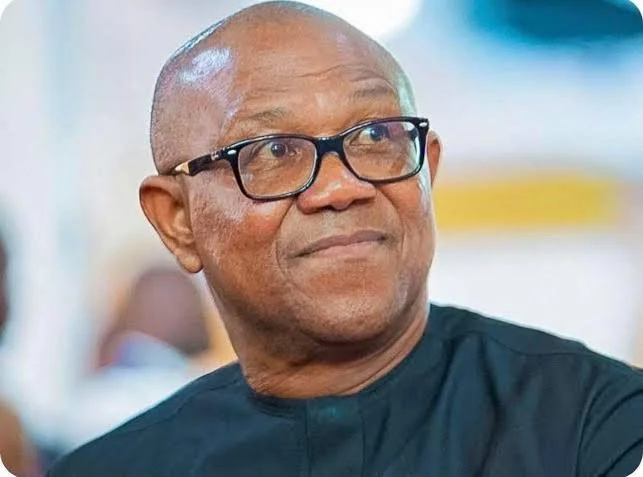
The presidential candidate of the Nigeria Democratic Congress, Peter Obi, on Tuesday revealed his governance plans. His agenda focuses on national unity, security, economic growth, and accountable leadership. He promised to bring hope to Nigerians if he becomes president in 2027.
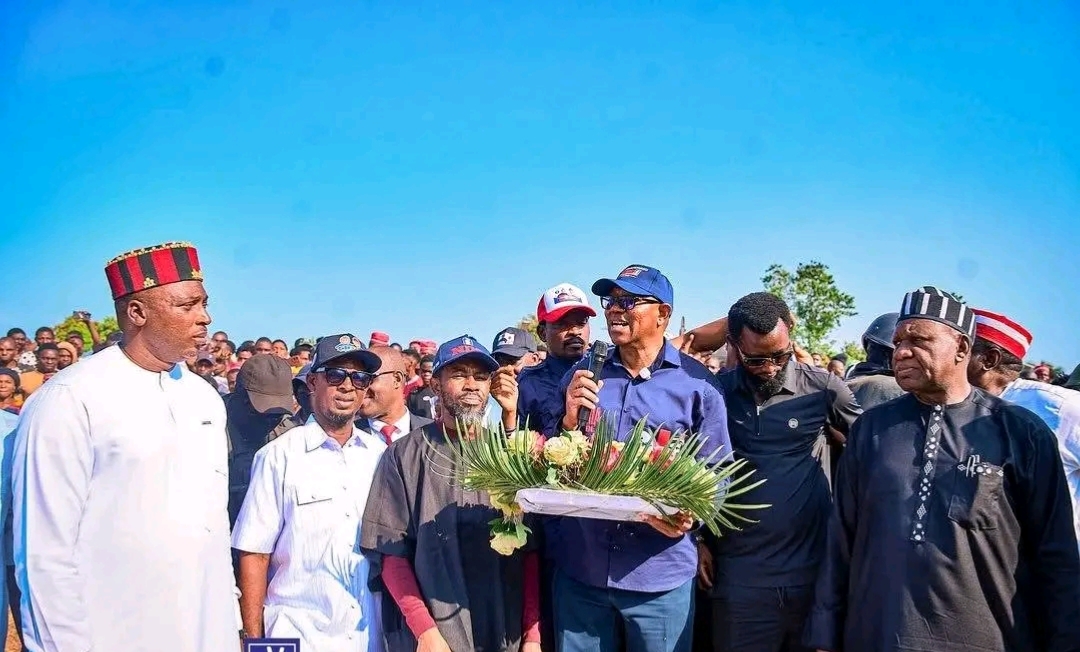
Obi shared his vision in Jos, Plateau State, during a town hall meeting with supporters. He said his administration would focus on listening to citizens and addressing their needs.
He emphasized that national unity is the top priority for his campaign.
"Our number one commitment is to unite the Federal Republic of Nigeria because today we have no unity. We are divided along tribal and religious lines. That should not be. We are Nigerians," Obi said.
Obi pointed out that insecurity is the second key part of his agenda. He stressed that the government's main job is to ensure the safety of lives and property.
"Number two is to secure Nigeria. It is our duty to ensure that Nigerians live in safety, in a country where people are no longer killed daily."
He added, "I assure you that no mother will continue to cry over the loss of her children. No woman should experience the pain of losing her husband, and no father should suffer the agony of losing his wife."
On the issue of displaced persons, Obi said that having internally displaced persons (IDP) camps shows a failure in leadership. He said his government would work to ensure that displaced Nigerians return safely to their communities.
"If any Nigerian remains in an Internally Displaced Persons camp, we have failed. Once one Nigerian is in an IDP camp, the entire Nigeria is in an IDP camp. People must return to their homes," he stated.
He promised to improve the nation's security system and tackle kidnapping and other violent crimes firmly.
"Nobody will kidnap two children and disappear into the bush. If you kidnap children and go into the bush, you will not be alone there. We will come after you," he said.
Obi explained that he chose to engage with communities before starting his campaigns. He believes effective leadership must respond to the people's needs.
"When you want to serve, you must listen to the people. When we come for campaigns, we only talk and we don’t listen to the people. We have decided that leadership must be demand-driven," he said.
The former governor of Anambra State recalled his visits to Bokkos, Barkin Ladi, Mangu, and other areas affected by conflicts in Plateau State. He described the security situation there as unacceptable.
"If I have one person in an IDP camp, it means we are all in an IDP camp. I am competing because I want to know how we talk to that mother whose child was killed, that husband who lost a wife, and that woman who lost a husband. Who is going to listen to their cries?" he asked.
As for the 2027 general election, Obi urged Nigerians to take charge of their votes.
"In the next election, every voter is an agent. Don’t vote and go home. Take that day as the one day you are giving to Nigeria as a patriotic Nigerian," he said.
"Prepare yourself with your breakfast, lunch, and dinner, and remain there. Your vote must be counted, recorded, and transmitted. Nobody should give you any excuse. It is your vote, and we want this election to be about the future of Nigeria."
On the economy, Obi said his government would shift Nigeria from a consumption-based economy to one focused on production. He believes that boosting local production will create jobs and improve living conditions.
"Our determination is to unite Nigeria, secure Nigeria, and pull people out of poverty. That is why we said we are going to move Nigeria from consumption to production," he said.
"By increasing production, we will increase employment. Today, farmers cannot go to their farms because of insecurity. Companies operating in Plateau State have collapsed because of insecurity. When we unite Nigeria and secure it, we will create opportunities."
Regarding access to finance for small businesses, Obi said his experience in finance will help him make changes that will support entrepreneurs.
"I know what it means to access funding. I have been a director and chairman of a financial institution, and I understand how banks operate," he said.
"We will ensure that a portion of credit available in the banking sector goes to small businesses to enable them to grow and create jobs."
On the issue of corruption, Obi promised that public funds would be used for the public good. He made accountability a key principle of his government.
"I have managed public money, so when I say I am going to fight corruption, I know what I am talking about," he said.
"I will fight corruption. Public money must be used for public good. Today, public money is wrongly being used, and that must change."
He also promised to invest heavily in education, noting that Nigeria has about 18 million out-of-school children.
"We want our children to go back to school. We want our schools to work. The more educated you are as a nation, the more developed you become," Obi said.
"We will build new classrooms, employ teachers, and ensure that our schools function properly. We cannot continue to allow millions of Nigerian children to remain outside the classroom."
On healthcare, Obi said improving primary healthcare is key to reducing deaths among mothers and infants.
"Today, if you are sick in Nigeria, you go to church because there are no functional hospitals in many communities. The consequence is that people are dying. Pregnant mothers are dying, children are dying, and we have very high infant and maternal mortality rates," he said.
"The foundation of access to healthcare is primary healthcare. We must strengthen our primary healthcare centres and ensure that every community has access to quality medical services."
He also highlighted the need for the government to support vulnerable groups, including the poor, the elderly, and people with disabilities.
"For a government to exist, it must care for the vulnerable. It must care for the poor and those living with disabilities," he said.
"If we don’t care for the poor, we are not caring for ourselves. That is why we are holding these town hall meetings. We want to listen to the people, take notes of their concerns, and understand their expectations."
Earlier, during a visit to the Plateau State Traditional Council in Jos, Obi said Nigeria cannot progress while citizens live in fear. He said the country needs capable and compassionate leaders.
"We want a government that has the capacity to do the job. We want a government that has compassion, a government that hears the cries of mothers who have lost their children," he said.
"We want a government that is committed to the future of Nigeria. Commitment is very important, and that is what we are going to offer Nigerians."

Comments
No comments yet.