Over Two Million Nigerians Face Blindness from Cataracts
The Ophthalmological Society of Nigeria reports that more than two million Nigerians suffer from avoidable blindness due to cataracts. Efforts to improve surgical rates are ongoing.
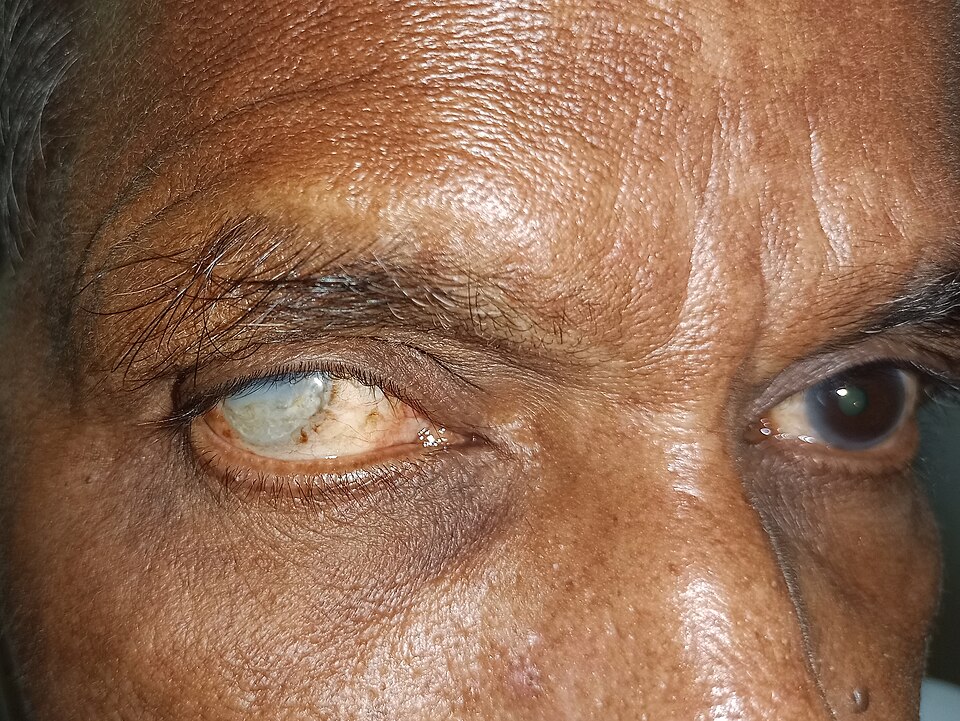
The Ophthalmological Society of Nigeria (OSN) has reported that more than two million Nigerians suffer from avoidable blindness caused mainly by cataracts.
Abubakar Rafindadi, the OSN vice-president and a professor, shared this information on Wednesday at a press briefing. This was in preparation for the 51st Annual General Meeting and Annual Scientific Conference, Abuja ASO 2026, which will take place from 2 to 4 September in Abuja.
Rafindadi mentioned that despite ongoing efforts to fight avoidable blindness, Nigeria still lacks the necessary cataract surgical rates to make a significant impact.
"The statistics have not changed dramatically. We are still fighting a heavy burden of avoidable blindness, with over two million people having avoidable blindness, mainly cataracts, despite the efforts we are making.
"We are not matching the required cataract surgical rates that we need," he said.
The OSN vice-president also noted some progress in training, technology, and eye care services since the last annual conference.
New Eye Care Centres
Rafindadi pointed out the creation of simulation centres in Lagos and Ibadan as key developments. These centres will help ophthalmologists enhance their skills in cataract and vitreoretinal surgery.
He added that the integration of eye care into primary healthcare has expanded. The number of states involved in this program has grown from 14 to 21.
Over 2,500 primary healthcare workers have been trained under this program, including a recent session in Bauchi State.
He mentioned that the society is looking into technology like tele-screening and artificial intelligence to provide quality eye care to rural communities and underserved urban areas.
Rafindadi pointed out that even though Nigeria is becoming more urban, many people in underprivileged areas still struggle to access good eye care.
"We are trying to see how we can adopt the new technological innovations to reach the rural populace and also the underserved populace within the metropolis.
"We are looking at how we can use technology to bridge these gaps through things like tele-screening, artificial intelligence technology, and so on," he said.


The OSN Vice-President also spoke about improvements in the availability of eye care equipment and advanced surgical services. He noted that posterior segment surgeries are now available in several regions where they were once absent.
He named centres in Benin, Lagos, Ibadan, Kaduna, and Kano as places now offering these advanced surgical services.
Rafindadi expressed concern over the shortage and uneven distribution of eye care professionals in Nigeria. He said that many specialists are in major cities due to insecurity and lack of job opportunities in rural areas.
He urged state and local governments to hire more ophthalmologists, optometrists, opticians, and ophthalmic nurses to ensure better eye care access for everyone.
He also mentioned that over 1.5 million reading glasses have been distributed under the Jigibola 2.0 initiative, with a goal of reaching five million by 2027.
Risks of Harmful Practices
Regarding harmful traditional eye practices, Rafindadi warned Nigerians to stay away from unverified treatments that could cause permanent vision loss.
He said the society is collaborating with the government and traditional medicine institutions to find safe practices while eliminating harmful ones.
"We must keep talking to the public. Please don’t go to these people. They should be aware that these practices can be harmful and can cause irreversible loss of vision to them," he added.
The OSN plans to carry out more than 500 free cataract surgeries as part of the activities leading up to the 51st Annual General Meeting and Scientific Conference.
This outreach is set for 27 and 28 August, possibly extending to 29 August if needed. Patients will be screened and selected from various centres in the Federal Capital Territory and surrounding areas.
More than 500 patients have already been chosen and assessed as fit for surgery. The conference, themed "Re-imaging Eye Care in the Digital Era," will focus on using artificial intelligence, tele-ophthalmology, digital diagnostics, and other new technologies to improve eye care access in Nigeria.
Rafindadi said the conference aims to create evidence-based recommendations and a clear plan for enhancing eye care delivery in the country.






Comments
No comments yet.