Tinubu asks National Assembly to approve new $7.7 billion loan
President Bola Tinubu has cancelled his previous loan request and is now asking for approval for a new $7.7 billion loan to help cover the budget deficit.
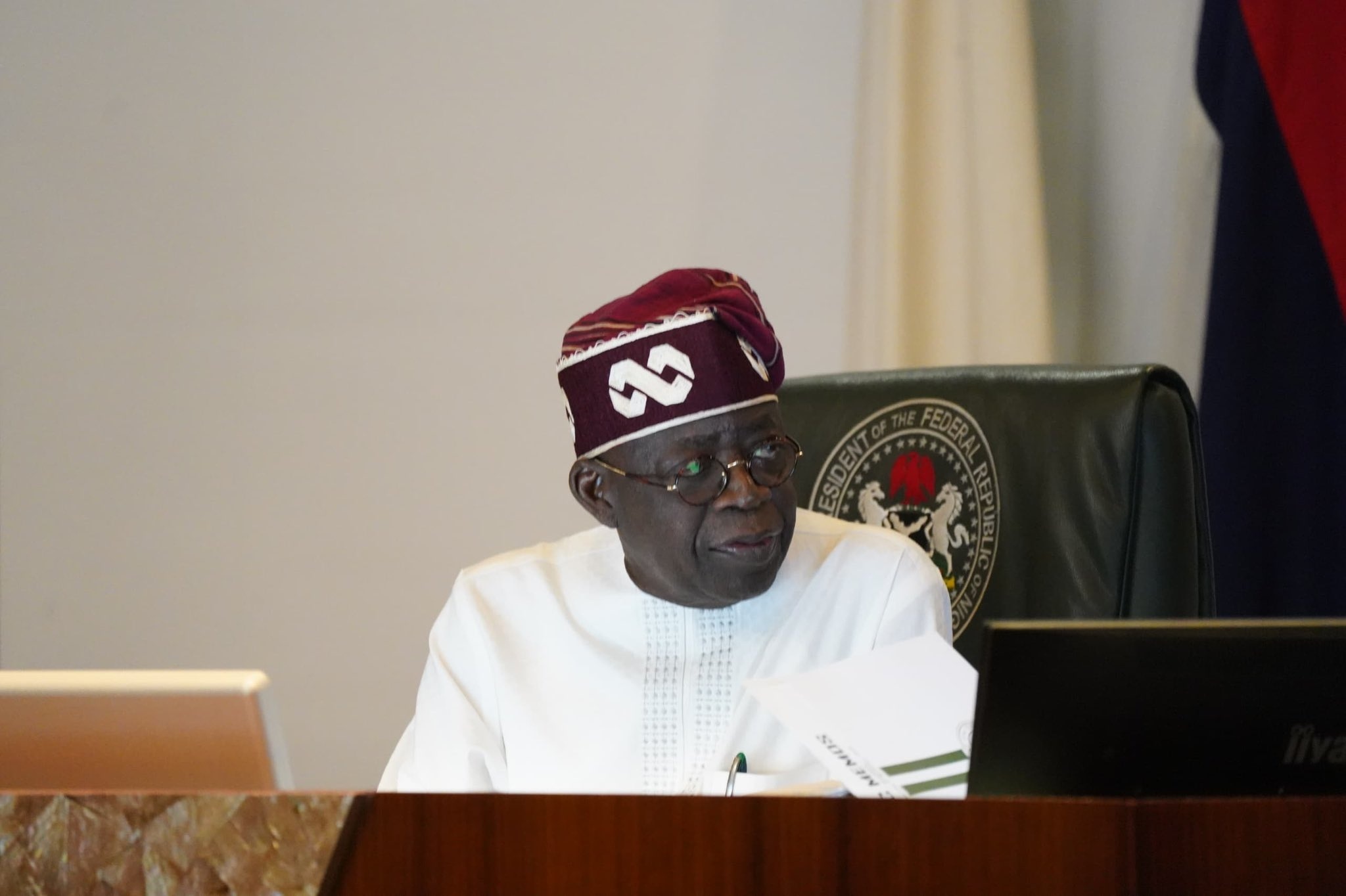
President Bola Tinubu has cancelled his earlier request to the National Assembly. He wanted approval for external loans worth $20.5 billion and €1.05 billion under the 2026, 2027 Supplementary External Borrowing Plan.
Now, the president is asking for approval for a new external loan plan of $7.7 billion to partly cover the 2026 budget deficit.
This new request, which seeks approval for $7,707,404,882.49, was presented in a letter read by Senate President Godswill Akpabio during a session on Wednesday.
According to Mr. Tinubu, this proposed borrowing is about N10.9 trillion when calculated at an exchange rate of $1 to N1,400. This money is meant to help with the N20.2 trillion budget deficit.
The president said this new borrowing plan would fund important projects in areas like infrastructure, defence, agriculture, healthcare, power, and education.
He stated that these projects aim to stabilise and strengthen the economic reforms and successes his government has achieved recently.
The new request includes more details about the borrowing, such as where the funds will come from and the conditions for getting them.
Mr. Tinubu noted that the money would come from several sources, focusing on Eurobonds. He described Eurobonds as quicker to arrange and capable of raising larger amounts at a lower cost.
He mentioned that the government would explore all options at the same time, considering their costs, benefits for the country, and how long it will take to access the funds.
"The plan is to raise the new external borrowings of USD 7.7 billion. I wish to note that all the options will be pursued simultaneously considering the cost and relative benefits to the country and the time required to access the funds," the letter stated.
The president added that the priority would be on issuing Eurobonds because these transactions are usually completed faster.
"In view of this, emphasis will be on the issuance of Eurobonds, which is typically faster to conclude. Additionally, a larger amount can be raised through Eurobonds at a relatively lower cost in respect to the terms and conditions of the Eurobond," he said.
Mr. Tinubu explained that since the borrowing would depend on market conditions, the final terms, interest rates, and repayment periods will only be set when pricing happens.
He said this request follows Sections 21(1) and 27(1) of the Debt Management Office (Establishment, etc.) Act, 2003, and the borrowing plan that the National Assembly approved in the 2026 budget.
The president noted that the 2026 Appropriation Act allows for N29.2 trillion in new borrowing to partly cover a budget deficit of about N31.4 trillion.
This approved borrowing includes N18.4 trillion from domestic sources and N10.79 trillion from external sources.
The proposed $7.7 billion facility aims to cover part of the external borrowing component.
"The total new borrowings of N29.2 trillion were further subdivided into new domestic borrowing of N18.4 trillion and new external borrowings of N10.79 trillion. The latter is the subject of this request," the letter explained.
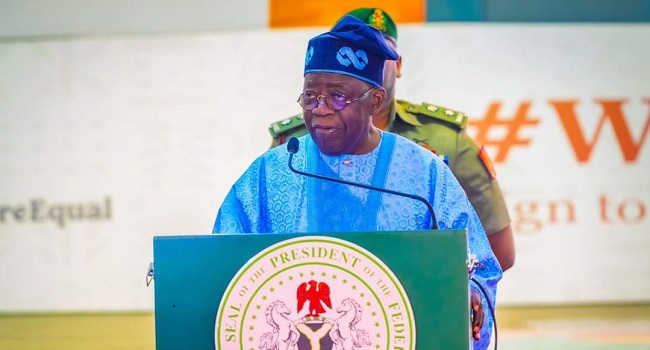
The president stated that this new external borrowing is necessary to carry out programs and projects outlined in the 2026 Appropriation Act.
After reading the letter, Mr. Akpabio sent the request to the Senate Committees on Local and Foreign Debts and Appropriations for further examination.
He instructed the committees to report back as soon as they can.
Last Tuesday, Mr. Akpabio read a previous request from Mr. Tinubu seeking the National Assembly’s approval for external loans worth $20,517,755,901 and €1,045,083,643 under the 2026, 2027 Supplementary External Borrowing Plan.
The president had said these loans would fund critical projects in sectors like infrastructure, agriculture, healthcare, education, water supply, security, and job creation, as well as financial management reforms.
This new request follows about five months after the National Assembly approved a $516.3 million loan from Deutsche Bank AG. This loan is for building the Sokoto, Badagry Superhighway, a major infrastructure project in Tinubu’s Renewed Hope Agenda.
The loan has a nine-year term, including a grace period of up to three years, with an interest rate capped at the Chicago Mercantile Exchange’s Secured Overnight Financing Rate (SOFR) plus 5.3 percent annually.
This facility is backed by insurance from the Islamic Corporation for the Insurance of Investment and Export Credit, which is part of the Islamic Development Bank.
In March, the National Assembly also approved a $6 billion external borrowing plan for the federal government.
Of this amount, $5 billion was to be sourced from First Abu Dhabi Bank to support the national budget. A $1 billion export finance facility from the United Kingdom, arranged by Citibank, was meant for the rehabilitation of Tin Can Island Port and the Lagos Port Complex.
This latest borrowing request comes as concerns rise about Nigeria’s increasing public debt and the growing costs of servicing government obligations.
Nigeria’s debt has grown in recent years as the federal government has depended on domestic and external borrowing to finance budget deficits and infrastructure projects.
Even though the country’s debt-to-GDP ratio is often seen as moderate compared to some other countries, experts worry about the government’s limited revenue and its ability to pay back debts.
A large portion of government revenue goes to servicing debts, which reduces money available for infrastructure, public services, and other development needs.
The International Monetary Fund and the World Bank have repeatedly urged Nigeria to improve revenue collection, boost tax income, and ensure that borrowed funds support productive investments that can yield economic returns.
The federal government insists that external borrowing is essential to fix Nigeria’s infrastructure gaps, fund development projects, and meet budget needs.
Officials argue that borrowing on good terms can help manage financing costs and support economic growth.
Get more stories like this on your home page
How this story developed
- National Assembly to Send State Police Bill to Tinubu
Tinubu asks National Assembly to approve new $7.7 billion loan (this story)


Comments
No comments yet.