TotalEnergies sends drilling ship to Akpo for new oil project in Nigeria
TotalEnergies has dispatched a drillship to Nigeria's Akpo oil field for a new drilling project. Operations are expected to start on November 13.
French energy company TotalEnergies has sent a deepwater drillship to Nigeria’s Akpo oil and gas field. They are getting ready to start a new drilling project that could boost activity in one of Nigeria’s key offshore oil locations.
On Thursday, the company announced that the drillship, Noble Black Rhino, had arrived at the Akpo field. Drilling of a well called AFE-1X is set to start on 13 November.
According to a statement on their Facebook page, the vessel entered Nigerian waters on 2 November after traveling 738 nautical miles from Côte d’Ivoire. It reached the Akpo field at 6 a.m. on 3 November.
TotalEnergies said they are working to prepare for the drilling campaign. They called the arrival of the drillship a significant step for their deep offshore operations.
This development shows ongoing investment in Nigeria’s deepwater oil sector. New drilling and field developments could increase production, bring in more government revenue, and create opportunities for local businesses.
But the company has not shared details on the expected production from the new well, how much they plan to invest, how many new reserves they aim to find, or how many Nigerian workers and contractors will benefit from the project.
What the drilling means for Nigeria
The Akpo field is in Petroleum Mining Lease 2 (PML 2), which used to be Oil Mining Lease 130 (OML 130). It is about 150 kilometers offshore Nigeria.
The field started production in March 2009 and is run by TotalEnergies Upstream Nigeria Limited, which holds a 24 percent stake in the license.
Other partners include China’s CNOOC with 45 percent, South Atlantic Petroleum Limited with 15 percent, and Prime 130 with 16 percent. The Nigerian National Petroleum Company Limited is the main operator of the production-sharing contract.
The old OML 130 was split into new petroleum mining leases as part of the Petroleum Industry Act. Akpo became PML 2, while Egina and Preowei became PML 3 and PML 4 respectively.
The Nigerian Upstream Petroleum Regulatory Commission (NUPRC) records show that Akpo is linked to PML 2.
The Akpo field is a major source of condensate and natural gas. Its development has helped Nigeria’s oil production and gas supply, including supplies to the Nigeria Liquefied Natural Gas facilities.
In February 2024, TotalEnergies announced that they started production from Akpo West, which connects to the existing Akpo floating production, storage, and offloading facility through subsea infrastructure.
This development was expected to add 14,000 barrels of condensate daily, with gas production projected to reach four million cubic meters daily by 2028.
NNPC reported that the Akpo main field produced 124,000 barrels of oil equivalent daily in 2023.
If the new drilling campaign goes well, it could support further development of the asset and help Nigeria maintain or increase its offshore oil production.
It could also bring in more royalties, taxes, and other government revenue if the drilling leads to profitable production.
But the economic benefits will depend on the nature of the well, its results, development costs, and whether any additional hydrocarbons can be profitably produced since starting drilling does not guarantee new production.
Questions over offshore communities’ benefits
The new campaign also raises questions about how much benefit local communities affected by the operations will get from this phase of deepwater investment.
TotalEnergies claims it has set up five Host Communities Development Trusts for its Nigerian operations. But available records reviewed by PREMIUM TIMES do not show that these trusts include the coastal communities related to its deepwater operations.
The company has identified five trusts for its Nigerian oil operations: Obagi, Olo, BOPANE, NOPL, and Port Harcourt. However, a look at the HostComply platform, which tracks the Petroleum Industry Act’s host communities framework, and TotalEnergies’ public records did not show a specific trust or a list of beneficiary communities for its Akpo and Egina offshore activities.
This raises concerns about whether the communities linked to these deepwater assets have been formally recognized as beneficiaries of development programs and whether the company has met its funding obligations to them.
The Petroleum Industry Act, which began in August 2021, requires oil operators to set up Host Communities Development Trusts within a year of the Act starting. It also requires each operator to contribute three percent of its actual annual operating costs from the previous year to the trust.
Although Akpo started production in 2009, more than ten years before the Act was enacted, this does not exempt the operator from the new host-community rules.
The NUPRC specifically named communities along Nigeria’s coastline as beneficiaries of deepwater oil operations.
In a presentation on 29 July 2022, the then Chief Executive of NUPRC, Gbenga Komolafe, outlined the regulator’s plan for allocating coastal communities to deepwater operators for the host communities regulations.
This plan included Rivers and Bayelsa states as the coastal states connected to the Akpo/Egina deepwater projects.
This suggests that communities in these states should be considered for host-community development arrangements for these fields.
But PREMIUM TIMES could not confirm from public records whether TotalEnergies has created a trust specifically for these communities, included them in any of its existing trusts, or how much has been contributed for their benefit.
A media inquiry sent to the company for verification did not get a response before this report was released. The company should clarify which trusts cover the Akpo/Egina coastal communities, identify the beneficiary communities, and disclose contributions made from the operating costs of the deepwater assets.
The Petroleum Industry Act was designed to ensure that communities affected by oil operations get direct and measurable social and economic benefits, rather than being left out of growth opportunities from the industry.
Environmental accountability remains important
The new drilling project comes at a time when there are questions about TotalEnergies’ environmental performance in Nigeria, especially its claims about stopping routine gas flaring.
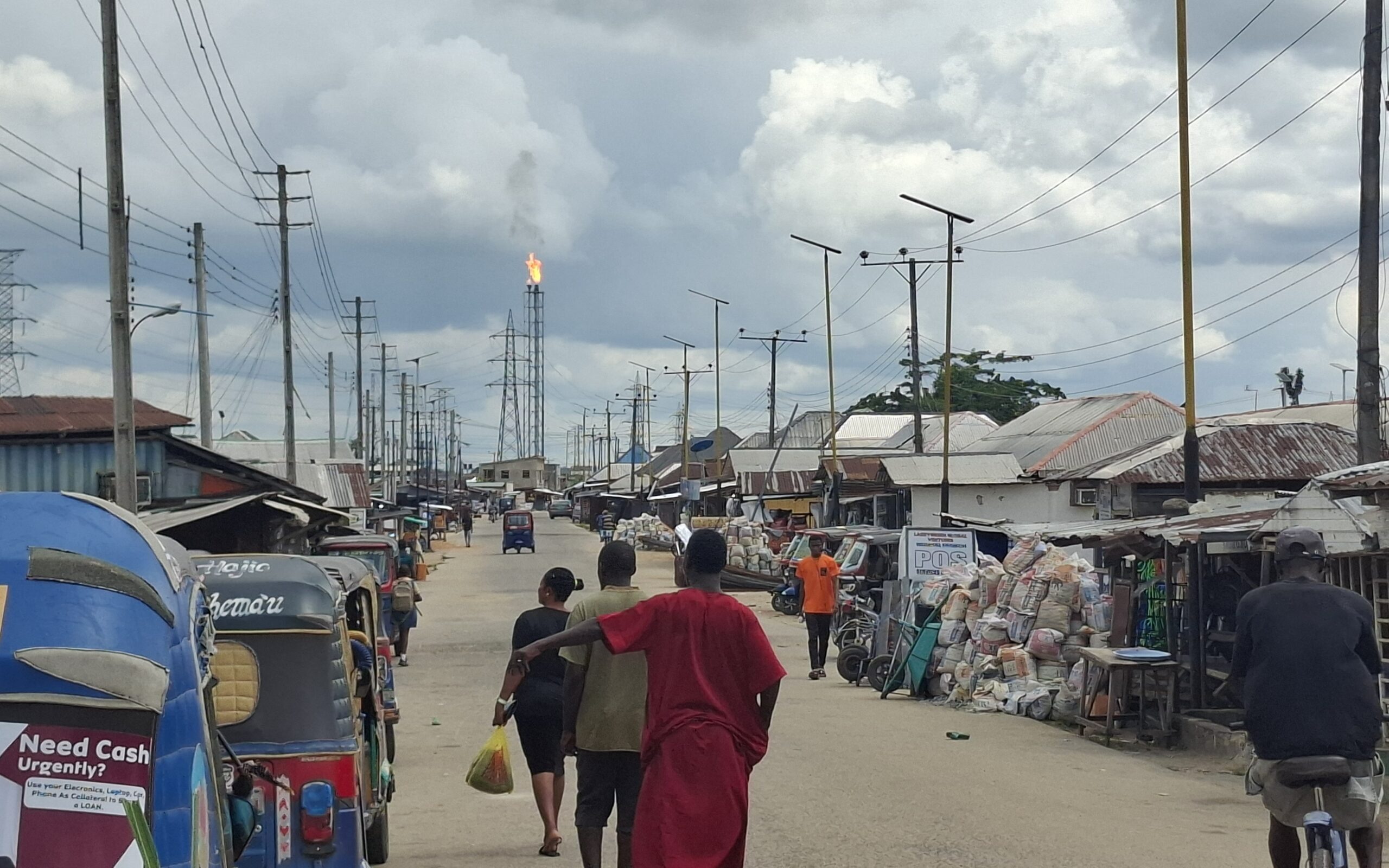
On 12 October, PREMIUM TIMES looked into the company’s claim that it had ended routine gas flaring in Nigeria. The investigation showed ongoing flare activity around its OML 58 and OML 130 assets using satellite data, regulatory records, and accounts from local residents.
Data from the Nigerian Oil Spill Detection and Response Agency’s Gas Flare Tracker showed that flare volumes around OML 130, where TotalEnergies is now drilling, rose to 7.9 million standard cubic feet in 2025, up from below 6.2 million in 2022 and 2023.
The investigation also found gaps in accessible information about methane emissions from assets, raising doubts about the company’s environmental claims.
While flare activity alone does not mean routine flaring is still happening, the findings highlighted the need for clear emissions records and strong regulatory oversight.
The arrival of a new drilling vessel makes it even more pressing to monitor environmental issues, like preventing methane emissions, oil spills, and other pollution linked to offshore drilling.
NUPRC is in charge of regulating upstream oil operations, while the National Oil Spill Detection and Response Agency manages oil spill preparedness and response.
For local communities and environmental advocates, the key question is whether increased investment in offshore oil projects will come with better environmental protections and clear reporting of impacts, especially in deep-water areas that may be hard for regulators and communities to monitor.
Major investment in deepwater operations
The Noble Black Rhino is a deepwater drillship owned by Noble Corporation, a global offshore drilling company.
This ship can operate in water depths of up to 12,000 feet and drill wells to about 40,000 feet deep.
In its third-quarter 2026 financial report published on 26 October, Noble said it had secured a four-well contract with TotalEnergies in Nigeria.
This contract is expected to start in the fourth quarter of 2026 and last for about 150 days, with six more priced option wells.
However, Noble did not specify the exact fields where all the wells would be drilled or provide details about the contract value.
TotalEnergies’ announcement about the vessel’s arrival names Akpo as the immediate drilling location.
The company said this development shows its commitment to responsible energy development, safety, technological progress, and increased Nigerian involvement in the oil and gas sector.
TotalEnergies has been operating in Nigeria for over sixty years and is one of the country’s top international oil and gas producers.

Comments
No comments yet.