Delta State Takes Action Against Human Trafficking
The Delta State Government is prosecuting over 15 human trafficking cases to combat exploitation through illegal migration. The Attorney-General emphasizes the state's commitment to justice.
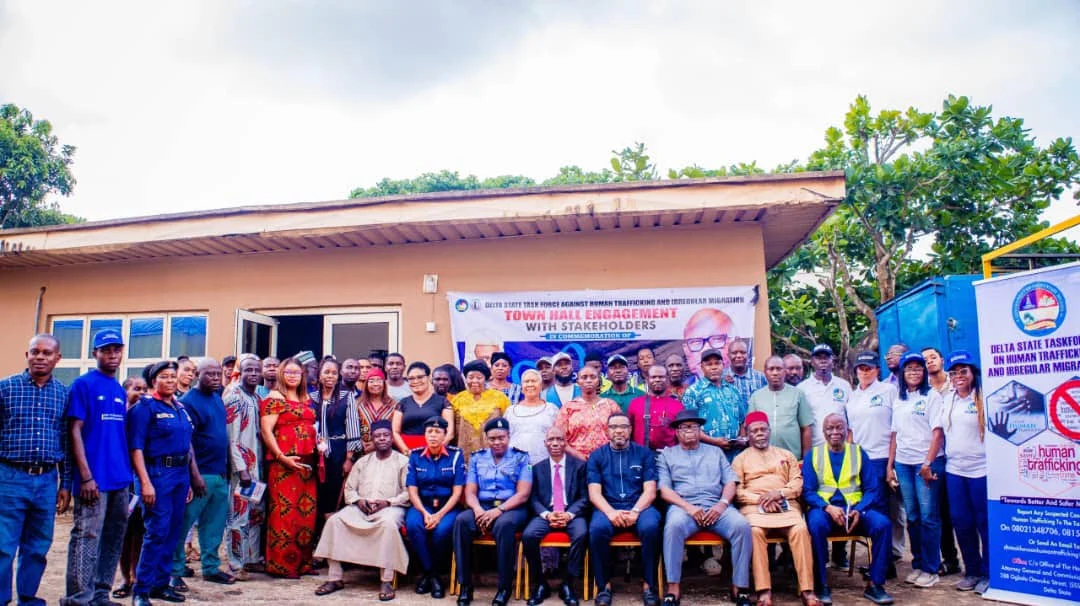
The Delta State Government is now prosecuting over 15 human trafficking cases at the state High Court. This move is part of efforts to stop the exploitation of residents through illegal migration and fake job offers abroad.
The state Attorney-General and Commissioner for Justice, Ekemejero Ohwovoriole, shared this information during a program on human trafficking, smuggling, and irregular migration in Agbor, Ika South Local Government Area, on Thursday.
Ohwovoriole, who leads the Delta State Task Force Against Human Trafficking and Irregular Migration, mentioned that the Department of Public Prosecutions is handling these cases under the Delta State Human Trafficking (Prohibition) Law, 2024.
He explained that this law, signed by Governor Sheriff Oborevwori, aims to strengthen the state's response to human trafficking and ensure that offenders are prosecuted.
The Attorney-General added that the National Agency for the Prohibition of Trafficking in Persons is also working on trafficking-related cases in the Federal High Courts in the state.
"The state government remains committed to ensuring that anyone involved in human trafficking and related offences faces the full weight of the law," he said.
Ohwovoriole warned that traffickers are using social media, fake job ads, and promises of high-paying jobs abroad to lure innocent people.
He said security agencies, the judiciary, and other important institutions are working together to break down trafficking networks, prosecute offenders, and rescue victims.
But he stressed that government efforts will not be enough without support from residents and community leaders.
He urged the public to be careful when considering job offers abroad and to report any suspected trafficking activities to the authorities.
During the event, the Zonal Commander of NAPTIP, Stephen Selowo, had a representative, Sam Offiah, who discussed the issue of human trafficking. He called it a growing global crime that needs coordinated efforts.
Offiah warned that educated young people and others in Nigeria looking for better opportunities abroad are becoming more vulnerable to trafficking networks that pretend to be legitimate recruitment agencies.


"Human trafficking is not only a moral crime but a growing global business that feeds on desperation.
The slang 'Japa' may sound harmless, but when dreams turn into desperation, people become vulnerable, and that is what traffickers take advantage of," he said.
He praised the Delta State Government for organizing the awareness program and encouraged other states to start similar initiatives to fight human trafficking and unsafe migration.
At the event, Ijeoma Nwanze, the Secretary of the state task force, gave a lecture describing human trafficking as modern-day slavery. She called for everyone to respond to this crime together.
Nwanze pointed out that many Nigerians want to find better opportunities abroad, making them easy targets for fake migration agents and trafficking groups.
She explained that human trafficking can be identified through signs of movement, exploitation, deceit, coercion, and the exchange of money or benefits to control victims.
She encouraged attendees to share this information with their communities and educate people about the dangers of irregular migration and misleading job offers.
"Together, we can build a Delta where no dream is trafficked, and no ambition is enslaved," she said.
Delta State has been actively responding to human trafficking through its task force and Ministry of Justice. The state started the Task Force Against Human Trafficking and Irregular Migration in March 2019. The ministry set up an Anti-Human Trafficking Unit in October 2021 to coordinate awareness campaigns, investigations, prosecutions, victim support, and teamwork among agencies.
The 2024 law gives a legal framework to prevent trafficking, protect victims, and punish offenders.



Comments
No comments yet.