Yobe and Adamawa Boost Security Against Illegal Mining
Yobe and Adamawa state governments are increasing security to tackle illegal mining, which is linked to banditry and insurgency in Nigeria.
The Yobe and Adamawa state governments have increased security to fight violent crimes linked to illegal mining in their rural areas.
These steps are likely connected to claims that the search for minerals like gold has fueled banditry and insurgency in some parts of Nigeria.
An investigation by the News Agency of Nigeria (NAN) found that Yobe has over 27 solid minerals, including gold, limestone, gypsum, trona, diatomite, granite, and kaolin. Adamawa has more than 26 solid minerals in commercial deposits, such as gold, limestone, gypsum, trona, diatomite, granite, and kaolin.
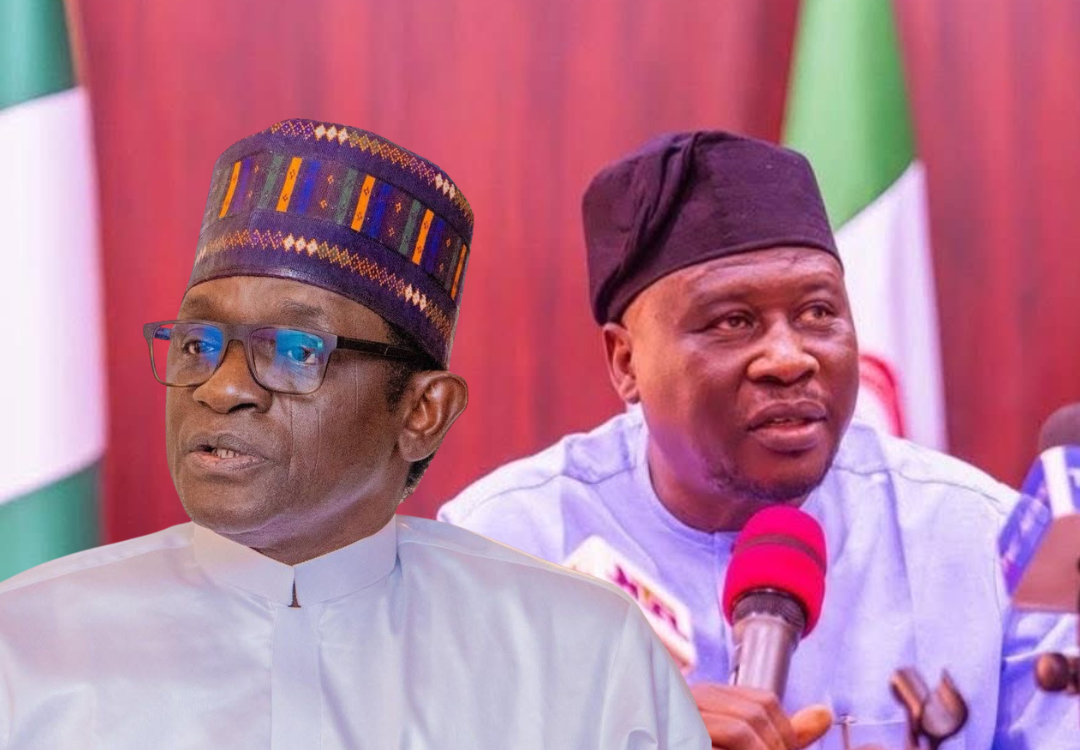
Yobe Governor Mai Mala Buni’s special adviser on security, Dahiru Abdulsalam, told NAN that the state has sent marshals to Gulani and Gujba local government areas to address illegal mining.
Mr Abdulsalam, a retired brigadier-general, said the new mining marshals are from the police, the Nigeria Security and Civil Defence Corps, and the State Security Service (SSS).
“As time goes on, the state government is going to establish a full-fledged mining marshals backed up by the law as a security outfit of the state government.
This will allow us to recruit more personnel, train and equip them to protect the mining areas, miners and the assets of their companies,” Mr Abdulsalam said.
He noted that illegal mining leads to insecurity, immorality, illiteracy, and ecological issues.
Aji Bularafa, the state commissioner for wealth creation, empowerment, and employment generation, raised concerns about unregistered miners coming to the areas.
He warned that if this continues, bandits and terrorists could take over mining and create serious security problems.
Mr Bularafa, who is a key player in the sector, urged stakeholders to work with the government by registering their companies with the state Mining Development Corporation.
Mohammed Bara, the commissioner for energy and transport, announced that registration offices would soon open in Shishiwaji and Damaturu. He advised residents to only deal with registered miners.
He also warned village heads against selling farmland to unregistered miners, saying this could lead to conflicts in the areas.
Mr Bara asked stakeholders to be patient, stating that the new mining reforms are meant to clean up the sector for better security and revenue generation.
In Adamawa State, Governor Ahmadu Fintiri has outlawed illegal mining to reduce banditry and community disputes tied to mineral resources.

Mathew Ayuba, the Director of Geology in the state Ministry of Mineral Resources Development, said the ban is a preventive step against banditry and communal issues.
He mentioned recent fights in communities like Chobo and Lamurde as reasons for the government’s move to tighten regulations in the sector.
Mr Ayuba said the government has also put a stop to scavengers who often explore mineral-rich areas without permission.
He added that the governor set up the Mineral and Environmental Management Committee (MEMCO) to oversee mining activities and ensure environmental compliance.
According to him, Adamawa has various solid minerals, including monazite, copper, fluorite, lithium, gold, and sapphire.
He said these minerals are found in large quantities across the state’s 21 local government areas, especially in Song, Mubi, Maiha, Jada, Toungo, and Michika.
Mr Ayuba mentioned that mining in some parts of Madagali is still on hold due to security issues from insurgency.
He attributed the state’s rich mineral deposits to its location along the Cameroon Volcanic Line, which gives it geological importance.
He said the state Ministry of Solid Minerals Development is working with the Nigeria Mining Cadastre Office to check mining records and confirm locations before giving clearance to potential operators.
He explained that while the federal government gives mining licences, the state government will provide clearance and help get community consent for applicants.
“The state does not issue mining licences. What we provide is clearance after verifying that the proposed site is free from disputes or conflicting claims.
Applicants are also directed to relevant traditional institutions to obtain consent letters before applying for licences to the Federal Government,” he said.
Mr Ayuba said this process aims to ensure peace between mining operators and local communities.
He revealed that the state has commercial-scale mining operations and that investors are running mineral processing plants.
Get more stories like this on your home page
How this story developed
Yobe and Adamawa Boost Security Against Illegal Mining (this story)
- Yobe and Adamawa Increase Security to Stop Illegal Mining



Comments
No comments yet.