89 Groups Urge Nigeria to Share Investment Treaty Review and Highlight Risks
Eighty-nine civil society groups in Nigeria are calling for transparency in the review of investment treaties, warning of risks to public funds and environmental protections.
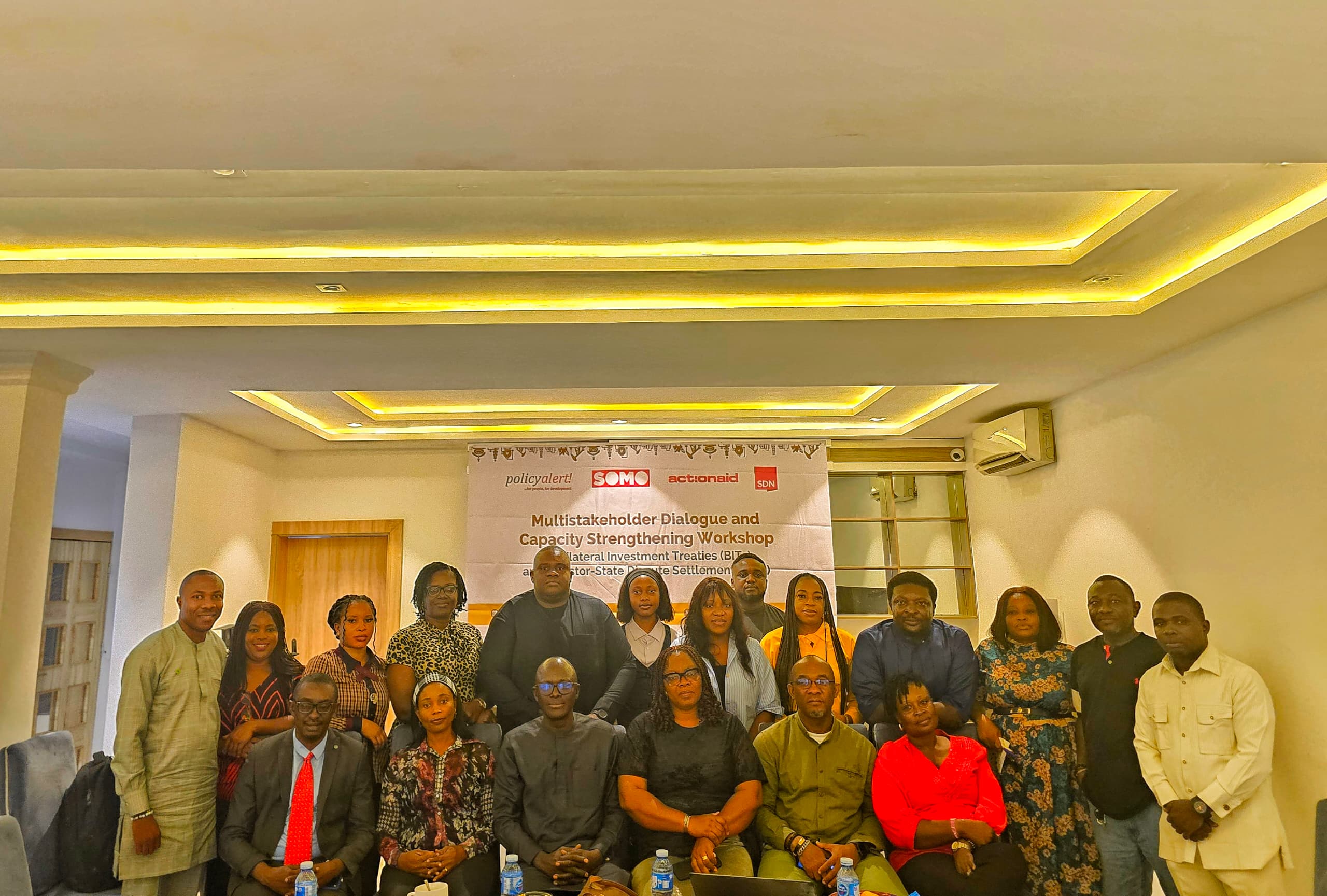
Eighty-nine civil society groups in Nigeria have urged the federal government to make public its review of the country’s investment treaties. They warned that international arbitration could put public funds at risk with expensive claims and limit the government's ability to enforce environmental and climate regulations.
The groups include Amnesty International Nigeria, BudgIT, ActionAid Nigeria, Health of Mother Earth Foundation, Policy Alert, and Yiaga Africa. They also want the government to rethink Nigeria’s use of the investor-state dispute settlement (ISDS) system. This system allows foreign investors to challenge some government actions in international arbitration courts.
In a statement released on 17 October, to mark the Global Days of Action to End ISDS, the CSOs asked the federal government and the National Assembly to ensure that investment agreements do not weaken environmental protection, public health, fiscal stability, and access to justice for communities.
They called for better transparency in investment agreements and dispute-settlement rules. They also want protections to make sure that new offshore oil investments do not limit Nigeria’s regulatory powers unnecessarily.
This statement comes as Nigeria is working on major offshore oil projects and trying to attract investment in transition minerals like lithium. This is happening even as there is increasing pressure for better environmental responsibility and climate action.
The groups warned that ISDS rules could lead to significant compensation claims against Nigeria if foreign investors find government policies to be against protections in investment treaties. They noted that these financial effects could be serious for a country with limited funds and many environmental issues, especially in oil-producing areas.
“Public resources spent defending claims or paying awards are resources unavailable for healthcare, education, climate adaptation, clean energy, and environmental restoration,” they stated.
They explained that the fear of costly arbitration could stop governments from creating or improving regulations that benefit the public. This situation is often called regulatory chill.
The CSOs emphasized that foreign investors deserve fair treatment and due process. However, they should not have special rights that undermine democracy, environmental responsibility, or access to justice for affected communities.
The statement pointed out three known investor-state arbitration cases involving Nigeria’s oil sector. In 2007, Shell Nigeria Ultra Deep Limited began a case against Nigeria at the International Centre for Settlement of Investment Disputes (ICSID). That case was dropped in 2011.
Another ICSID case was started by Shell Petroleum N.V. and Shell Petroleum Development Company of Nigeria Limited in 2021 under the Nigeria-Netherlands bilateral investment treaty. This case was also dropped in October 2022.

In June 2023, Korea National Oil Corporation and its Nigerian branches started a case under the Nigeria-Korea bilateral investment treaty. This case is still open according to the latest records mentioned by the groups as of 2026.
The CSOs said that while the three cases did not prove Nigeria’s liability, they show the legal and financial risks involved in defending such disputes. They also raised worries about how investment protections might affect Nigeria’s plans for offshore petroleum projects like Bonga North and Bonga South West/Aparo.
They urged the government to ensure that petroleum agreements, production-sharing plans, and fiscal incentives allow it to strengthen environmental, climate, public health, and financial regulations.
The CSOs mentioned the Jupiter Lithium dispute in Kaduna, which was registered at ICSID in June 2026 under the Nigeria-United Kingdom bilateral investment treaty. This case, which is still pending, involves a lithium mining project and highlights the possible effects of investment protections on Nigeria’s growing transition-minerals sector.
They said Nigeria must ensure that investment deals support responsible mining, environmental safety, and domestic economic growth instead of repeating the environmental and social issues linked to oil extraction.
A key demand from the CSOs is for the immediate release of a report from a nine-member committee set up by the Attorney-General of the Federation on 8 November 2024. This committee was tasked with reviewing Nigeria’s bilateral investment treaties and the Nigerian Investment Promotion Commission Act.
The committee needed to look at how investment promotion could work alongside national interests, environmental protection, and sustainable development. The CSOs said the committee’s findings and recommendations have not been shared publicly and they want this information released without delay.
If the review is not finished, they want the government to share its current status and give a clear completion date. They also called for open discussions with the National Assembly, civil society groups, host communities, labor organizations, and independent experts.
They further urged the federal government to take legal steps to end or change investment agreements that could expose public-interest regulations to legal and financial risks. They want Nigeria to support global efforts to move away from the ISDS system.
The CSOs concluded that Nigeria needs investments that promote development without risking democratic accountability, environmental protection, or the rights of its citizens.

Comments
No comments yet.