APC backs Tinubu’s claim on poverty, blames PDP for past failures
The APC supports President Tinubu's view that past governments, especially the PDP, are responsible for Nigeria's ongoing poverty crisis. They argue that the roots of this issue predate Tinubu's presidency.
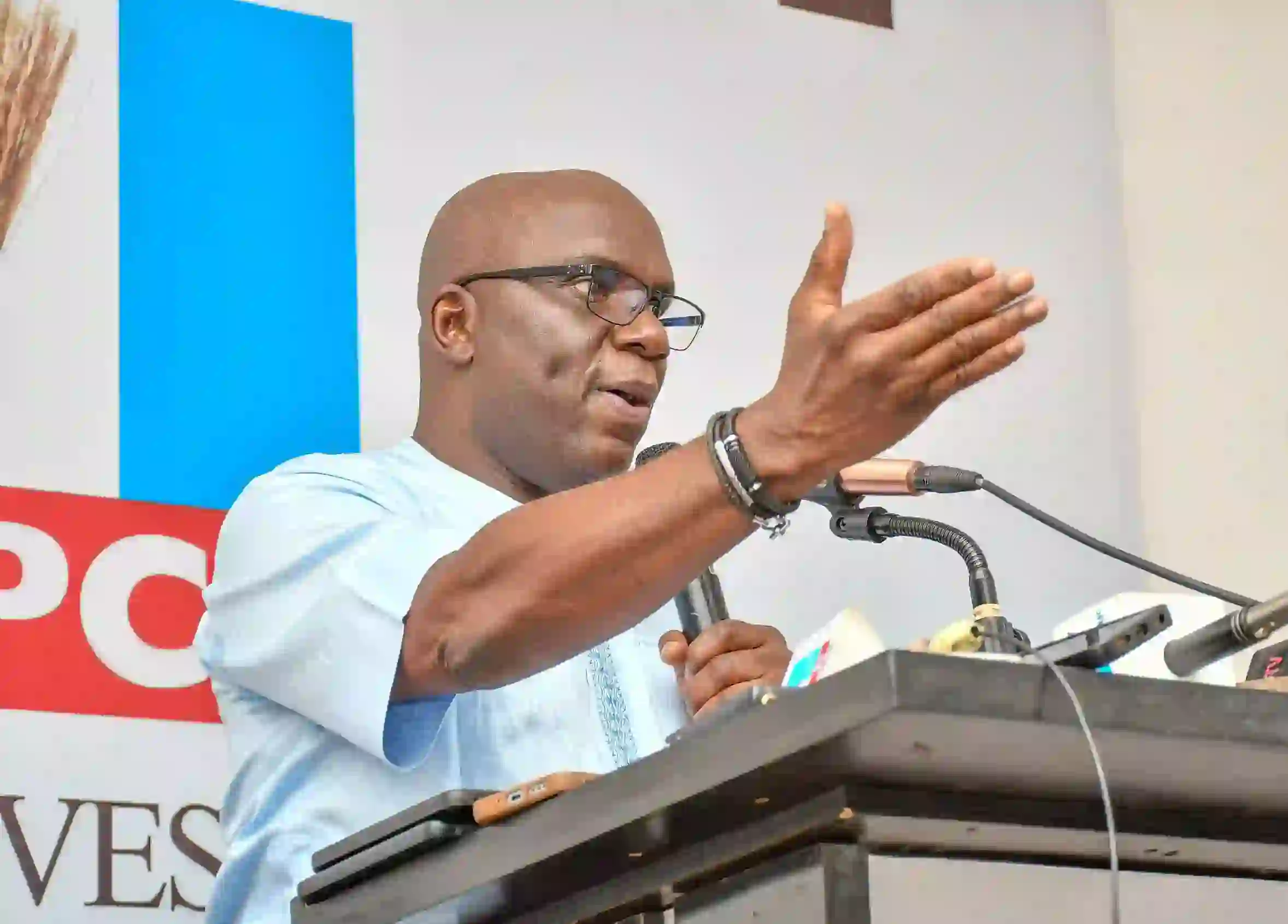
The All Progressives Congress (APC) has come out in support of President Bola Tinubu's claim that opposition politicians caused the hunger and poverty facing Nigerians. They blame past governments, especially the Peoples Democratic Party (PDP), for not solving the country's long-standing economic issues.
Felix Morka, the party’s National Publicity Secretary, said the roots of Nigeria’s current poverty crisis were planted before Tinubu took office in May 2023. He argued that former leaders should not present the current hardship as something that started with this administration.
Morka spoke on Monday during an interview on News Central Television’s Breakfast Central. He responded to questions about Tinubu’s comments at the APC’s 2027 presidential campaign launch in Kaduna on Saturday.
At the rally, Tinubu accused opposition politicians of creating hunger and poverty. He insisted that his administration is working to eliminate these problems. “I have heard the opposition talking about hunger and poverty. Who created them? They did. They created the hunger; they created the poverty. We are trying to eradicate it,” he said.
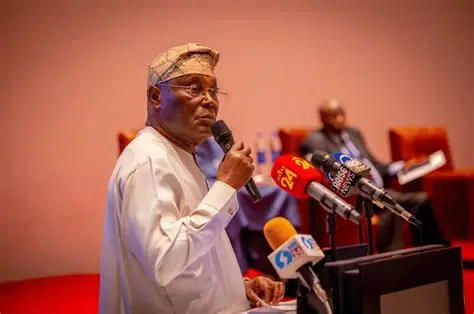
Morka defended Tinubu’s statement and pointed out that former Vice President Atiku Abubakar, now an opposition leader, was part of a political system that ruled Nigeria for 16 years under the PDP from 1999 to 2015 but did not solve poverty. He said, “Poverty has been with us. As a matter of fact, the foundations for the endemic poverty we’re dealing with today were laid in that era.”
He urged Atiku, who was vice president from 1999 to 2007, to explain why previous administrations failed to tackle poverty before criticizing the current government about the economic hardship Nigerians face today.
Morka maintained that Tinubu was talking about the historical causes of poverty, not suggesting that the current government has no responsibility for the tough situation Nigerians are in today. But this defence comes at a time when many are worried about the rising cost of living and the impact of Tinubu’s economic reforms on households.
The World Bank estimates that 69.6 percent of Nigerians will live below the lower-middle-income poverty line of $4.20 a day by 2025. About 50.8 percent, or around 123 million people, are expected to live in extreme poverty. These numbers highlight the challenges facing the government even as it claims that its reforms are needed to stabilize the economy.

Morka disagrees with how poverty numbers are sometimes presented in public talks. He said currency depreciation and changes in the exchange-rate system should be factored in when looking at incomes and living standards. He explained that the government's choice to unify the exchange rate aims to fix economic distortions.
He said looking at the policy only based on its immediate effects on purchasing power would give an incomplete view. Morka admitted that the reforms have lowered Nigerians’ purchasing power and raised the cost of living, but he argued that the government had few options to tackle what he called deep-rooted economic issues.
He also defended the removal of the petrol subsidy, saying it was necessary to ease the burden on public finances and to end a system that previous governments struggled to reform. Morka argued that the government should be judged not only by whether Nigerians see quick improvements in their living conditions but also by whether its policies lead to real economic recovery.
He pointed out that changing an economy does not happen overnight. He gave examples of countries like China, Malaysia, and Singapore, whose development took time. “We didn’t tell you we had a magic wand to correct Nigeria’s generational problems in one day or in two weeks or in one year,” he said.
According to him, the Tinubu administration has introduced several measures to help soften the effects of its reforms. These include cash transfers to vulnerable households and plans to lower transportation costs and improve access to financing.
Morka said the government is not ignoring the struggles caused by the reforms but noted that the impacts of removing long-standing economic support systems would naturally be felt by households. He also defended the government’s changes in the electricity sector, saying these changes have given states and other players the chance to boost power generation. He thinks that the benefits will take time to show but will eventually improve electricity supply and support economic growth.
The APC’s defence comes as Tinubu kicks off his campaign for a second term. Public worries about living costs and the effects of his administration’s economic policies remain central issues as the government argues that the reforms are essential for restoring economic stability.



Comments
No comments yet.