Concerns Rise Over Deaths in Partners' Homes
Recent deaths of young people in partners' homes have sparked serious concerns. Experts call for caution and better safety measures in relationships.
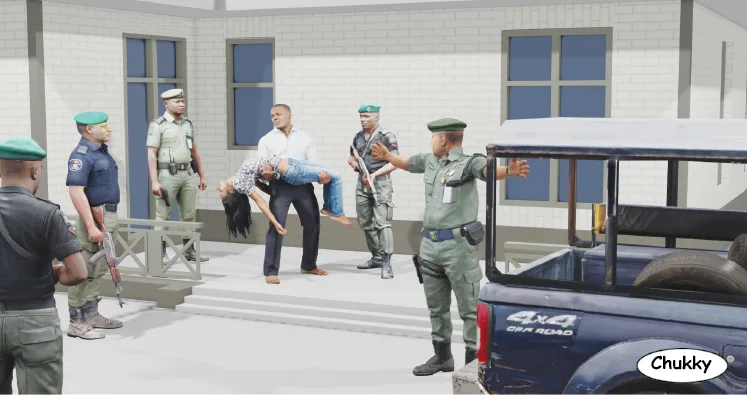
The deaths of young people in the homes of their partners have raised serious concerns among security experts, lawyers, and others. They are calling for caution in relationships, quick reporting of strange incidents, and thorough investigations to find out what happened in these cases.
Recently, there have been reports of people found dead or falling ill after visiting their boyfriends or girlfriends. This has highlighted the dangers that can come with intimate relationships and the challenges of investigating deaths that happen behind closed doors.
While each case is different, these incidents have sparked discussions about personal safety, relationship violence, possible medical emergencies, and the need for proper forensic investigations. This can help to determine if the deaths were due to natural causes, accidents, or criminal actions.
In January 2026, 27-year-old Esther Akwaji died after visiting her boyfriend in the Dei-Dei area of Abuja. The Federal Capital Territory Police Command reported that Esther’s brother, Peter, said she left home on January 21, claiming she was going to a bank in Dei-Dei.
Later that night, Peter received a call from a man who said he was her boyfriend. The man told him that Esther had come to his house, where he bought her food. After eating, she started vomiting and was taken to Kubwa General Hospital, where she was confirmed dead.
The police stated that her body was taken to the mortuary for an autopsy to find out how she died. They were also trying to find her boyfriend, who was reportedly on the run.
Esther’s death was not the only troubling case. In March 2026, the Oyo State Police began looking into the death of 26-year-old Precious Mogaji. Her body was found at her boyfriend’s door in the Oguntula area of Ojoo, Ibadan.
The police identified the boyfriend as 29-year-old Quadri Mohammed. They said a Good Samaritan called the authorities after finding the body. In August 2025, another woman named Bidemi Omole died shortly after visiting her boyfriend, known as Yinka, in Esa-Oke, Osun State.
The police reported that she fell ill after arriving at his house and died while being taken to the hospital. The boyfriend was arrested, and an autopsy would be carried out to determine the cause of death.
Earlier, in March 2025, a Lagos State University graduate named Adija was found dead in her boyfriend’s apartment in the Meiran area of Lagos. Her family became worried when she stopped answering calls. They went to his apartment and found her body after forcing the door open.
The police stated they were working to apprehend the boyfriend. There have also been cases where both partners died. In June 2024, a man named Eric and his girlfriend were discovered dead inside his apartment in the Ayeyemi area of Ondo town.
Relatives found their bodies after failing to reach Eric by phone. Residents suspected electrocution, pointing to a generator running on the premises and a phone charging near the bed. But the Ondo State Police said the cause of death was unknown and that an investigation had begun.
A study published in the BMJ Public Health journal in 2024 by Vitalis Ukoji from the Federal University Lokoja and Vitus Ukoji from the University of Ibadan recorded 205 deaths from 180 intimate partner violence incidents in Nigeria between 2019 and 2021.
The study showed that fatalities rose from 62 in 2019 to 69 in 2020 and 74 in 2021. Women made up 74 percent of the victims, including 51 percent female spouses and 23 percent female lovers. Male spouses accounted for 18 percent and male lovers seven percent. Lagos had the highest number of deaths among the states studied.
The researchers found that arguments between partners led to 50 deaths, while alleged infidelity accounted for 37. Dangerous weapons were linked to 46 deaths and physical assaults to 27. They concluded that deaths from intimate partner violence increased steadily over those three years, even before and after the COVID-19 lockdown.

The findings show that fatal violence in relationships is not just limited to married couples. Unmarried partners also faced similar dangers. The different situations surrounding the reported deaths highlight how tough it can be to know what happens in private homes, where there are often no witnesses.
A person who falls ill suddenly at a partner’s house might face a medical emergency, poisoning, or another issue. If someone is found dead after a violent argument, they may have been assaulted. A couple found dead together might have died from an environmental or electrical problem.
The location of a death alone does not explain how or why it happened or who, if anyone, is to blame. This is why forensic investigations are important. Autopsies, toxicology tests, crime-scene assessments, medical records, phone records, and statements from neighbors can help investigators piece together what happened before a death.
If poisoning is suspected, toxicology tests may reveal substances involved. If electrocution or generator issues are suspected, checking electrical setups and the environment is necessary. The quality and speed of investigations matter to grieving families. An unexplained death can leave loved ones with doubt, mixed stories, and unanswered questions.
If a partner goes missing after a death, investigators must clarify what happened instead of letting public opinion decide guilt. There needs to be more focus on warning signs in relationships. Repeated fights, threats, stalking, coercive behavior, and attempts to isolate a partner should not be brushed off as normal disagreements.
Families and friends who notice such behavior should take it seriously and encourage those affected to seek help. At the same time, public talks should be careful not to label every death in a partner’s home as murder.
Some deaths might be natural or accidental, while others could involve crime. Only solid investigations and medical proof can show the difference. Speaking with Sunday PUNCH, Col Yomi Dare, a former Director of Legal Services at the Nigerian Army, advised young people to be careful when choosing partners.
He said deaths in lovers' homes could have various explanations, including criminal acts and existing health issues. Dare, who is also the founder of International Masters Security Systems Limited, said, “It is advisable that youths must be very careful in the type of relationship they are engaged in. There is an instance of yahoo-yahoo where young people are involved in rituals. You cannot rule out the possibility of death through a prevailing health condition.
“If such things happen, it should be immediately reported to the police and the homicide department, where they will order an autopsy to be performed on the deceased, and if there is foul play, it will be known. And if it happens, you cannot say that the person in whose home it took place is probably a murderer.”
Also speaking with Sunday PUNCH, human rights lawyer Tolu Babaleye said just being present when another person dies does not mean someone is guilty. He stressed the need for medical evidence to figure out how someone died. He said, “Death is a natural occurrence and where it is discovered that it is a natural occurrence, no matter where the person died. The person who is there is the first suspect, and that is what has happened to that boy.
“The police, in the course of investigation, will have to conduct an autopsy. Without that, you cannot establish death or murder. The moment it is conducted, they discover that the death is natural even though the matter is charged to court.
“What the police should do is that if they discover that the autopsy did not point to any wrongdoing on the part of the boy, I will advise the police not to waste public money to prosecute.” The Police Public Relations Officer for the Oyo State Police Command, Olayinka Ayanlade, advised people inviting others into their homes to be aware of their medical issues.
He urged anyone involved in a death incident to report it to the police immediately. Ayanlade said, “Anybody who is carrying someone home should have an idea of the person’s medical condition. And that will help you to know quickly what you should do at any point. Secondly, if anything happens, the proper thing to do is to report to the nearest police station.
“An attempt to cover it up will increase the charges. If the person was supposed to be charged with manslaughter, he will be charged with murder. If he attempts to cover it up, such individuals will be charged for murder instead. An attempt to cover up such a thing will show that it was premeditated.




Comments
No comments yet.