Could Tshisekedi’s Third Term Help or Hurt DRCongo?
The DRC Senate's bill could let President Tshisekedi seek a third term. This raises questions about the impact on democracy and public trust in the government.
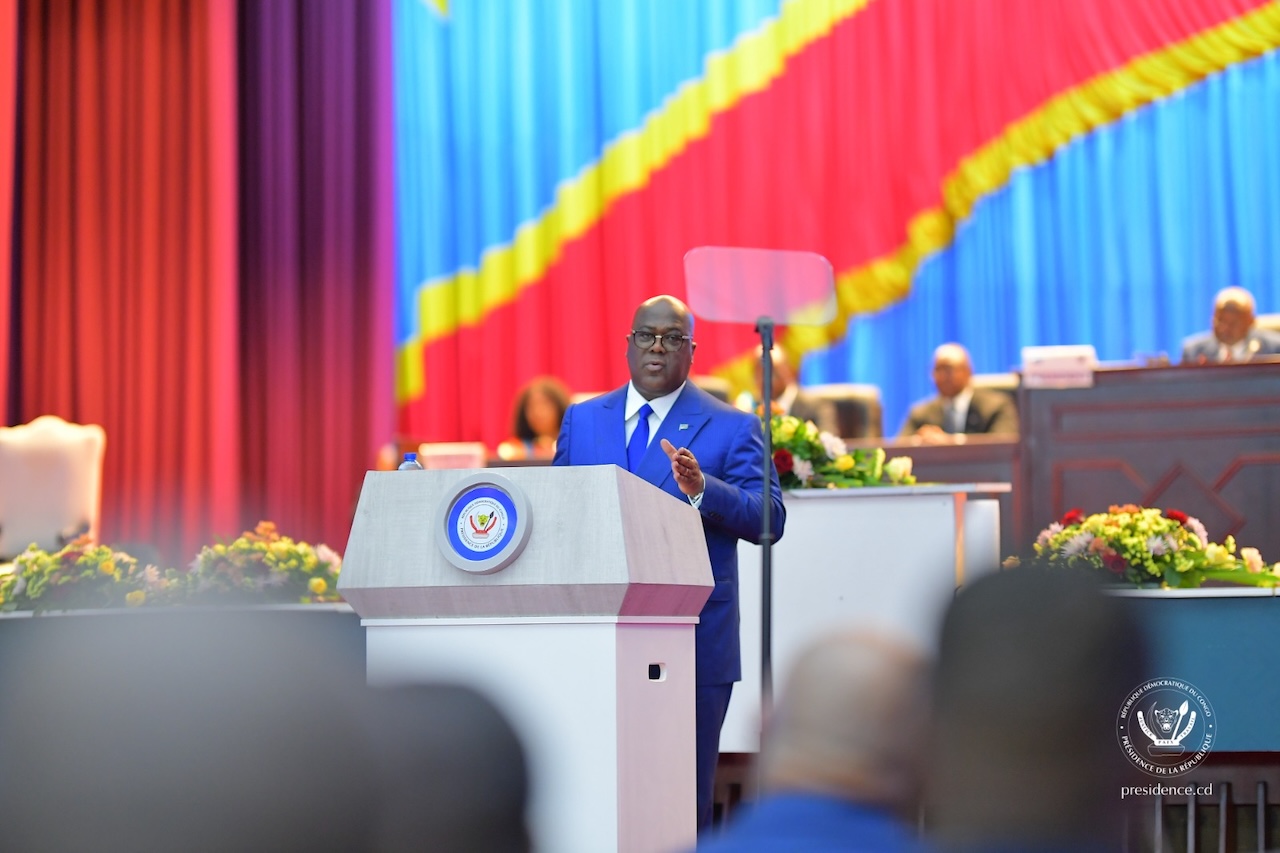
On 15 June, the Senate of the Democratic Republic of the Congo (DRC) passed a bill to change the constitution. This bill would reset presidential term limits. If it becomes law, a referendum could happen. Under the new rules, President Félix Tshisekedi’s past terms would not count. This means he could run for a third term.
The constitution currently bans changes to term limits. But this bill allows Mr Tshisekedi to make constitutional changes. This bill came after his statement on 6 May. He said elections could not happen in 2028 unless the conflict in eastern DRC was resolved. He also mentioned he would consider a third term “if the people want it.”
Despite protests, the bill is moving forward. Many see this as a ‘constitutional coup’ according to opposition members. Mr Tshisekedi’s coalition controls Parliament. This makes it easier for them to push the bill through faster than the opposition and civil society can respond. The Coalition of Congolese for Constitutional Change and the Catholic Church oppose it. But neither group has the power to stop the changes. They can only try to mobilise public pressure and influence outside reactions to the DRC.
This issue is important because how the constitution is viewed affects more than just local politics. A past example is when former president Joseph Kabila delayed leaving office. This caused protests and a crisis of legitimacy that hurt Kinshasa’s standing both regionally and internationally. When the public lost trust in the electoral system, Kinshasa struggled to get support from other countries.
Mr Tshisekedi’s changes could backfire. They could create problems beyond just international relations. Delaying elections for security reasons may weaken governance that is already fragile. Years of weak institutions and corruption, plus the ongoing conflict in eastern DRC, have lowered public trust in the state. Only 12% of people in DRC trust elections.
A referendum and conditional elections could make the situation worse in two main ways. First, low public trust makes democratic processes less credible. This increases the chances that people see election results as manipulated. Political competition may move away from official channels. This could lead citizens and political actors to seek support from armed groups.
Second, ongoing violence in eastern DRC makes political contests easier to turn into security issues. Armed groups and political leaders may use fear and uncertainty to justify violence or revenge. The government could be seen as unable to maintain order or even helping to undermine it. This further weakens already fragile state institutions and creates more societal divisions.
A major worry for the DRC is that these constitutional changes could repeat past political instability. A state facing serious security issues needs strong institutions to keep public trust and manage political competition peacefully. Weakening these institutions in the name of security could lead to more instability instead of solving problems.
Despite military actions, states of emergency, and regional help, Kinshasa has struggled against the Alliance Fleuve Congo (AFC)/M23. A better strategy has been to internationalise the conflict. Investigations by the United Nations, sanctions, regional mediation, and increasing pressure from the West have all highlighted Rwanda’s support for the rebellion.
The DRC has always framed the conflict as an attack on its sovereignty. While the conflict has roots in both internal and external issues, Mr Tshisekedi’s constitutional moves could complicate Kinshasa’s diplomatic position. Instead of just defending against claims of supporting the rebellion, Rwanda can now point to political issues in DRC, making it harder for Kinshasa to present a clear message.
Whether this argument is effective is not the main issue. International diplomacy often revolves around competing stories rather than the truth. A president trying to reset term limits and postpone elections gives Rwanda a narrative that complicates Kinshasa’s own.
International responses could vary. European governments and international bodies have stressed the need for constitutional governance in DRC. For them, attempts to extend presidential terms could raise questions about Mr Tshisekedi’s legitimacy.
On the other hand, the US is less focused on democracy and more on strategic interests like regional stability and mineral supply chains. This could give Mr Tshisekedi more political support as the US drops any pretense of promoting democracy in its dealings.
Kinshasa’s waning legitimacy could also strengthen the AFC/M23’s demands for more autonomy. This reinforces the idea that the central government does not represent all Congolese. In the current political and security situation, a referendum on a new constitution would leave out civilians in rebel-held areas. This would further question the legitimacy of the process.
Ending cycles of violence and hostility requires a government based on both internal legitimacy and external support. It needs to encourage dialogue and reforms that tackle the root causes of the conflict.
To avoid the fallout from Mr Tshisekedi’s constitutional moves, action is needed now. The Catholic Church and civil society groups are still strong voices in DRC. Their role in promoting dialogue and public discussion should be supported. There should be a focus on including credible voices in national talks about constitutional changes.
Regional and international groups like the East African Community, International Conference on the Great Lakes Region, and the UN should work together to prepare for potential tensions. They need to coordinate mediation and early warning systems.
International partners involved in DRC peace efforts must make clear the conditions for their support. Diplomatic backing and pressure on Rwanda cannot be separated from Kinshasa’s constitutional actions.
Kinshasa cannot afford to fight two battles for legitimacy at the same time: one against Rwanda in eastern Congo and another over constitutional succession at home.
Comments
No comments yet.