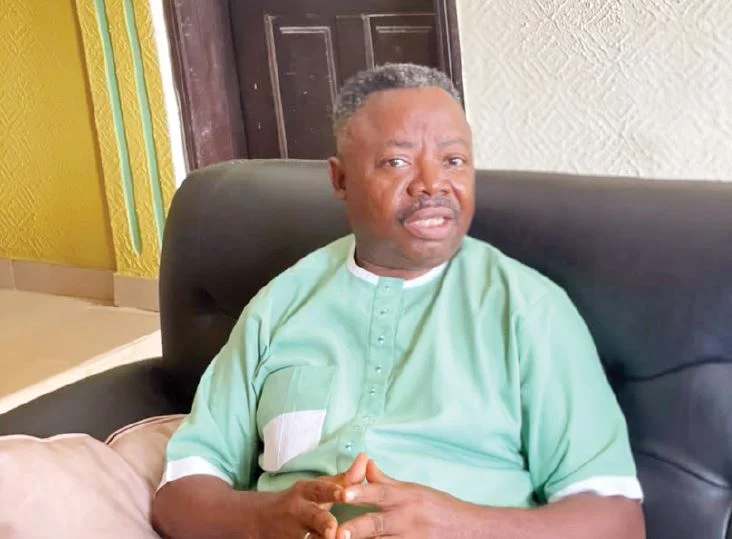
In this chat with EDWARD NNACHI, Dr Bolaji Akinyemi, a public affairs analyst and advocate for democracy, shares his thoughts on the deregistration of the National Democratic Coalition, Nigeria's democracy, the role of the judiciary, governance, insecurity, the economy, preparations for the 2027 general elections and more.
The deregistration of any political party is more than just paperwork. It raises serious questions about how healthy our democracy is, how open our political space is, and how much trust citizens have in our electoral bodies. Democracy grows when there is competition, inclusion and choice, not when political participation is limited. More importantly, I worry about what I call the technical deregistration of voters. When registered citizens must verify, reactivate or confirm their Permanent Voter Cards before they can vote, it suggests that keeping a credible voters' register is now the responsibility of the voters. In a country where trust between INEC and Nigerians is already low, such processes create worry and suspicion. Ultimately, this is about trust. Every eligible Nigerian must know that their right to vote cannot be weakened through administrative or technical methods. Democracy is strongest when more people can participate, not when citizens are unsure if they can exercise their constitutional rights.
The judiciary is supposed to be the last hope for the common person only if it acts as a guardian of justice and not a tool in political fights. More and more, Nigerians feel uneasy when they see political outcomes decided more in courtrooms than at the ballot box. The courts are there to interpret the law, uphold the Constitution and protect the people's sovereignty. They should never replace the voters. When court decisions cause more arguments than confidence, it damages democratic legitimacy. Nigeria urgently needs a judiciary that is trusted by the public, gives justice fairly, and is independent of political influence.
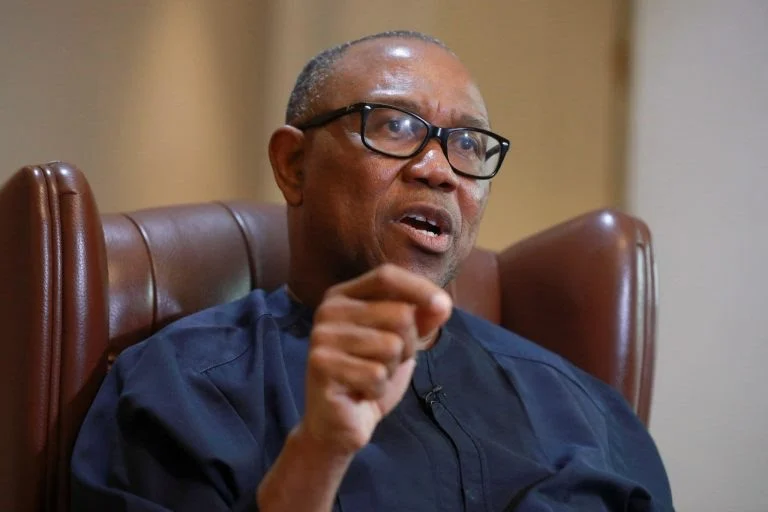
Mr. Peter Obi shared a personal concern, and every Nigerian has the right to talk about their safety. But we should look beyond one person. Nigeria has over 250 million people. My bigger worry is how many Nigerians will still be alive and able to vote in 2027, considering the issues of insecurity, poor healthcare, hunger and the ongoing neglect of data that should guide public policies. If I am right, Mr. Obi is around 64 years old and will be about 65 by 2027, an age that only a small number of Nigerians reach. That reality should make us think deeply. Our average life expectancy is in the mid-fifties, not because Nigerians are not strong, but because governance has not done enough to protect lives and improve living conditions. So the real question is not whether one politician will be around for the election, but whether millions of everyday Nigerians will live long enough to take part in democracy.
Nigeria is facing a problem of trust more than a problem of resources. Inflation is eating into salaries, unemployment is high, insecurity is a constant issue, and many citizens no longer believe that government actions are based on evidence or the national interest. Our democracy is also turning into a fight rather than a participation. Whether every claim of opposition suppression is true or not, the government must understand that how people feel also matters for democratic legitimacy. A confident government welcomes criticism because opposition is a key part of democracy, not an enemy. What Nigerians want is governance that is open, accountable, and judged by results instead of promises.
The release of the kidnapped pupils and teachers after 54 tough days is both comforting and a wake-up call. While we thank God for saving their lives and appreciate everyone who fought for their freedom, their release should not make us forget the failures that allowed the kidnapping to happen in the first place. The incident reminds us that security is not just about using force; it is about creating strong systems that stop crime before it happens. The government must improve intelligence gathering, secure schools, enhance community policing, use technology for monitoring and quick response, and ensure that those who commit crimes are quickly caught and punished. Education cannot flourish where fear exists. Every child deserves to learn in safety, and every teacher deserves to work without the threat of violence. Making schools safe must become a top national priority and a key measure of responsible governance.
The 2027 elections should not just be another battle between political parties. They should give citizens a chance to reshape the purpose and direction of our democracy. I believe real progress will only come when citizens mobilize and organize around national interests instead of party loyalties. Our diversity is too complex for political parties alone to fully understand our shared goals or turn them into a clear development plan. That is why I advocate for a Citizen Agenda, one that belongs to Nigerians from all political, religious, and ethnic backgrounds. Political parties should be pressured to respond to that agenda instead of citizens only defending party interests. Democracy must focus more on citizens if it is to achieve lasting national progress.
Turning 60 is more than just a personal milestone; it is a chance to reflect on one’s journey, assess one’s contributions and renew one’s commitment to serving others. I chose to celebrate my birthday with a national discussion because birthdays should honor not just age but also purpose. Nigeria is at a crucial moment. We need more discussions that produce solutions than ceremonies that just entertain us. I want to gather citizens, public officials, professionals, and young people to think about the future we want to create together. As I have stressed throughout this conversation, anyone who hopes to live long should care that Nigeria’s average life expectancy is still in the mid-fifties. That reality inspired our discussion theme: ‘Data Is Life: Government Roles and the Citizens’ Pacts.’ We cannot ignore the data that shows the quality of our lives and the challenges our society faces. In that spirit, Governor Alex Otti will speak on ‘Life at 60 for Senior Citizens: Government’s Roles and the Citizens’ Pacts.’ The discussion will be led by Senator Ade Fadahunsi, a skilled political scientist. Joining us will be economist Dr. Jonathan Sunday Akuns and Pastor Goke Coker, who is also an economist. The newly sworn-in Senator representing Ondo South, Professor Dayo Faduyile, will share his medical knowledge in the discussion. Together, we hope to inspire a national conversation that is based on evidence, focused on solutions, and dedicated to the welfare of Nigerians. If there is one message I want Nigerians to take away, it is this: the future of our country will not be decided by the government alone. It will be shaped by citizens who choose to be active participants instead of passive onlookers. Building our nation is a shared duty, and every generation must work to leave Nigeria better than they found it.
Credible elections will depend not only on changes by INEC but also on Nigerians taking charge of the electoral process. This is not just about trusting APC, ADC, NDC or any other political party. Political parties seek power, while citizens must protect the national interest. The experience of 2023 should remind us that vigilance cannot be handed off to someone else. Nigerians must come together, legally use technology, document polling unit results, gather available information independently, and stay peacefully involved throughout the electoral process. No one should wait until after an election for results to simply be announced. Citizens must keep records that can either support or challenge official announcements. When citizens take an active role in ensuring electoral integrity, democracy becomes stronger.
The scandal reveals a serious failure of coordination and oversight among institutions. It is hard to understand how an organization could operate under the name of a federal agency for years without exposing major weaknesses in our governance systems. Internationally, incidents like this raise concerns about weak institutions and poor accountability. Investors look at not just economic signs but also the credibility and reliability of public institutions. When regulatory systems fail to catch such problems, public trust inevitably suffers. Accountability must go beyond just identifying those behind the fake agency. The institutions that are supposed to oversee must also explain how such a failure was allowed to continue for so long.
The first lesson is that governance must be more data-driven and integrated with technology. Every government agency should be traceable through a central, clear and publicly accessible database. Secondly, oversight institutions must be more proactive instead of reactive. Good governance identifies and fixes problems before they turn into national embarrassments. Finally, citizens also have duties. We must build a culture of checking facts instead of assuming. Democracy works best when the government is accountable and the citizens are alert.
Drop your comment
No comments yet — be the first to drop the gist 👇