Guterres Calls for $1.3 Trillion to Help Developing Nations Tackle Climate Change
UN Secretary-General António Guterres emphasizes the urgent need for $1.3 trillion each year to support developing nations in combating climate change.
United Nations Secretary-General António Guterres has urged developed countries and international banks to provide at least $1.3 trillion each year for developing nations by 2035. He warned that the world's efforts to fight climate change are not matching the seriousness of the problem.
Mr Guterres said that money promised for climate finance must be easy to access for nations struggling with rising temperatures, building strong infrastructure, and switching to cleaner energy sources.
He also called for a faster move away from fossil fuels. He accused big industry players of blocking climate action while still making money from activities that worsen global warming.
Mr Guterres made these statements on Wednesday at the World Leaders Summit of the 31st United Nations Climate Change Conference (COP31) in Antalya, Türkiye. Leaders from various countries gathered to talk about how to fulfill international climate promises.
He pointed out that global emissions need to drop by about six percent each year. He argued that current national climate plans would only cut about a third of what is needed, even if they are fully followed.
"Our first climate duty is to tell the truth. The brutal truth is that the climate crisis is outrunning us. Emissions in 2025 reached all-time highs. Heat records keep shattering. The last four years were the hottest ever," he stated.
Climate Financing Concerns
Mr Guterres' request comes as worries continue about how available climate finance is for developing countries. Many of these nations face high costs to deal with extreme weather, protect vulnerable communities, and lower emissions.
The $1.3 trillion yearly funding goal isn't completely new. It builds on the climate finance agreement made at COP29 in Baku, Azerbaijan, in 2024. That agreement aimed to raise at least $300 billion each year for developing nations by 2035, led by developed countries, plus a broader goal to reach $1.3 trillion annually by that year.
But Mr Guterres stressed that this larger financing goal needs to go beyond political promises to become real money that can help the countries that need it.
"Developed countries must lead in delivering at least $300 billion a year by 2035, and set out concrete plans with clear milestones to at least triple adaptation finance by then," he said.
He added, "The $1.3 trillion goal must become real finance flowing to developing countries, and this demands that every source of finance pull its weight." He also noted that emerging economies outside China make up nearly two-thirds of the world’s population but get less than one-fifth of global clean energy investments.
Many of these countries pay two to three times more to borrow money, which makes it hard to fund renewable energy projects and climate adaptation programs. This situation risks making them more reliant on fossil fuels, as they might keep investing in traditional energy setups due to the lack of affordable clean-energy financing.
He called for more help from multilateral development banks, private investors, and donor countries. This includes better lending terms and new ways to finance projects.
Scrutiny of Fossil Fuel Companies
Mr Guterres also criticized the fossil fuel industry for its impact on climate policy. He said the lobbying from these companies is slowing down the move to renewable energy.
He pointed out that the world cannot keep relying on coal, oil, and gas when their economic and environmental costs are clear.

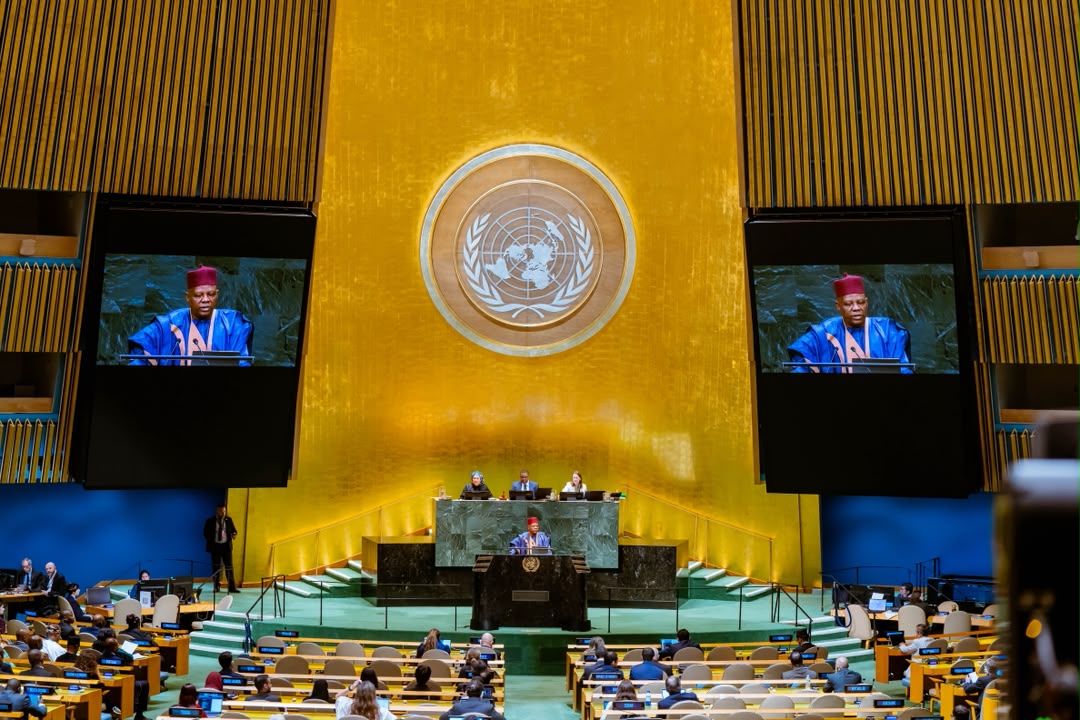
"Fossil fuels must go the way of the dinosaurs, but that won’t happen on its own. The dinosaurs did not have a lobby, but fossil fuels do," he stated. He accused fossil fuel interests of twisting scientific facts, delaying policy actions, and avoiding accountability for environmental harm.
He noted that renewable energy is becoming more competitive. For instance, solar power, which was only one percent of global electricity generation ten years ago, now meets nearly three-quarters of the electricity demand growth from last year.
He mentioned the increasing use of electric vehicles, predicting that nearly one in three new cars sold globally will be electric by 2026. He also pointed out that three-quarters of the world’s population lives in countries that import fossil fuels, making them vulnerable to price changes and energy insecurity.
He called for a fair and orderly transition that includes stopping new coal projects, reducing methane emissions, and expanding electricity grids.
He urged governments to tax the huge profits made by fossil fuel companies and use that money to help countries affected by climate disasters. He highlighted the difference between the profits of oil companies and the funding for climate-vulnerable nations, revealing that the nine biggest oil companies made $95 billion in profits in the last quarter. In contrast, the Loss and Damage Fund had received only about $600 million.
"That is what these companies made in about 14 hours," he pointed out.
Leaders Call for Action
The COP31 World Leaders Summit is happening on November 11 and 12. This is part of the high-level talks that will continue from November 9 to 20 in Antalya.
Türkiye is hosting the conference, while Australia is leading the formal discussions under a partnership agreement. Other leaders at the summit also urged for more climate finance and practical steps to help vulnerable countries.
Australian Prime Minister Anthony Albanese emphasized the growing danger of rising sea levels to Pacific island nations, especially Tuvalu, where the islands are about 1.83 meters above sea level.
He shared a story about meeting a 13-year-old student from Tuvalu who is worried about her home’s future, even though she dreams of becoming a doctor. He read her message to world leaders, asking for cooperation to protect communities at risk from rising oceans.
Mr Albanese noted that Australia has doubled its renewable electricity generation over six years, with renewables now making up half of the country’s electricity. He also said that over 600,000 home batteries were installed in the past year.
Meanwhile, Ethiopian Prime Minister Abiy Ahmed asked for climate action to be part of economic planning, especially in areas where changing weather threatens farming and livelihoods.
“In Ethiopia, climate action is economic policy,” he emphasized. He noted that more than 90 percent of Ethiopia’s electricity comes from hydropower and the country is investing in wind, solar, and geothermal energy.
He also talked about Ethiopia’s Green Legacy Initiative, where over 56 billion seedlings have been planted to restore land and increase forest cover. He said climate financing needs to be reliable and available early enough for vulnerable nations to prepare for extreme weather.
He urged international financiers to make their commitments clear, specifying how much funding will be available, when it will arrive, and any conditions tied to it.
Comments
No comments yet.