Senate approves bill to boost funding for unity colleges and armed forces schools
The Senate has passed a bill to enhance funding for unity colleges and armed forces schools, aiming to improve infrastructure and learning resources.
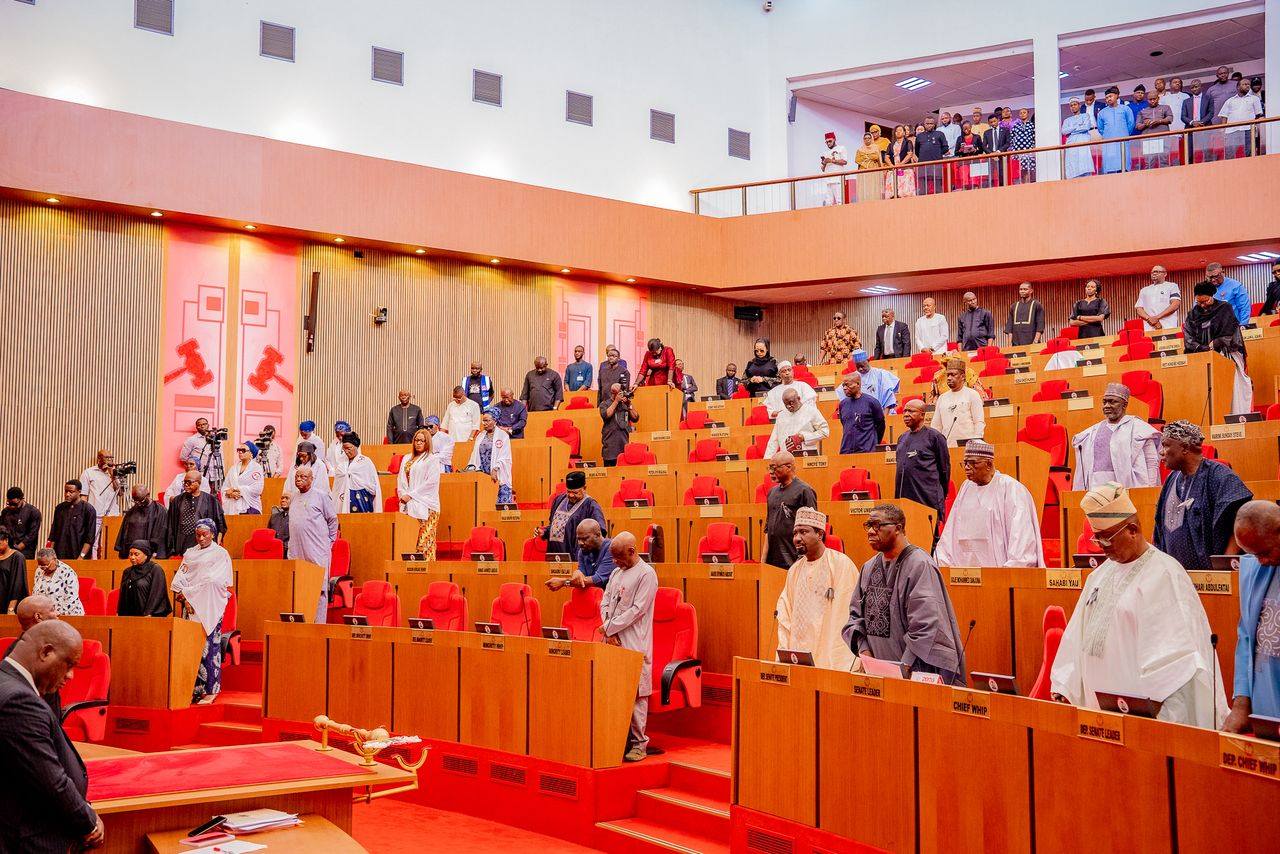
The Senate on Wednesday approved a bill to change the National Senior Secondary Education Commission Act. This change will increase government funding for federal unity colleges and armed forces senior secondary schools. It also aims to improve how these schools are run.
The Senate passed the amendment after looking at a report from its Committee on Education (Basic and Secondary). Orji Kalu presented the report on behalf of the committee chairman, Usman Adamu.
The Deputy Senate President, Barau Jibrin, who led the session, announced that the bill passed after getting majority support via a voice vote.
This amendment is an executive bill sponsored by the Senate Leader, Opeyemi Bamidele. It passed its second reading in October and was sent to the committee for more discussion, including a public hearing.
The bill aims to provide direct government help to fix poor infrastructure and lack of learning materials in public senior secondary schools across the 36 states and the Federal Capital Territory (FCT).
It also outlines direct government funding with clear rules and good coordination between the National Senior Secondary Education Commission and other relevant agencies.
Additionally, the amendment changes Section 23(1)(b) of the current Act, which talks about the makeup of state education boards. Under the new rule, one member will be picked from each of the three senatorial districts in every state. They must have at least one woman among the three representatives.
While presenting the committee's report, Mr Kalu, who is a former governor of Abia State, mentioned that the committee held a public hearing on the proposed amendment. Representatives from the Federal Ministry of Education, the Nigeria Union of Teachers (NUT), the Academic Staff Union of Secondary Schools (ASUSS), and others attended.
He said the committee reviewed and combined the ideas shared by stakeholders during the hearing before suggesting the bill's passage.
The committee then asked the Senate to approve the suggested amendments.
After the report was shared, Mr Jibrin closed the Senate session, and lawmakers moved into the Committee of the Whole. There, they looked over and accepted the proposed amendments clause by clause.
This proposed amendment comes at a time when there are worries about low funding, poor infrastructure, lack of teaching materials, and unequal learning results in Nigeria's public secondary schools.
Even though the federal and state governments have made policies and set up institutions to improve access to quality education, many public schools still find it hard to create good learning spaces, provide enough teaching resources, and prepare students for further education and jobs.
A recent report from the United Nations Children’s Fund (UNICEF) called Public Finance for Basic Education in Nigeria noted that chronic underfunding is a big problem causing poor access to education and weak learning results. The report showed that government spending on education fell from 9.3 percent of total government spending in 2015 to 3.6 percent in 2023. This is well below the international standard of 15 to 20 percent.
The report also pointed out major learning gaps among children in school. In 2022, 86 percent of pupils in Junior Secondary School 2 did not reach the minimum level in mathematics, based on assessments cited by UNICEF and the Universal Basic Education Commission.
In June 2025, the Executive Secretary of the National Senior Secondary Education Commission (NSSEC), Iyela Ajayi, stated that lack of funding is holding back the commission's ability to fix infrastructure issues, shortages of teaching materials, and gaps in human-resource development. He said the commission has not yet received the required allocation of at least two percent of the Consolidated Revenue Fund as stated in the National Senior Secondary Education Commission Act, 2023.
The Act established the commission to set and enforce minimum standards for senior secondary education. It also aims to provide federal support to address infrastructure problems in Federal Unity Colleges, the 36 states, and the Federal Capital Territory. It also sets up a special fund to help with school infrastructure, teaching materials, lab equipment, teacher training, and other educational needs.

Comments
No comments yet.