Hospital in Akwa Ibom Celebrates Survival of Tiny Preterm Baby
A baby girl born at just 25 weeks has been sent home from Ibom Multi-Specialty Hospital. She is the smallest baby the hospital has ever discharged.
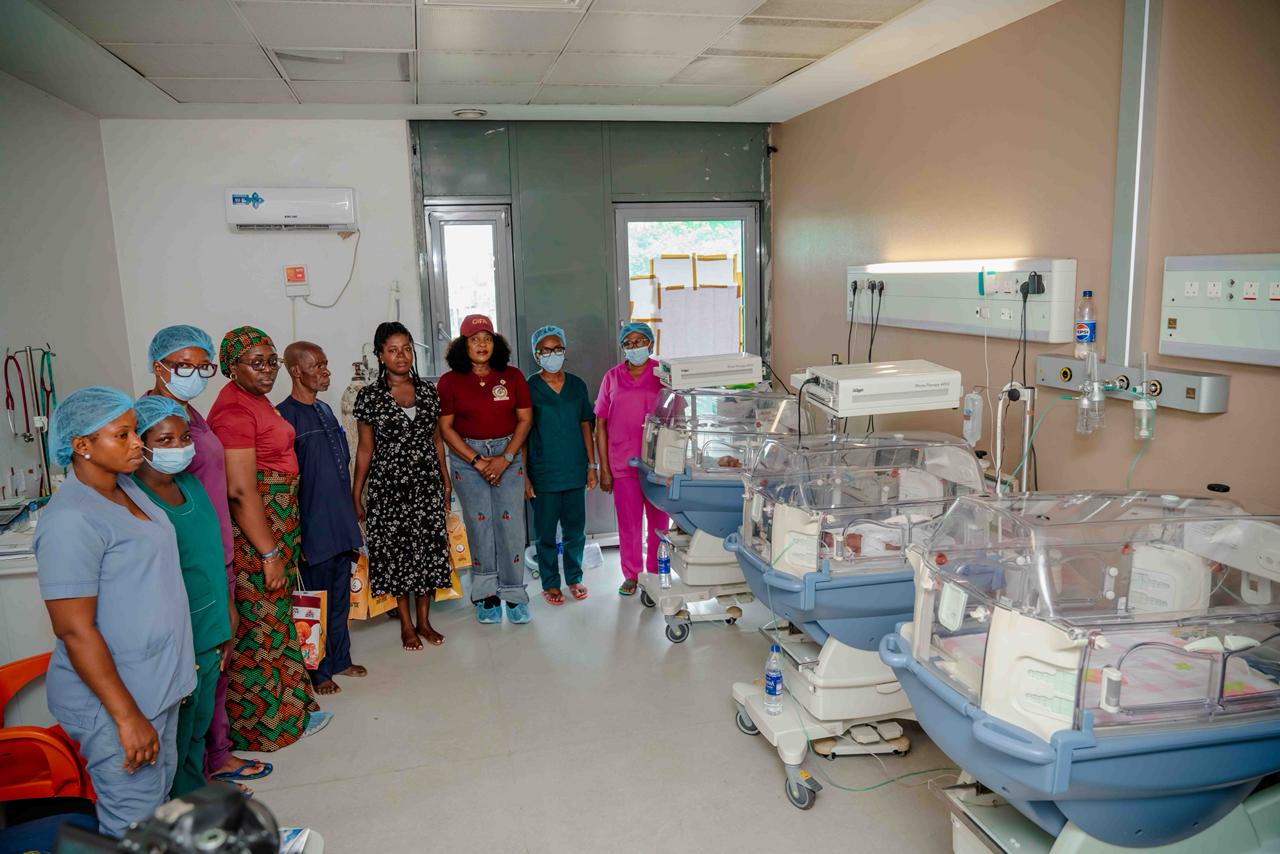
A baby girl born at just 25 weeks and weighing 750 grams has been sent home from Ibom Multi-Specialty Hospital. She spent six months in the hospital’s Neonatal Intensive Care Unit (NICU). The hospital calls her the smallest baby it has ever discharged.
The World Health Organization (WHO) defines preterm birth as babies born alive before 37 weeks of pregnancy. They break preterm births into three types: extremely preterm (less than 28 weeks), very preterm (28 to less than 32 weeks), and moderate to late preterm (32 to less than 37 weeks).
To give you an idea, 750 grams is about the weight of a regular loaf of bread.
Nigeria has about 774,100 preterm births each year, making it the third-highest in the world, after India and Pakistan.
The WHO says complications from preterm birth are a leading cause of death among children under five worldwide.
The baby girl was born in January and left the hospital on June 9, weighing 2.1 kilograms after six months of care, according to the hospital’s Chief Medical Director, Ini Etukudo.
For the hospital, this discharge is more than just a medical success. It marks a big step forward for the hospital after years of struggles that raised doubts about its future.
“It is a remarkable achievement to manage a 750-gram baby to achieve a weight of 2.1 kilograms,” Mr Etukudo told PREMIUM TIMES.
The hospital first shared this news on Facebook. PREMIUM TIMES later reached out to Mr Etukudo for more details.
Mr Etukudo said the baby faced several life-threatening problems linked to extreme prematurity.
“The thing to be proud of is that, despite the complications, we managed to get the baby to 2.1 kilograms,” he explained.
He noted that babies born at 25 weeks deal with huge medical challenges.
“When you deliver a baby at 25 weeks weighing 750 grams, you know it will not be easy. You will manage infections, breathing problems, and many other issues. Your ability to handle these challenges is what you should be proud of.”
He mentioned that breathing problems and infections were major hurdles during treatment because the baby's lungs were not fully developed.
“The lungs are not fully developed, so breathing issues are expected. You will also deal with infections. We were prepared for these problems, and the neonatal team provided the necessary care.”
He stated that the hospital had the right equipment, supplies, and specialist staff to handle such sensitive cases.
Mr Etukudo said this situation is rare in Nigeria. Babies born this early often have very low chances of survival.
“Key thing to know about 25 weeks is that in Nigeria, the age of viability is 28 weeks. If a baby is born before 28 weeks, they are often seen as non-viable. It might be viewed as a miscarriage.”
He added, “We provided all necessary help and neonatal care to ensure the baby survived. It is not common to survive at that age.”
Though Mr Etukudo did not share the total cost of treatment, he noted that caring for the baby required a lot of money.
“It was quite a lot. The parents had to pay some of the bills, and we helped them with discounts.”
He said the parents covered part of the cost, while the remaining amount was waived.


The Golden Initiative for All (GIFA), a project from the Office of the First Lady of Akwa Ibom State, visited the family during the baby’s stay and gave gifts to the mother.
“GIFA also came to see the baby and brought gifts for the mother. For the bill, the parents paid part of it, and we helped with the rest.”
This latest success comes almost ten years after Ibom Multi-Specialty Hospital faced one of its toughest times.
Built at a cost of N41 billion, the hospital aimed to be a modern center to reduce medical tourism and improve access to healthcare in Akwa Ibom.
It was opened by former Governor Godswill Akpabio in May 2015 but only started full operations six months later due to equipment installations and staff recruitment.
Just two years later, the hospital hit a crisis when its private managers, Cardiocare Medical Services Limited, pulled out of the management agreement due to disagreements with the Akwa Ibom State Government.
Despite these challenges, the hospital was vital in treating victims from the collapse of the Reigners Bible Church building in Uyo in December 2016.
Since then, the hospital has slowly rebuilt its services, improving emergency medicine, surgery, radiology, intensive care, and neonatal services. Discharging the 750-gram baby shows its growing ability to handle complex medical cases.
Mr Etukudo said this case should give hope to the public that babies born at very low gestational ages can survive with proper care.
“In our facility, we have the tools and the team to help extremely premature babies survive.”
He added that while the hospital still serves as a referral center, the public can also access specialist services directly.
“Unlike before, when it was only a referral center, you can now walk into the hospital for care at a reasonable cost.”
The hospital’s Facebook page shared a touching video of the discharge ceremony on June 11. It showed staff forming a guard of honour as the baby’s mother walked through the hospital carrying her daughter.
Amid songs of thanks and applause, the baby’s father expressed gratitude to the doctors, nurses, the Akwa Ibom State Government, and the Office of the First Lady for their support during the six-month stay.
“Many people never believed it could happen. It has never happened before. A child born at that age to survive.”
The baby’s mother also shared her joy.
“God has done mighty things for me. He has filled my heart with joy. God made me leave this hospital with a baby.”
While Ibom Multi-Specialty Hospital claims this baby is the smallest it has discharged, it is not the first case of a Nigerian hospital successfully managing a baby born at 25 weeks.
In October 2019, Reddington Hospital in Lagos reported discharging a baby girl born at 25 weeks weighing around 800 grams after more than two months in intensive care. Hospital officials credited the success to their specialized expertise and advanced equipment.
Medical experts say babies born this early are still at high risk for breathing issues, severe infections, feeding problems, and other complications. But improvements in neonatal intensive care are slowly raising survival rates in more specialist hospitals across Nigeria.
The Akwa Ibom case stands out because the baby weighed just 750 grams at birth. She survived six months of care and was discharged at 2.1 kg, showing the growing quality of neonatal care available in the state-owned hospital.





Comments
No comments yet.