Is High Oil Price a Blessing or a Curse for Nigeria?
High oil prices can boost Nigeria's revenue, but past experiences show little benefit for citizens. The key is how the government uses this extra income.

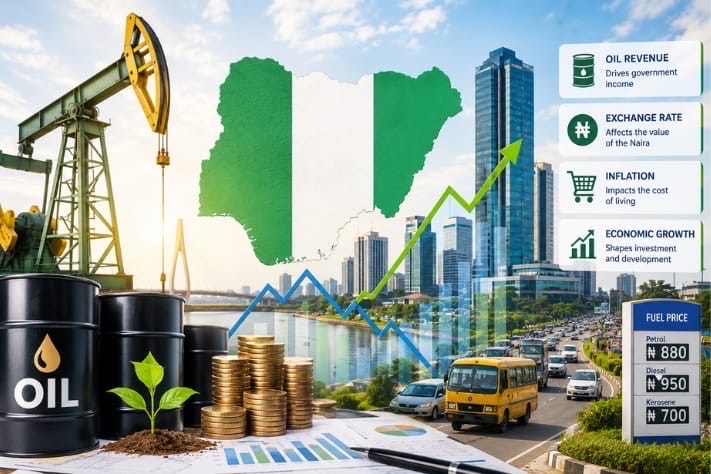
When oil prices shoot up, Nigeria’s treasury usually benefits. But will Nigerians feel any of this benefit? On 16 October, Brent crude oil hit over $110 per barrel, its highest since May. This rise is due to conflicts in Iran and the ongoing war between Russia and Ukraine, which continue to threaten global supply. For a country like Nigeria that depends heavily on crude oil for foreign exchange, this surge seems like good news. The 2026 budget was set with an oil price of about $65 per barrel, meaning that each barrel sold now brings in much more money than expected. Yet, history tells us to be careful. Nigeria has seen oil booms before, but they often ended with little savings, rising debt, and not much improvement in the lives of everyday people. The key question is not how much Nigeria earns when oil hits $110 per barrel, but how the government uses that money.
The possible benefits are huge. Nigeria produced about 1.68 million barrels of crude oil and condensate daily in August, according to the upstream regulator. NNPC Limited reported a production of about 1.82 million barrels per day in September. With prices more than $40 higher than the budget plan, this extra money could reach billions of dollars over several months. Increased oil revenue can help boost foreign exchange reserves, support the naira, increase the funds available to state and local governments, and help reduce the budget deficit. As of early October, reserves were around $55 billion, showing a stronger position partly due to this situation. But we need to be precise. Higher oil prices do not automatically mean more government revenue. Production has mostly stayed below the 1.84 million barrels per day that the budget expected. Production costs, joint-venture commitments, and the amount of oil kept for local refining all cut down the money that goes into the Federation Account. So, a windfall seen at oil terminals might drop significantly before reaching the treasury. This highlights the need for clear accounting.
The first big worry is transparency. The Excess Crude Account was set up to save oil money that goes beyond the budget limit. But recent reports show that its last known balance was only about $535,823, with little proof that it has gained from the recent price rise. Opposition leaders, including former Vice President Atiku Abubakar, have asked for a full breakdown of excess crude earnings. The government has defended its borrowing as necessary to cover deficits and infrastructure costs. No matter the political view, the public deserves clear information: how much extra money oil has brought in this year, how it has been spent, and how much has been saved. The second worry is the odd situation of borrowing during a boom. The Federal Government raised ₦7.15 trillion through FGN bonds from January to September, more than double last year's amount for the same period. They also spent ₦5.28 trillion on domestic debt service in the first half of 2026. Borrowing heavily when oil prices are high goes against good financial practices. Good years should be used to cut down on expensive debts and build reserves, so that borrowing can go up when prices fall. A government that borrows in both good and bad times leaves itself no options when the cycle changes.
The third worry is the effect on families. Higher oil prices push up petrol and diesel costs, leading to higher transport fares and food prices. In some parts of Abuja, petrol prices have recently been seen at over ₦1,400 per litre. While inflation dropped to 14.63 percent in September, food inflation is still close to 20 percent. If oil prices remain high, efforts to reduce inflation could slow down. This shows the double-edged sword of an oil boom in Nigeria: while government revenue increases, families face rising costs at the pump and in the market. The fourth worry is that this boom might not last. Much of the recent price rise is due to geopolitical issues, not strong demand. Analysts expect prices to drop if supply routes open up and conflicts settle down. Planning as if oil will stay at $110 per barrel forever could lead to repeating past mistakes. Making commitments based on a short-term windfall, like ongoing spending, new salaries, or projects for political gain, could turn into financial headaches once prices drop.

So, what would smart management of this windfall look like? First, Nigeria should have a clear and strict system where any money over the budget limit is automatically saved, with monthly reports published. The Excess Crude Account, the Sovereign Investment Authority, or a special stabilization fund could work for this, as long as the rules are written into law and all levels of government follow them. Second, the windfall should pay off or refinance the most expensive debts. Cutting down interest costs provides long-term savings, unlike a one-time spending spree. Given the level of current debt service, even small repayments would lighten future budgets.
Third, the government should use any windfall spending on projects that provide long-term benefits, like power, transport, and agriculture, rather than ongoing expenses. These projects improve productivity in the non-oil economy, which offers the best protection against oil price changes. Fourth, the government could directly help struggling families. Targeted cash transfers funded by oil revenues would better shield the poorest from rising fuel and food costs than broad subsidies. This could also show Nigerians that the windfall brings real benefits. Fifth, the windfall could boost efforts to increase output and diversify. The benefits of high prices are limited when production does not meet targets. Security in the Niger Delta, investment in production, and a stable regulatory environment will determine if Nigeria can fully benefit from future price changes.
In the end, Nigerians will likely judge this oil boom not by Brent crude prices, but by what it achieves: less debt, stronger reserves, better infrastructure, and real support for struggling families. Oil windfalls are temporary, but the choices made during this time can have lasting effects. If Nigeria saves wisely and invests properly, $110 oil could help strengthen economic recovery. If it spends as if the boom will last forever, it risks missing another opportunity. Policymakers need to turn this temporary windfall into lasting economic strength.






Comments
No comments yet.