CCB Investigates Peter Obi, Saraki, David Mark and Others Over Offshore Assets
Nigeria's Code of Conduct Bureau is investigating seven public officials, including Peter Obi and Bukola Saraki, for undeclared offshore assets. The probe follows revelations from the Panama and Pandora Papers.
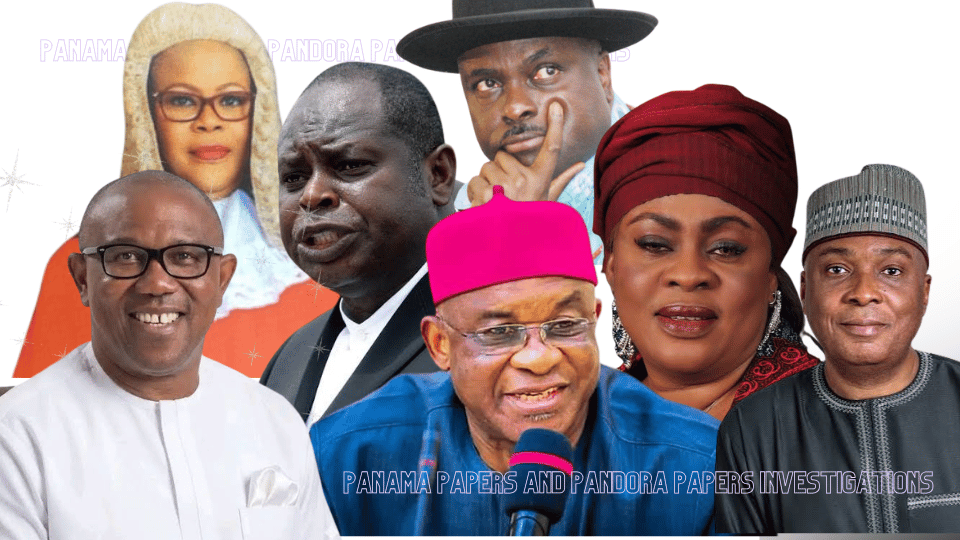
Nigeria’s Code of Conduct Bureau (CCB) is looking into seven people named in PREMIUM TIMES' Panama Papers and Pandora Papers investigations. They are accused of owning undeclared offshore assets and business interests.
Sources from the anti-corruption agency confirmed this investigation to PREMIUM TIMES after the newspaper asked for an update on the reports involving public officials mentioned in these international investigations.
The seven individuals under investigation include former Anambra State Governor Peter Obi, former Senate Presidents Bukola Saraki and David Mark, former Aviation Minister Stella Oduah, late former Bayelsa State Governor Diepreye Alamieyeseigha, former Delta State Governor James Ibori, and Stella Ogene, a retired Delta State judicial officer.
A CCB source said, "All the Nigerian officials named in the Panama and Pandora papers will be investigated. But seven of them have been assigned to case officers who have already commenced investigations."
PREMIUM TIMES had reported how these individuals used offshore companies and other structures to hold assets and business interests while in public office. This raised questions about their compliance with Nigeria’s asset declaration laws and rules on public officers' private business interests and foreign bank accounts.
Multiple sources indicate that the CCB plans to widen its investigations to include more individuals named in the Panama Papers and Pandora Papers.
The CCB does not have an official spokesperson, but an aide to its chairman confirmed the agency is looking into the Nigerian officials named in these global investigations.
In September, the CCB mentioned it was reviewing information and materials related to allegations of undeclared offshore assets and business interests tied to public officials exposed by PREMIUM TIMES’ Pandora Papers investigation.
The bureau had written to PREMIUM TIMES in October 2021, recognizing the importance of the Pandora Papers investigation led by the International Consortium of Investigative Journalists (ICIJ).
CCB called the investigation one that had "created ripples across the globe" and asked for the newspaper’s help to facilitate investigations and possible prosecution of Nigerians involved in the findings.
In a response dated 18 October 2021, PREMIUM TIMES Editor-in-Chief Musikilu Mojeed welcomed this request and promised the newspaper’s cooperation.
Mr Mojeed said, "The primary motivation for our work is to help the public obtain the information they need to ask questions and make informed decisions and for law enforcement agencies to have the leads they require for necessary actions."
After years without a public update on the investigations, PREMIUM TIMES contacted the bureau again in July 2026 to check on the status of its inquiries about public officials named in the reports.
The newspaper recalled that the bureau had shown interest in investigating allegations about undeclared assets and business interests, foreign bank accounts, and other possible breaches of the Code of Conduct for Public Officers.
Mr Mojeed said, "Several years after that engagement, however, there has been little or no public indication that investigations have been initiated or concluded regarding a number of public officials named in the Pandora Papers. We are therefore constrained to inquire about the status of any investigations undertaken by the Bureau in respect of these matters."
In September, the CCB replied that the relevant information and materials were under review according to its constitutional and statutory mandate. It said any necessary action would follow due process.
The bureau also mentioned it might invite a PREMIUM TIMES representative with knowledge of the issues to provide further information or clarification as the investigations proceed.
It declined to give details that could affect ongoing or planned actions, citing the confidential nature of investigative and verification processes.
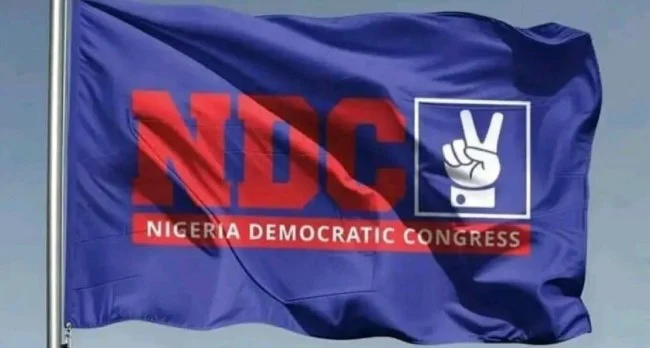
In 2021, PREMIUM TIMES reported that Mr Obi, a former governor of Anambra State and the Presidential Candidate of Nigeria Democratic Congress (NDC), had undisclosed offshore business interests while in public office.
The investigation was part of the global Pandora Papers, organized by the ICIJ. The Pandora Papers came from a massive leak of financial documents from 14 offshore tax havens like the British Virgin Islands and Panama.
The investigation revealed that Mr Obi was a director of NEXT International (UK) Limited for 14 months after becoming governor of Anambra State, which goes against Section 6 of the Code of Conduct Bureau and Tribunal Act.
It also found that he did not declare certain offshore holdings and operated a foreign bank account while serving as governor, raising questions about compliance with Nigeria’s public service rules.
Mr Obi did not deny the allegations of not complying with asset declaration rules, operating a foreign account, and keeping a directorship while in office. He said he did not know that assets jointly owned with others needed to be declared.
Mr Obi has also said many times that he did not divert public funds, even though PREMIUM TIMES did not accuse him of diverting public money in its report.
This newspaper also reported that Stella Oduah, a former aviation minister who later became a senator, bought four London properties worth a total of £6.7 million between October 2012 and August 2013 through an offshore company based in Seychelles.
The investigation identified her as the main owner of International Trading and Logistics Company Limited (ITCL), which she used to acquire the properties. It also found that she held a directorship in the company while serving as a public officer.
The four properties were bought without mortgage financing, according to the report. The investigation also linked Ms Oduah to three more London properties, making a total of seven associated with her.
A leaked suspicious activity report from Deutsche Bank to the United States financial intelligence agency FinCEN showed that Sea Petroleum and Gas Company Limited, a Nigerian business tied to Ms Oduah, transferred $71,973 to a London property agency in September 2012, about a month before one of the purchases.
Ms Oduah served as aviation minister from 2011 to 2014 and became a senator for Anambra North in 2019.
The Pandora Papers also revealed offshore interests of Stella Ogene, a retired senior judicial officer who led the Delta State Customary Court of Appeal for 21 years.
Documents obtained by PREMIUM TIMES showed that Mrs Ogene set up Assete Media Limited, an offshore company in Seychelles on 7 September 2009, to buy a property in London.
The documents named her as the company’s owner, director, and secretary. Cook Worldwide, a financial services firm in Panama, helped set up the company through Mayfair Trust Group Limited, an offshore service provider in Seychelles.
The investigation also found that public records from Nigeria’s Corporate Affairs Commission listed Ms Ogene as a director of a private Nigerian company for 10 years while she was in charge of the state’s Customary Court of Appeal.
PREMIUM TIMES also reported that Nicholas Mutu, a member of the House of Representatives, had business interests while in public office and used an offshore company to buy a property in London.
Documents from offshore law firm Alemán, Cordero, Galindo & Lee showed that Mr Mutu set up Forest Group of Company in Seychelles in 2010 while he was a lawmaker.
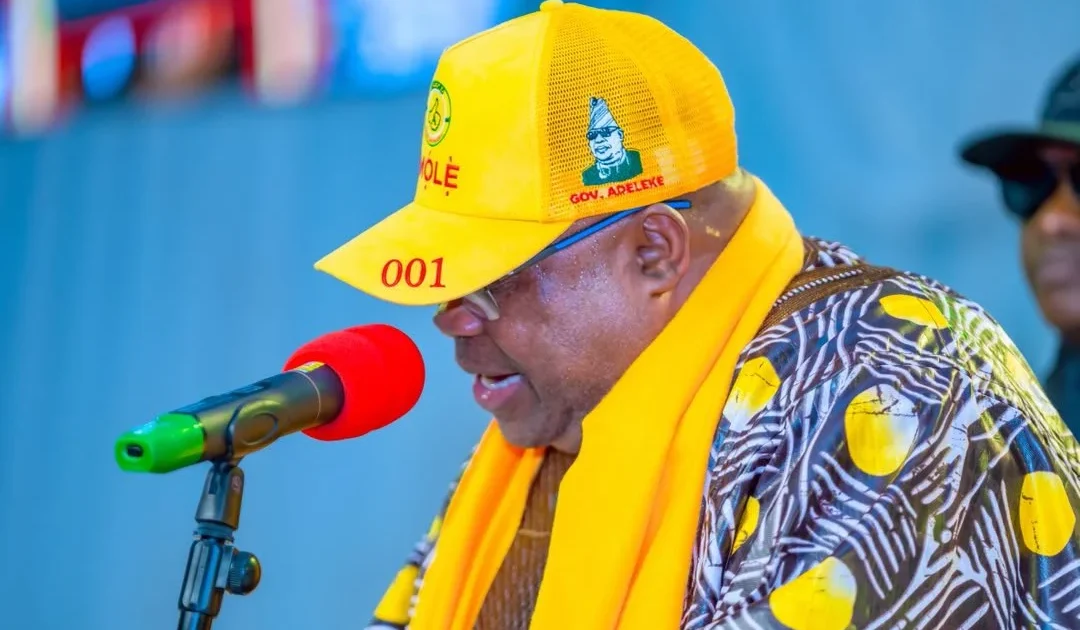
The company bought a property in north London in 2012 for £620,000 and sold it in 2014 for £730,000, according to UK Land Registry records.
Mr Mutu denied being a director of the offshore company, saying it belonged to and was controlled by his wife. He also denied that the company owned a UK property.
However, documents from the UK Land Registry and the Pandora Papers showed he was a director, shareholder, and owner of Forest Group of Company.
We also found that Mr Mutu was listed as a director of several Nigerian companies while serving as a public officer.
The CCB’s investigations also involve people named in the Panama Papers, a global investigation released in 2016 that showed how wealthy people and public officials used offshore companies to hold assets and do business.
This investigation, also managed by the ICIJ, was based on leaked documents from the Panamanian law firm Mossack Fonseca. It identified over 140 Nigerian individuals and companies tied to offshore entities.
As the only Nigerian news organization given direct access to the leaked files, PREMIUM TIMES published over 30 stories from the internal records of Mossack Fonseca, the law firm at the center of the scandal.
Those exposed included former Senate President Bukola Saraki and his wife, Toyin Saraki, as well as his predecessor, David Mark.
The investigations also uncovered a web of shell companies in offshore tax havens connected to Africa’s richest man, Aliko Dangote, and his brother, Sayyu Dantata, along with the offshore companies of Wale Tinubu, head of Nigeria’s largest indigenous oil company, Oando Plc, among others.
Additionally, the reports revealed the secret offshore company of one of Africa’s well-known televangelists, the late Temitope Joshua, known as T.B. Joshua.
Other prominent Nigerians named in the investigation include former Minister of Defence and billionaire businessman, Theophilus Danjuma; Etisalat boss, Hakeem Bello Osaigie; Globacom CEO, Mike Adenuga; former Governor Abubakar Bello of Niger State; the late Ooni of Ife, Okunade Sijuwade; Arik Chairperson Joseph Arumemi-Johnson and his wife, Mary, as well as two former senators, Andy Uba (Anambra) and Ibrahim Gobir (Sokoto).
Top politicians, businesspeople, and their families were found in the database, including people who were still in public office when the reports came out.
It is important to mention that using shell companies is not illegal.
Many people and businesses set them up for legitimate reasons. But some Nigerian public officials named in the investigation did not declare their offshore assets to the CCB, which could violate Nigerian laws. The CCB can prosecute officials found guilty at the Code of Conduct Tribunal after its investigations.
PREMIUM TIMES reported that the Saraki family owned at least four assets held through offshore structures that were not disclosed to the CCB as required by Nigerian law.
The newspaper’s investigation found four assets linked to Mr Saraki’s wife held offshore. Nigerian public officials must declare their assets and those of their spouses and children under 18.
Documents showed that Mrs Saraki had interests in offshore companies, including Sandon Development Limited, registered in Seychelles. This company was used to buy a property on Whittaker Street in Belgravia, London, in 2012.
Babatunde Morakinyo, a longtime aide of Mr Saraki, was listed as another shareholder in Sandon Development Limited.
The investigation also looked at Girol Properties Limited, registered in the British Virgin Islands in 2004, and Landfield International Developments Limited, incorporated in the same place in 2014.
Documents showed that Mrs Saraki was initially listed as a shareholder in these companies. The investigation found that Mr Saraki later took control of Landfield through Longmeadow Holdings Limited, an offshore company registered in Jersey.
A supposed board meeting in January 2015 approved the sale of Landfield to Mr Saraki for more than £3 million, according to the documents.
The Panama Papers linked Mr Mark, a former Senate president, to at least eight active companies in the British Virgin Islands while he was in office.
The companies included Sikera Overseas S.A., Colsan Enterprises Limited, Goldwin Transworld Limited, Hartland Estates Limited, Marlin Holdings Limited, Medley Holdings Limited, Quetta Properties Limited, and Centenary Holdings Limited.
Documents from Mossack Fonseca repeatedly marked Mr Mark as a politically exposed person. The records showed he provided documents to the law firm to verify his identity and address any concerns about his status.
The investigation could not determine the nature of the businesses done through these companies.
Though owning offshore companies is not illegal, Nigeria’s Code of Conduct rules stop public officials from managing or running private businesses while in office, with certain exceptions.
The law also bans public officers from having or using bank accounts outside Nigeria.
The Panama Papers investigation also revealed how the late Diepreye Alamieyeseigha, who governed Bayelsa State from 1999 until his impeachment in 2005, used offshore companies to hold assets and transfer funds abroad.
One of the identified companies was Solomon & Peters Limited, set up in the British Virgin Islands in 1999, months after he took office as governor.
Documents showed Mr Alamieyeseigha was the first director and secretary of the company. The investigation linked this company to offshore financial deals and property purchases in several countries.
British authorities returned more than £5 million taken from funds stolen by the former governor to the Bayelsa State Government in 2012.
The investigation also traced properties associated with Mr Alamieyeseigha to the United Kingdom, the United States, and South Africa, along with foreign bank accounts containing millions in pounds and dollars.
His asset declarations to the CCB in 1999 and 2003 listed buildings, land, vehicles, a boat, a company, and bank balances in Nigeria. These declarations did not reflect the extent of the overseas assets found in the Panama Papers investigation.
Comments
No comments yet.