Kogi State's N7 billion health centre upgrades face serious issues
The OAU Primary Health Centre in Kogi State appears newly built but remains closed and without medical services. Staff shortages and utility issues hinder operations.
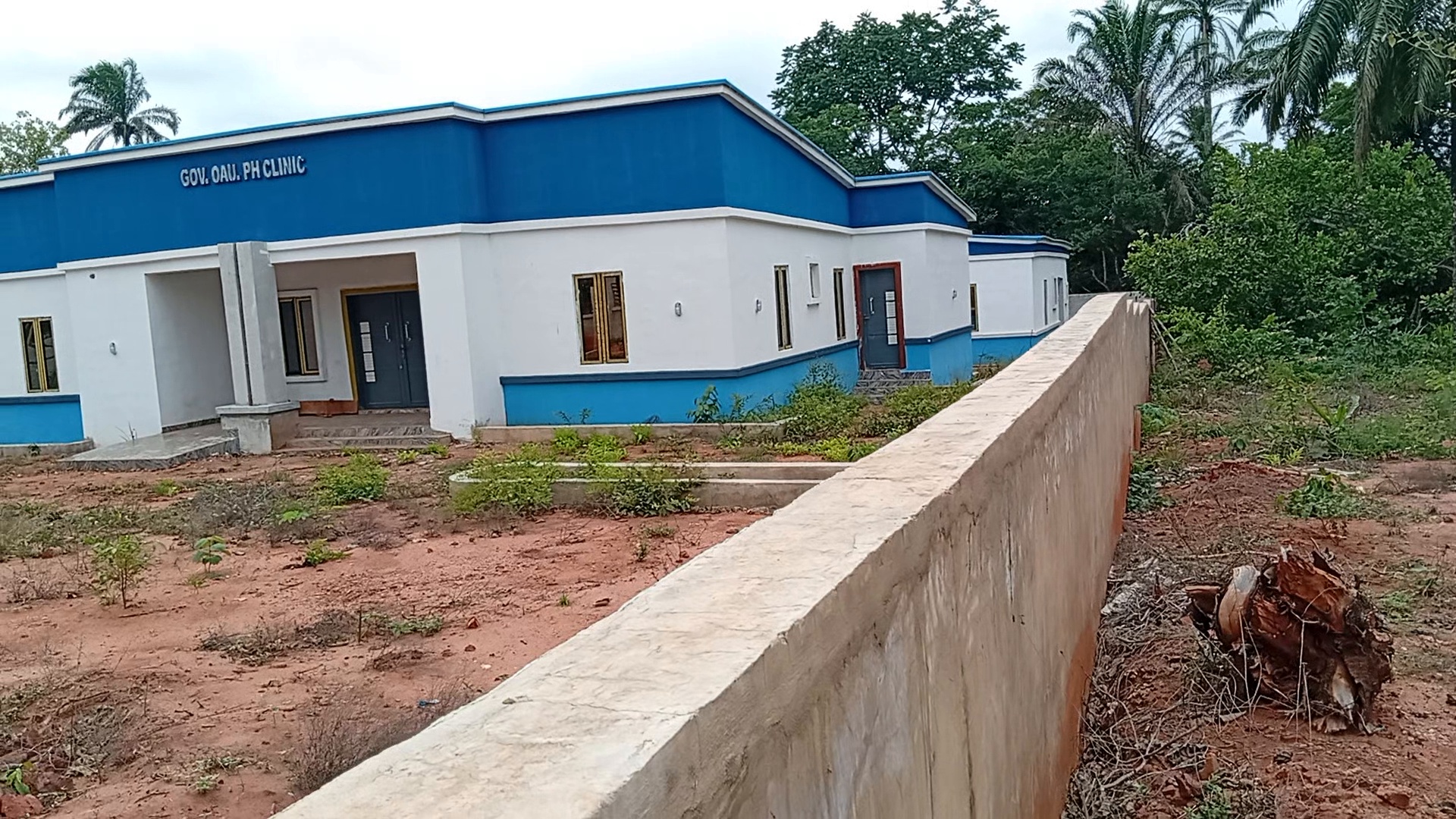
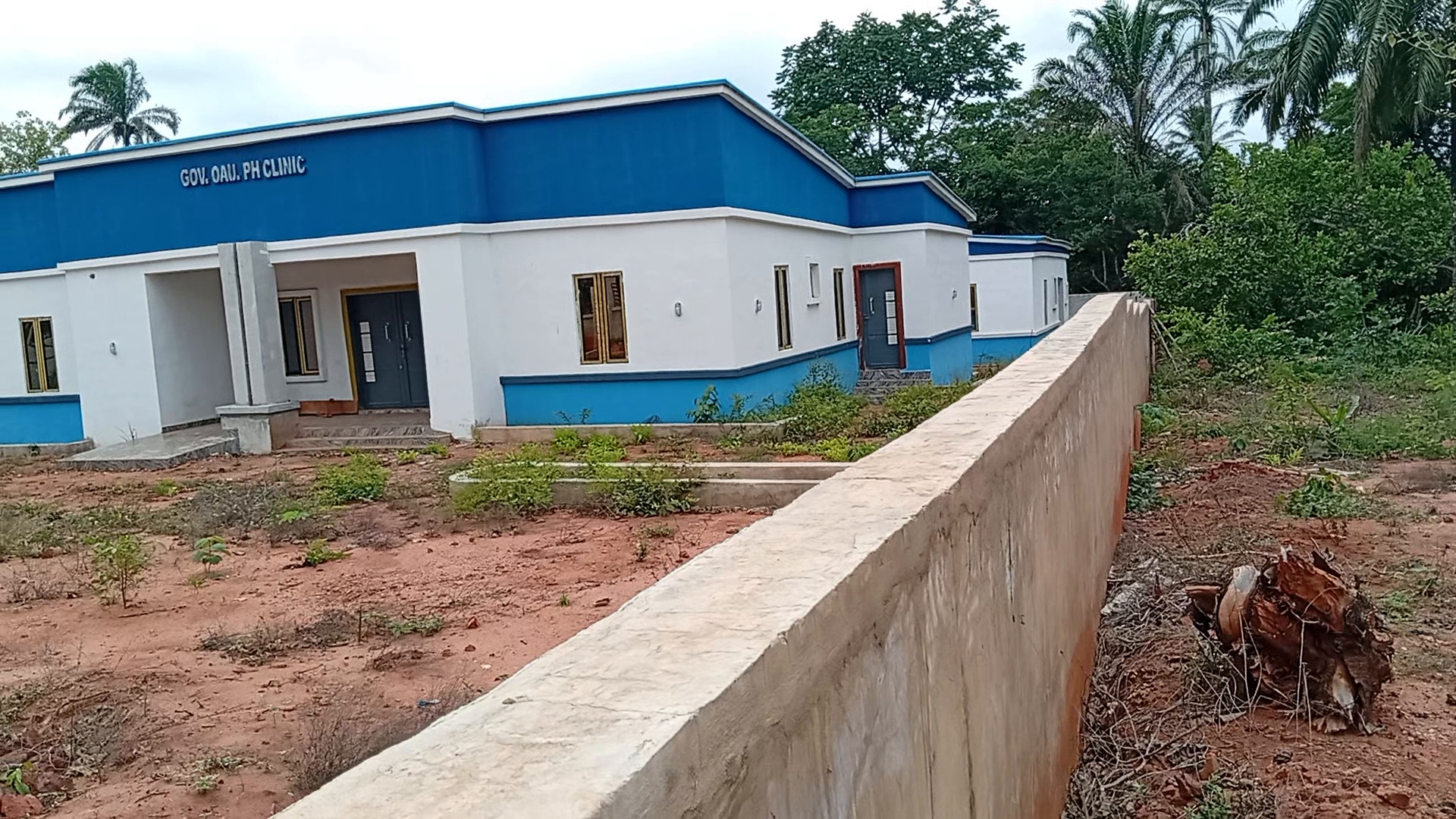
From afar, the OAU Primary Health Centre in Ojoku, Ankpa Local Government Area of Kogi State, looked newly built when PREMIUM TIMES visited the place on 6 May 2026.
The blue-and-white paint was fresh, the roof was intact, and the doors and windows were fitted.
But on closer look, it was clear that work was not finished. The clinic was locked up, and there were no health workers or patients around. No medical services were being provided.
PREMIUM TIMES first checked the facility in December 2025 and found it was not offering any clinical services.
Aminu Nuhu, who leads the Department of Health Services at Ankpa Local Government Council, mentioned that OAU PHC Ojoku was one of six clinics picked for refurbishment in the area.
He said the council was still trying to find health workers to send to some of the revitalised clinics.
"For those that have been revitalised, we are looking for staff to put in those facilities," he said.
But the lack of staff was not the only issue.
Mr Nuhu said a borehole had been drilled at the clinic, but it could not supply water because there was no electricity or solar power to run the pump.
"They have finished it, but we are waiting for them to make it work," he said.
Almost five months after the first visit, PREMIUM TIMES returned to find that clinical services were still not running.
A security guard at the clinic said there were no medical supplies inside.
"There is nothing inside," he said. "It’s just the building."
The situation at OAU PHC Ojoku revealed some of the issues uncovered in a long investigation by PREMIUM TIMES into Kogi State’s multi-billion-naira primary health care revitalisation programme.
The investigation looked at whether the government’s investments had turned into functioning health centres that could provide essential services to the people.
It found incomplete repairs, not enough staff, lack of basic facilities, and health workers operating from temporary buildings, even with the government claiming that many facilities had been revitalised and opened.
Kogi's N7 billion commitment
In January 2025, the Kogi State government announced it had committed over N7 billion, with help from the World Bank, to improve 88 PHCs across the state’s 21 LGAs.
This announcement was made during the formal handover of project sites to contractors at the Model PHC in Felele, Lokoja.
Governor Ahmed Ododo, represented by the Commissioner for Health, Abdulazeez Adams, said this project would upgrade over 150 PHCs to functional Level 2 facilities.
The contractors were told to finish the projects within four months.
On 7 November 2025, the state government announced that 80 revitalised PHCs were ready.
Muazu Musa, the executive director of the Kogi State Primary Health Care Development Agency, said the facilities had been upgraded from Level 1 to Level 2.
According to the federal government’s 2025 HOPE-PHC Programme Operations Manual, functional Level 2 PHCs should offer 24-hour health services, including basic emergency obstetric and neonatal care.
The programme also checks for skilled birth attendants, reliable electricity or solar power, and access to clean water.
These conditions are meant to ensure upgraded facilities can deliver essential healthcare services beyond just physical improvements.
But the Kogi State Government did not give PREMIUM TIMES the complete list of the 80 facilities it claimed were commissioned.
So, the newspaper could not confirm if the facilities checked during the investigation were part of those officially opened.
Reviewing the spending: N6.09 billion in contracts
A look at Kogi State's procurement records showed four contracts for the infrastructure of 88 PHCs.
These contracts totaled N6.1 billion and were given to Multi Purpose Errand Mens Services Ltd, QSA Nigeria Ltd, Inknuel Ltd, and Base-SAN Ventures Nigeria Ltd.
Records indicated that N5.5 billion, about 90.6 percent of the total contract value, had been reported as paid to these four contractors.
PREMIUM TIMES could not verify these payments against bank records or government treasury documents. So, these figures are described as amounts recorded ‘as paid’ in the procurement disclosure.
The procurement records also showed a difference in the geographical coverage of the contracts.
Even though the government said the intervention involved all 21 LGAs, the descriptions of the four contract lots only identified 20 distinct LGAs.
Kogi LGA, based in Koton-Karfe, was not included in any of the four lots.
This does not mean Kogi LGA was left out of the project. But without the complete list of the 88 facilities, PREMIUM TIMES could not find out if this was a mistake in the procurement summary or if it reflected the real distribution of the projects.
The total contract value of N6.1 billion was also lower than the government’s promise of over N7 billion.
The available records did not explain what other activities or costs made up the difference.
The state’s 2025 fourth-quarter Budget Implementation Report recorded a final budget of N8.205 billion for the broader Immunisation Plus and Malaria Progress by Accelerating Coverage and Transforming Services (IMPACT) programme.
The report showed a spending of about N7.818 billion for the year so far.
But the IMPACT programme includes activities beyond the four infrastructure contracts. So, this spending cannot be treated as what was spent specifically on the 88 PHC rehabilitation projects.
The records available to PREMIUM TIMES did not clarify these figures.
Questions about Lot D contractor
One contract, known as Lot D, was awarded to Base-SAN Ventures Nigeria Ltd for work covering 23 PHCs across Ankpa, Olamaboro, Omala, Ofu, Dekina, Ibaji, and Bassa LGAs.
The procurement disclosure recorded that about N1.069 billion had been paid for the contract.
During a follow-up visit to PHC Ankpa, PREMIUM TIMES found a project signboard identifying “BASESAN VENTURE NIG LTD” as the contractor in charge of upgrading the facility.
The difference in the name on the signboard and the name in the procurement disclosure raised questions about the contractor’s exact legal identity.
Also, a review of public corporate information showed BASESAN Ventures Limited, registered under number RC 822294, with a person named “Sanni Eggidi A” listed as someone with significant control.
The newspaper could not confirm if BASESAN Ventures Limited, Base-SAN Ventures Nigeria Ltd, and the company named on the project signboard were the same company or related.
PREMIUM TIMES later contacted Sanni Abdulraheem, the member representing Ajaokuta Federal Constituency in the House of Representatives, to clarify if he had any link to BASESAN Ventures Limited.
The similarity in names does not mean they refer to the same person.
The newspaper also sought details on the connection between the companies and requested records for the 23 PHCs covered by Lot D, including their approved work, completion status, and inspection documents.
The lawmaker’s response was not received by the time of publication.
Missing records, unanswered questions
Aside from the differences in contract values and geographical coverage, the procurement disclosure did not list all 88 PHCs individually.
It also did not detail the approved scope of work, contract value, or payment status for each facility.
The state government did not give PREMIUM TIMES the complete list of the 80 PHCs it announced as commissioned in November 2025.
Without these documents, it was hard to match the facilities covered by the contracts with those announced as completed and opened.
The lack of facility-level inspection reports and completion certificates also made it impossible to independently verify what was approved, completed, and certified at each project site.
These gaps do not prove that funds were misused or that the contracts were not carried out. But they limit the public's ability to scrutinise the government’s claims about the intervention.
Between December 2025 and September 2026, PREMIUM TIMES checked health facilities across Ankpa, Lokoja, and Ajaokuta LGAs.
The newspaper spoke to health workers, residents, and government officials; examined project signboards; and reviewed procurement and budget documents.
The findings concern facilities that local officials or evidence linked to the state intervention.
PHCC Ankpa: services running, problems persist
At the Primary Health Care Centre in Ankpa (PHCC Ankpa), clinical services were ongoing when PREMIUM TIMES first visited.
The facility offered antenatal care, routine immunisation, family planning, outpatient consultations, and delivery services.
Momo Oneshona, the officer-in-charge, mentioned that the centre could see as many as 70 patients on Mondays for immunisation, antenatal care, and general consultations.
But the facility was facing serious operational challenges.
Health workers said there was no running water, electricity, or solar power for general operations.
The available solar power only served the vaccine refrigerators.
"We don’t have solar, we don’t have water here, we don’t have light," Mrs Oneshona said.
She explained that staff sterilised reusable tools by boiling them over gas or ordinary stoves.
During the first inspection, the laboratory was locked and looked dusty.
The facility also had a shortage of staff.
"We have a shortage of staff," Mrs Oneshona said. "They retire; no replacement."
She estimated that only about seven workers were actively providing services, including three Community Health Extension Workers (CHEWs) and two Junior CHEWs.
According to Mrs Oneshona, the shortage of staff and lack of a security guard meant the facility could not operate overnight.
This did not meet the 24-hour service expectations for functional Level 2 PHCs.
Contractors left unfinished work
Beyond the operational problems, PREMIUM TIMES saw an unfinished building being worked on within the facility’s compound.
Doors and window frames had been removed and piled inside, while openings in the walls and roof were still exposed.
"They scattered our place and went away," Mrs Oneshona said. "We only saw them working, then they left."
Mr Nuhu, the Ankpa LGA health official, confirmed that PHCC Ankpa was one of six facilities chosen for revitalisation.
He said construction workers stopped work between December 2025 and January 2026 and had not returned by the time of the newspaper’s first inspection.
Of the six facilities, he identified PHC Emekutu as the only one he considered fully completed at the time of his interview.
Mr Nuhu also pointed out broader staffing challenges across Ankpa LGA.
He estimated that the council had 68 working PHCs but only about 50 to 55 percent of the needed staff to operate them well.
He mentioned that 12 facilities relied solely on volunteers, while six or seven retired health workers had been kept on to maintain services.
Laboratory affected by rainwater
When PREMIUM TIMES returned to PHCC Ankpa on 28 September 2026, the laboratory was accessible.
Rain had fallen shortly before the visit.
Water was visible on parts of the laboratory floor, while damp patches appeared on the walls.
A project signboard at the facility identified the work as the “Upgrading of Primary Health Care Centre Ankpa, Ankpa LGA.”
It named Kogi State IMPACT Project 2024 as the client and listed “BASESAN VENTURE NIG LTD” as the contractor.
The procurement disclosure separately identified Base-SAN Ventures Nigeria Ltd as the contractor for Lot D, covering 23 PHCs across seven LGAs.
Though the signboard connected PHCC Ankpa to the IMPACT project, PREMIUM TIMES could not obtain the facility’s approved work scope, valuation, payment records, or completion certificate.
Lokongoma PHC: Renovation followed by more construction
At PHC Lokongoma, in Lokoja, local health officials linked the facility to the state’s revitalisation programme.
When PREMIUM TIMES visited on 13 May 2026, the centre had a new fence, a paved compound, freshly painted walls, and red roofing.
However, the gate was locked when the reporter arrived at about 5:45 p.m.
A nearby shop owner said health workers usually left between 2 p.m. and 3 p.m.
According to the resident, the clinic offered antenatal care, deliveries, routine immunisation, and treatment for minor illnesses when it was open.
PREMIUM TIMES did not get the facility’s duty roster to confirm its operating hours.
The resident also mentioned that the clinic had been renovated less than a year earlier.
Later images showed that construction work continued after the May inspection.
Images dated 9 July 2026 showed work on parts of the red roof, new structures, and paving.
By 20 July, more images showed blue roofing, more structures, and additional paving.
These images show that more work took place after the May visit.
However, PREMIUM TIMES could not find out if services continued during construction or if the ongoing work was part of the same project.
The available records did not clarify what each round of construction involved, who funded it, or if the work had been inspected and certified.
Ganaja PHC: Eight years in school classrooms
At Ganaja, in Ajaokuta LGA, health workers were still providing services from two borrowed classrooms inside UBE Standard College when PREMIUM TIMES visited.
Local health officials said this facility was connected to the state’s revitalisation programme.
Health workers said flooding had forced them to leave their original building nearly eight years ago.
Since then, they had been working from temporary accommodation.
"We were on the other side before, but flood covered that place," said Ms Aminu, the Officer-in-Charge. "We are just managing this place as a temporary site."
Across the road, the old PHC showed signs of long neglect.
Weeds had taken over parts of the compound, while rubbish had piled up around the crumbling building.
Inside the school, one classroom served as an office and consultation room.
Medical supplies, vaccine carriers, desks, chairs, and patient records filled the limited space.
This setup limited the services health workers could offer.
Ms Aminu said the classrooms could not accommodate patient admissions or maternity services.
She thought about 10 workers were attached to the facility but mentioned there was no midwife.
As a result, pregnant women needing delivery services were referred elsewhere.
Ms Aminu said a new PHC was being built elsewhere in Ganaja.
She estimated the project was about 70 percent complete.
However, PREMIUM TIMES could not check this estimate because the reporter could not find and inspect the construction site.
Ms Aminu could not give clear directions, and no one was available to guide the reporter.
She also could not provide a completion date or say when health workers would move.
When PREMIUM TIMES returned in September 2026, the clinic was still operating from the school classrooms.
Nearly eight years after flooding forced them out, health workers and patients were still waiting for a permanent building.
This situation also raised questions about whether the new project had properly considered the flooding that caused the move.
PREMIUM TIMES did not find out what caused the original flooding or link it specifically to climate change.
The documents reviewed did not include a flood-risk, environmental, or climate-vulnerability assessment showing what protections had been included in the new project.
Commissioned, but were the facilities ready?
The Kogi State government’s announcement in November 2025 that 80 PHCs were commissioned suggested significant progress in its healthcare revitalisation programme.
But findings from the facilities inspected by PREMIUM TIMES showed gaps between building improvements and the delivery of real healthcare services.
At OAU PHC Ojoku, a newly painted building remained without clinical services during follow-up visits.
At PHCC Ankpa, patients continued to receive care despite unfinished rehabilitation work, staffing shortages, and inadequate water and electricity supply.
At Lokongoma, more construction was recorded months after an earlier renovation.
At Ganaja, health workers kept working from school classrooms while waiting for a permanent facility.
Local officials or evidence linked these facilities to the state’s intervention.
But since the complete commissioning list was not available, PREMIUM TIMES could not confirm if any of the four facilities were part of the 80 announced as commissioned.
The newspaper also could not get inspection reports or completion certificates showing what had been checked and certified before commissioning.
These gaps leave important questions about the criteria used to declare facilities ready, the work done at individual sites, and whether the upgrades led to the services expected from Level 2 PHCs.
Government fails to provide project records
PREMIUM TIMES sought explanations and documents from the Kogi State government before finishing the investigation.
On 15 May 2026, the newspaper sent written requests under Nigeria’s Freedom of Information Act 2011 to the Kogi State Ministry of Health and the Kogi State Primary Health Care Development Agency.
These requests asked for a list of PHCs; details of revitalisation and infrastructure projects; the names of beneficiary facilities and contractors; contract amounts; project status; Basic Health Care Provision Fund disbursements; staffing details; and operational records for facilities.
The newspaper followed up with phone calls and WhatsApp messages to the Commissioner for Health and Aisha Mohammed, who introduced herself as the secretary and assistant to the executive director of the State’s primary healthcare agency.
When the requests did not yield meaningful responses, PREMIUM TIMES reached out to the Commissioner for Information and Communications, Kingsley Fanwo.
The newspaper informed him about the outstanding requests and asked him to respond on behalf of the government or help get answers from the right agencies.
Calls, WhatsApp messages, and a text message were sent to Mr Fanwo, including a reminder that the report was almost done and that the government’s response could still be included.
By the time of publication, the state government had not provided the complete list of the 88 facilities, the list of 80 commissioned PHCs, facility-level work scopes, inspection reports, or completion certificates.

Comments
No comments yet.