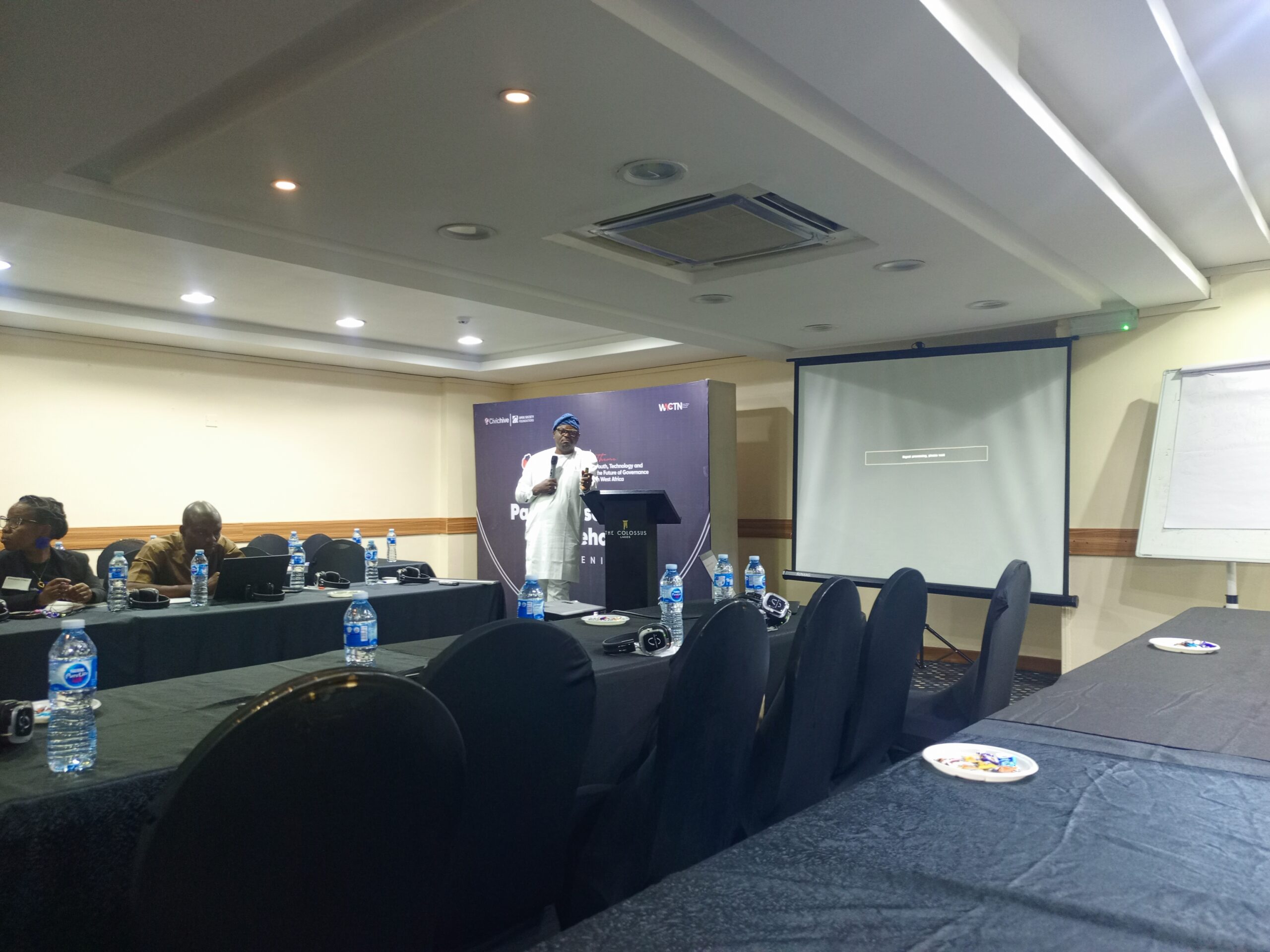
Non-governmental organisations need to make compliance a key part of their work. This is important to keep the public's trust and ensure their efforts last. Oluseun Onigbinde, the CEO of BudgIT, shared this message.
Mr Onigbinde said compliance should not be seen as a burden or something that gets in the way of helping people. Instead, it should act as a safeguard against financial misuse, breaking laws, and harming the organisation's reputation.
"Compliance is not the enemy of impact. It is what makes impact durable," he said.
He spoke on Thursday at the West African CivicTech Conference in Lagos. The event, organised by CivicHive, brought together civic groups, tech innovators, policymakers, and other stakeholders. They discussed how young people and technology can help improve governance and democracy in West Africa.
Mr Onigbinde focused on the theme, "Setting the Tone: Youth, Technology, and the Future of Governance in West Africa." The timing was crucial as NGOs across Africa face more rules, reduced civic space, funding issues, and fast-changing technology. All these factors make it hard for them to continue their work and stay accountable.
He urged civil society organisations to include compliance in their project planning, execution, reporting, and risk evaluation. They should regularly ask what laws apply to their work, how to follow those laws, and who will ensure compliance.
"What does the law say? How do we comply? What does compliance mean? Who would lead compliance? Those are important questions to ask," he said.
Mr Onigbinde pointed out that organisations need to go beyond the passion that often drives people to start initiatives. They should set up systems that help them meet their legal obligations.
"Sometimes we have passion, and it is passion that we started this initiative. But please, move from passion to business, not the business of buying and selling, but move from passion to ensure that you can meet all regulatory goals," he explained.
He advised organisations to have clear contracts and policies, onboard and train staff properly, define job roles, and set up reporting procedures for misconduct. The BudgIT CEO also told non-profits to keep their financial and operational records safe and organised.
He warned that regulators may ask for documents from several years during audits. Organisations should check the laws that apply to them to know how long to keep documents. He suggested that they maintain secure digital copies instead of only relying on paper records.
"Do not keep them in paper copies only. Get them on cloud where you can, and make sure that all your documents are always easy to retrieve when it comes to audits," he added.
He mentioned that tax authorities could request contracts, bank statements, audit reports, management letters, and minutes of board meetings. Mr Onigbinde also said that organisations need to document any incidents that could affect their ability to meet deadlines.
For instance, if a government platform goes down when they need to submit something, he said they should record the issue and keep proof of their attempts to comply.
"If you can’t remit it within that period, and it’s no fault of yours, it’s theirs. You must show evidence," he stated.
He cautioned organisations against thinking that regulatory bodies work alone. Regulators are sharing information and linking their systems more often now. This makes it easier to spot organisations that are not meeting their legal responsibilities.
Mr Onigbinde urged organisations to keep their registrations, annual returns, tax filings, and other regulatory tasks up to date. He noted that in Ghana, NGOs that do not file annual returns could end up on a list of organisations not in good standing. In Nigeria, those that fail to comply may be marked inactive.
"Don’t forget that that registry is also now linked to embassies," he said. He warned that failing to maintain good regulatory status could harm an organisation's dealings with others.
Mr Onigbinde pointed out that many non-profits have weak or inactive boards, even though board members have legal duties. The people listed on an organisation's registration can be held accountable for serious issues.
"The people whose names are on your CAC registration certificate, that is your governing body," he stated. "Those names ... are the owners in trust. If anything happens in your organisation, they are the ones CAC, FIRS, financial reporting, all regulators will chase."
He encouraged boards to meet regularly and make compliance a priority in their discussions. "If you meet four times a year, make sure that for every quarter there is compliance on the agenda that the board must discuss," he advised.
Mr Onigbinde also suggested organisations evaluate the skills needed on their boards, including finance and compliance expertise. They should also think about diversity and succession planning.
He warned against allowing founders or executive directors to make big decisions without proper oversight. "Founder-centric decision-making without board oversight. That is one trap. Please avoid it," he cautioned.
He also recommended separating financial duties to prevent one person from having too much control. "Non-segregation of duties in finance, please. Again, separate the duties," he stressed.
Mr Onigbinde noted that non-profits must document where their funding comes from and show how they spent the money. They should keep records of donors and funding sources, especially if the money is from high-risk areas.
He advised organisations to strengthen their monitoring and evaluation systems to track how money is spent and what results come from it. "If someone has given you $50,000, I want to see the people elements. I’m not interested in the finances yet," he stated.
"Build your monitoring and evaluation system in such a way that you can report who you met with that $50,000, what results you are seeing," he added.
He urged non-profits to follow data protection laws and safeguard personal information from beneficiaries and other stakeholders. Mr Onigbinde also warned against using non-profit resources for political candidates.
He explained that while individuals can belong to political parties or take part in politics, organisations should not spend their resources on candidates. "What is not within your right is to use the resources of a non-profit to support a candidate or to campaign," he said.
He encouraged organisations involved in voter education and election activities to treat all political parties fairly and avoid supporting any candidates.
Mr Onigbinde stressed that compliance can also be a tool to challenge excessive regulations. He stated that if organisations work together to meet reporting requirements, regulators might have to rethink their monitoring limits.
"As advocates around civic space, we are now saying, let’s use compliance for pushback," he revealed. "If the law says submit your reports by June 30, ensure that we all submit. The regulator will then say that we don’t have capacity."
He mentioned that Nigeria has 53 laws, policies, and directives regulating non-profit organisations. This number could go up to 54 if a new bill requiring NGOs to report international funding becomes law.
He noted that some regulation is needed to prevent organisations from endangering national security or acting as political groups under the guise of NGOs. But he also stressed that regulation should not make it hard for genuine organisations to operate.
He warned that one organisation's misconduct could harm public trust in the entire non-profit sector. "If you are a non-profit, and there’s a story around here about not complying, about money being stolen, it affects your reputation," he said.
"But not just your reputation, it affects the reputation of the entire sector," he added.
He urged organisations to set up crisis plans, think ahead about risks, and prepare for leadership changes. Compliance should be seen as everyone's responsibility, not just finance or admin staff.
"Again, you cannot talk about compliance if leadership is not very serious about compliance," he stated.



Drop your comment
No comments yet — be the first to drop the gist 👇