Nigeria could repeat oil mistakes in minerals sector, expert warns
Nigeria may repeat past oil industry mistakes in its minerals sector. An expert stresses the need for better regulation and local community benefits.

Nigeria risks making the same mistakes it did with oil in its minerals sector. An expert says the country needs to improve regulation, manage resources better, and ensure local communities benefit from mining activities.
Tengi George-Ikoli, who manages Nigeria for the Natural Resource Governance Institute (NRGI), pointed out that Nigeria has not turned nearly 70 years of oil production into economic growth for everyone.
"We have not," Mrs. George-Ikoli said when asked if Nigeria benefited from its oil resources.
She spoke to PREMIUM TIMES during the ongoing COP31 climate conference in Antalya, Türkiye. She highlighted that oil and gas are still key sources of government income but past governments did not invest this money in other sectors, create enough jobs, or improve conditions in oil-producing areas.
Nigeria's heavy reliance on its extractive sector is clear from its contribution to government income and exports. The 2023 Extractive Industries Transparency Initiative (EITI) report shows that these industries made up 54.4 percent of government revenue and 82.52 percent of exports.
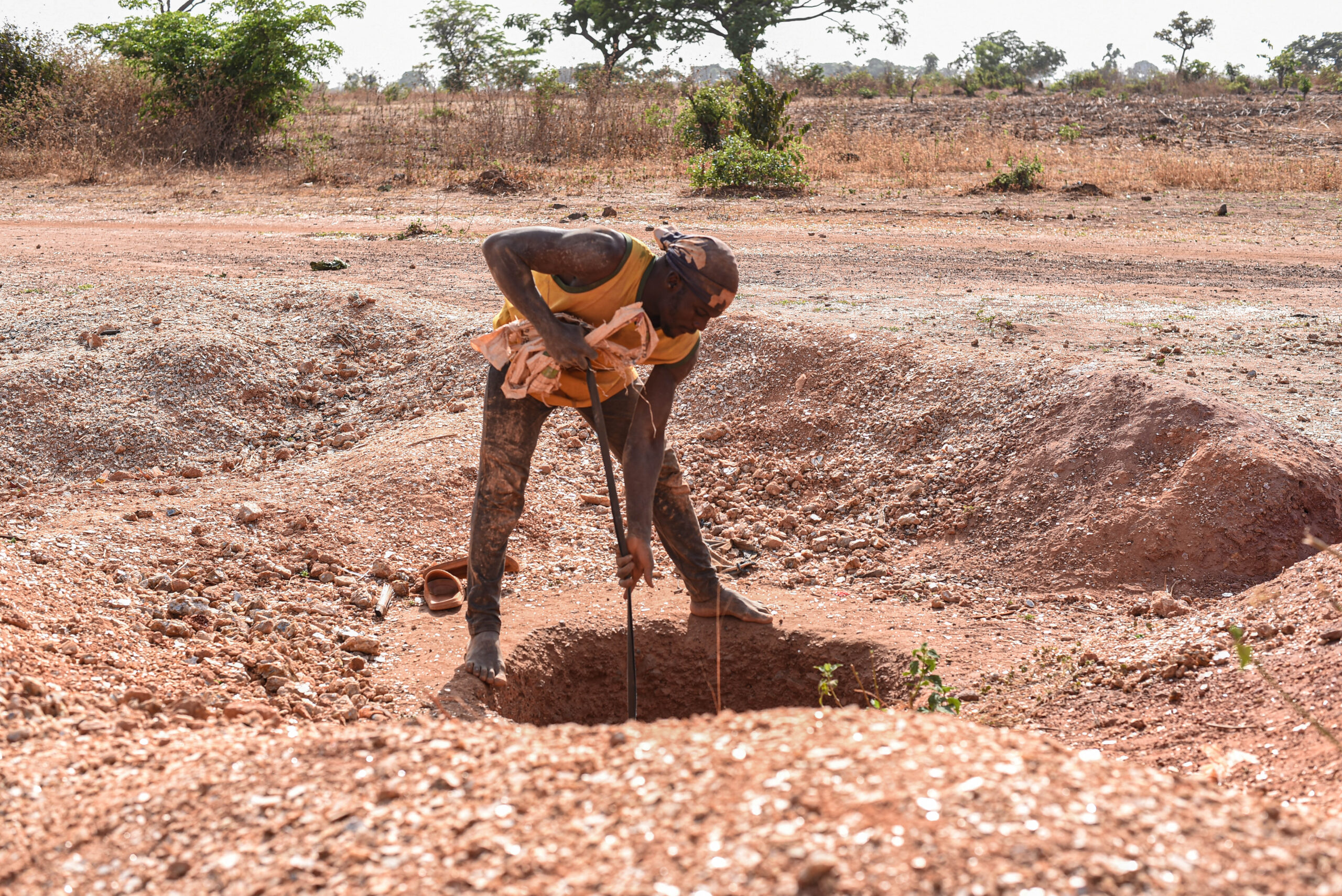
Despite this, Mrs. George-Ikoli said the communities where extraction happens still face issues like poverty, joblessness, and environmental harm. She warned that if Nigeria does not change, it may repeat these failures while trying to attract investment in minerals that are becoming more important globally.
Nigeria's solid minerals sector is still small compared to its oil industry. The 2023 EITI Solid Minerals Industry Audit report revealed that this sector contributed N1.76 trillion, which is only 0.75 percent of the gross domestic product.
The report also recorded mineral exports of 4.32 million metric tonnes worth N117.29 billion, with royalties reaching about N9.01 billion. Mrs. George-Ikoli cautioned that Nigeria should not think mineral wealth will automatically lead to economic growth or replace oil earnings.
In a report from August 2026, which she co-authored, NRGI warned that developing mining projects can take years and may not bring in as much public revenue or jobs as governments expect.
She said Nigeria must strengthen the institutions that manage the sector before bringing in more investment. She pointed out that the Nigerian Minerals and Mining Act of 2007 needs reform.
"We need to strengthen our governance structures. It took us how many years to reform that in the oil and gas sector with the Petroleum Industry Act," she said.
She highlighted the need for effective regulation, clear licensing, a strong fiscal policy, and reliable geological data as urgent priorities.
According to her, Nigeria must identify its minerals, where they are located, and if they exist in commercially viable amounts before negotiating with investors.
"We need to provide data. We need to really map out where our resources are, what it is that we have, in what level of commercial quantities as well, what sort of value, so that as we continue to have increasing investments or interest in us, we will be able to negotiate better for Nigeria," she said.
She also stressed that communities must be involved in decisions about extraction and should receive a fair share of the benefits. She warned against repeating the weaknesses she sees in the community development trust arrangements under the Petroleum Industry Act.
Mrs. George-Ikoli suggested Nigeria should focus on mineral processing and adding value where it is commercially viable. This is instead of trying to process every mineral locally, regardless of resources or capacity.
She encouraged cooperation among African countries like the Democratic Republic of the Congo, Zambia, Ghana, and Uganda to develop regional processing and manufacturing industries.
According to her, Nigeria's market size and industrial potential could make it a regional processing hub. Collaborating with other mineral-producing countries could also strengthen Africa's position in global supply chains.
"We are feeding global supply chains, but we’re not really benefiting as much as we could individually," she said.
She believes that countries working together could keep more economic value from their resources and create skilled jobs beyond just mining.
Besides mining, Mrs. George-Ikoli questioned whether Nigeria's ambitious gas expansion plans are realistic considering production limits and changes in international energy markets.
The Decade of Gas initiative aims to boost production and develop a gas-powered economy by 2030. However, a report from NRGI in September 2026, which she also co-authored, found that Nigeria is unlikely to meet its goal of adding 4.6 billion cubic feet per day of gas production by 2030.
Even in the best-case scenario, the production might only reach around 1.3 billion cubic feet per day.
Mrs. George-Ikoli said Nigeria needs to think about how much gas will be used domestically for power and industry instead of just for exports.
She warned that investments in long-term oil and gas projects may not be as attractive as global energy markets and regulations change.
She called for more investment in renewable energy and other productive sectors, alongside plans to support workers and communities affected by the energy transition.
These points should be included in Nigeria's national development plans and climate commitments, as well as in ongoing discussions about the Just Transition Work Programme under the United Nations climate process.
Comments
No comments yet.