Nigeria's Lithium Mining Faces Community Challenges
Nigeria is tapping into the lithium boom but risks repeating past mistakes with local communities. Reports will explore humanitarian issues linked to this resource.
Nigeria is trying to benefit from a global lithium mining boom. The country wants to avoid the problems of environmental damage, community anger, and corruption that have marked decades of oil exploitation in the southern delta region.
Nigeria's lithium belt runs from Oyo in the southwest to Kano in the north. It is believed to be worth over $34 billion. Nigeria is not a top producer, but its lithium is high-grade. The government is working hard to increase its processing capacity to meet the growing demand for lithium-ion batteries, which are key to clean energy.
With the right policies, Nigeria could see economic growth, create jobs, and improve rural living conditions. But in the rush to take advantage of its reserves, local communities may suffer from pollution, land damage, and security issues that come with poorly managed resource extraction.
The New Humanitarian, together with PREMIUM TIMES, is starting a series of reports. These reports will look at the humanitarian and rights issues linked to the lithium boom and what can be done to prevent exploitation and ensure communities benefit.
Foreign investors are flocking to Nigeria, mainly from China, as well as from Australia, Britain, and the US. Since Nigeria banned the export of raw lithium ore, Chinese investment in processing plants has reached $1.3 billion.
The Natural Resources Governance Institute (NGRI) warns that Nigeria's mineral sector offers a real chance for economic diversity, but it is not a quick solution. Realizing this potential needs realistic expectations and good governance.
NGRI said, "Stronger community engagement, environmental management, grievance mechanisms, and transparency are essential to attract responsible investment, maintain public trust, and ensure mining delivers sustainable and inclusive development."
While Nigeria's mining law includes clear rules for community and environmental protection, oversight is weak. Olasehinde Oladusi, deputy director in the Ministry of Solid Minerals and Development, told The New Humanitarian/PREMIUM TIMES, "Resources and capacity are never enough."
In Niger State, the largest by land area, the Mines Inspectorate Department has only one vehicle and four staff members to supervise all operations. The Mines Environmental Compliance Department has the same number of staff.
Mining and processing companies are meant to get local community approval before starting work. This usually involves a Community Development Agreement (CDA) that the MEC approves. The CDA is supposed to outline compensation, often in the form of community infrastructure like roads, water, and education grants.
But power imbalances can leave communities without a voice. Kangimi is 40 kilometers from Kaduna, where one of Nigeria's first lithium processing plants is located. This plant is a joint venture between a Chinese firm, Ming Xin Mineral Separation Nigeria Ltd, and the state government.
The village was promised borehole water, solar lighting, roads, a clinic, and jobs. But after three years, village head Danjuma Husseini said the cheap plastic taps broke, the solar system is weak, the clinic and roads are still missing, and local youth only have informal jobs.
Village elders did not hire a lawyer for the CDA and do not have a copy of the original agreement. "We weren’t used to such things," Mr Husseini explained. "There’s no cyber café nearby to make a copy: It was our fault, but we’re learning, next time we will make sure to have a copy."
When The New Humanitarian/PREMIUM TIMES visited Kangimi in September, talks were ongoing with company representatives about building a new mosque. "But we still don’t really trust them," Mr Husseini said.
His worries include potential pollution from the processing plant, which flows into a dam next to the drinking water reservoir for Kaduna and local fishers. The dam wall is broken, allowing seepage into the reservoir, and it has not been fixed for months.
Kaduna State authorities claim the water is treated and show no signs of contamination. But Sunday Duniya, the water treatment manager, admitted they sometimes run out of chemicals needed for treatment, causing water supply to shut down: "We can’t serve untreated water," he insisted.
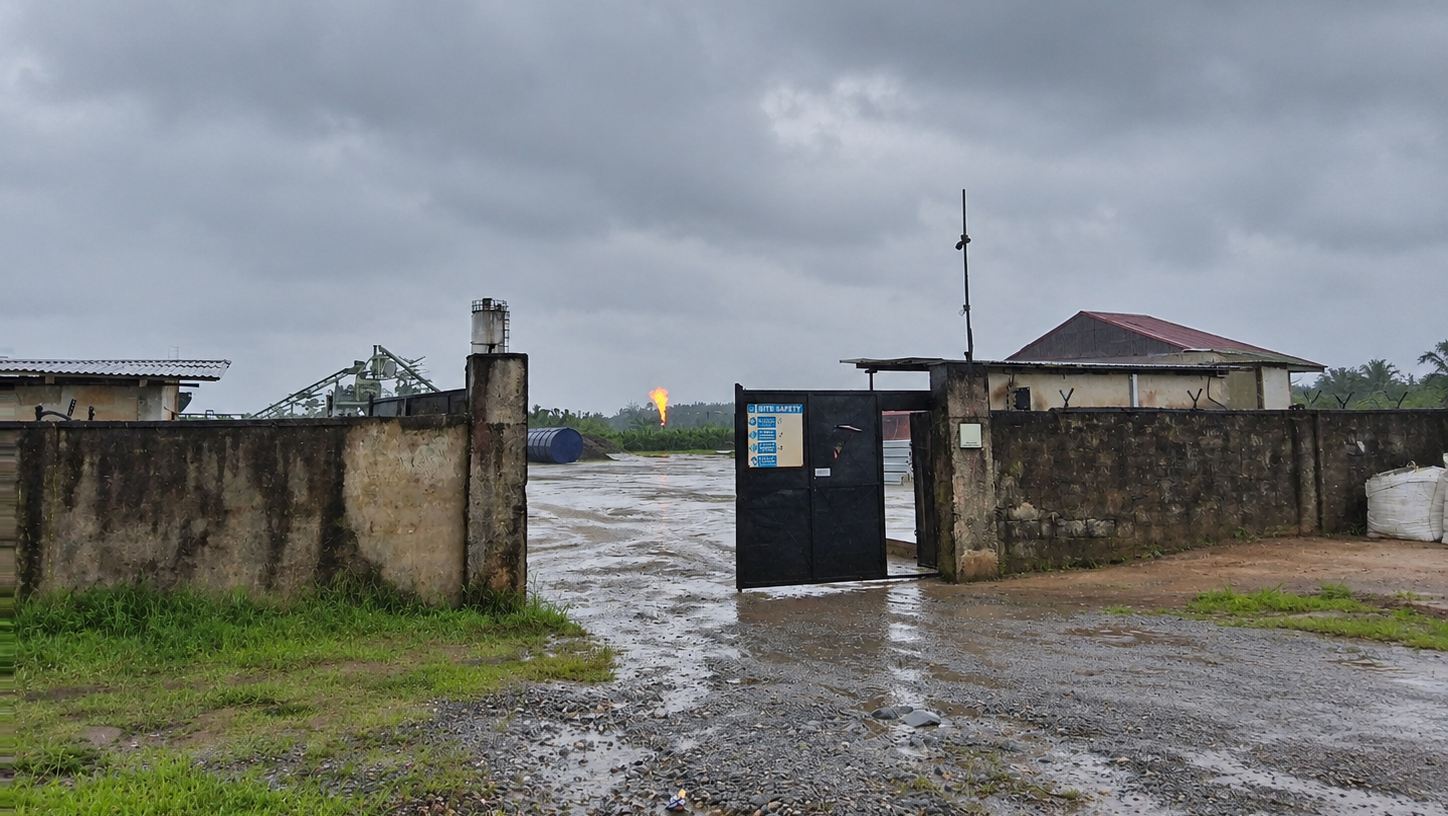
He added that the damaged dam wall near the reservoir is "absolutely wrong" and should be handled by Kaduna State’s Environmental Protection Agency, which did not comment for this story.
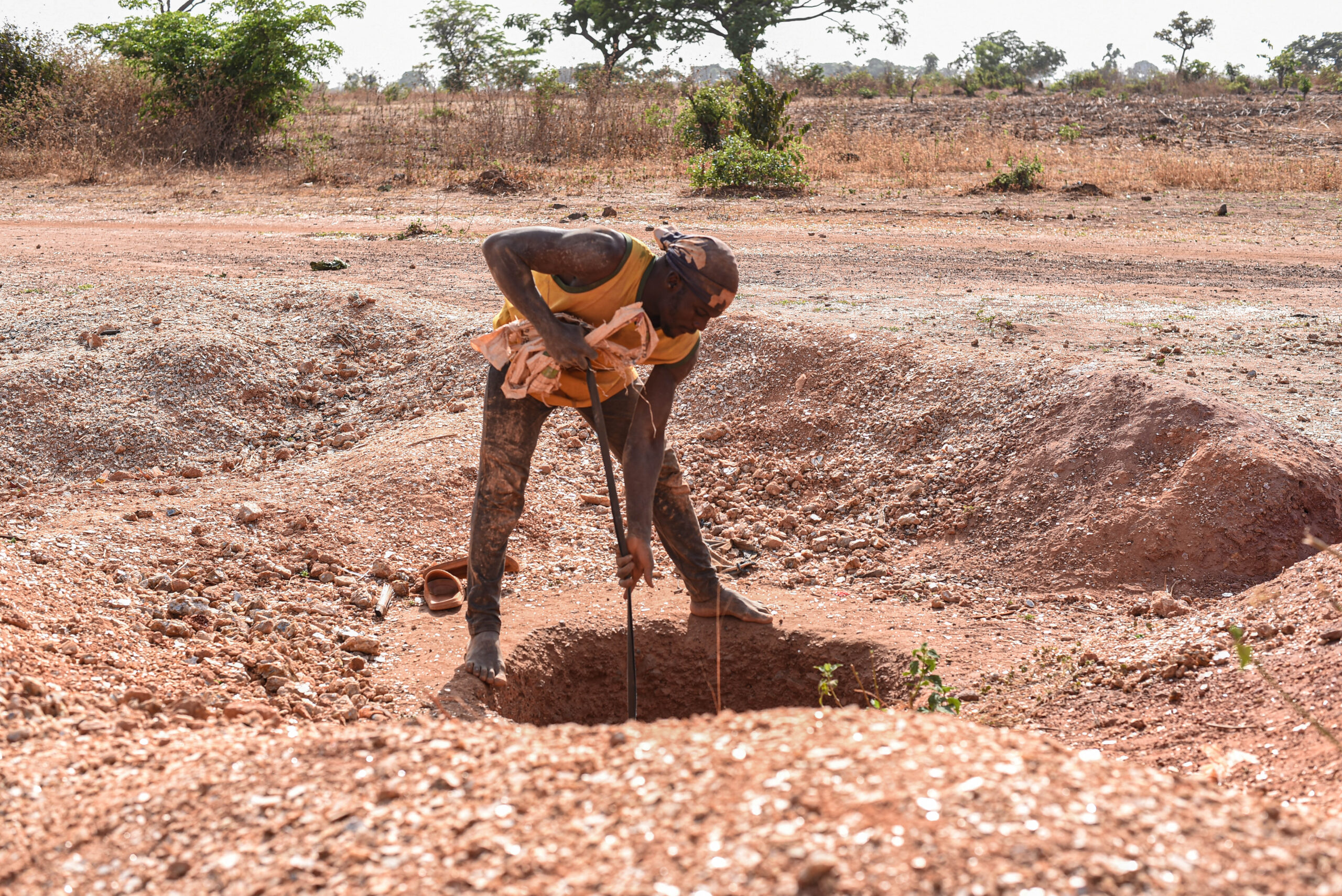
Nigeria's mining sector is mostly informal. Many rural communities earn extra income by mining during the dry season using simple tools. In Dangoma village, there are many circular pits in the ground, each owned by individual miners.
From the roughly five-meter-deep shafts, miners dig horizontal tunnels underground. They cannot dig deeper due to the lack of wood to support the shafts and fear of collapses. Children also work on the site, with young girls sorting mica and boys as young as 10 going underground.
People have mined in Dangoma for about five years. The story goes that two brothers from the village went to Plateau State to mine and returned with knowledge of the geology. It has become a source of income for many families.
“This area is agriculturally rich, but you need capital to farm, and you don’t make your money until the harvest,” said miner Abdul Oma. “But with mining, you make your money the instant that you dig, if you’re lucky.”
The informal sector often faces criminalization. In September, 37 young men died while in custody of the Nigeria Security and Civil Defence Corps after being arrested in raids on mining sites and crammed into a small cell.
The process to register for legal mining is complex. Miners must first form registered cooperatives to apply for a license. This process, while inexpensive, requires navigating an online platform and payment system, which can be difficult for many rural miners.
Miners are forced to work informally, making them vulnerable to exploitation by bandits, who are criminal gangs that operate in much of Nigeria's rural areas. "Bandits don’t do mining themselves, but they hide in the unregulated sector," Mr Oladusi noted. "They create insecurity, they create panic, and are entrenched."
The ore they steal enters the market through middlemen or is sold directly to licensed mines. In Birnin Gwari, on Kaduna's border with Zamfara and Katsina states, informal miners shared stories of bandits stealing their lithium ore or forcing them to work.
One miner in a Liverpool football shirt, who did not want to be named, said, "We fear the bandits: They come to where people are mining and enslave us to mine for them." He was among six people kidnapped last year and held for 18 days until his family paid the ransom.
While security has improved on the highway to Birnin Gwari, a bandit economy tied to resource extraction continues to thrive in rural areas. One miner said, "There is no government presence; the bandits are the government."
Although there is some security along highways, inside villages, there is little protection. Nigeria is hurrying to maximize its mineral wealth, but building a solid mining sector takes time. Dauda Garuba, director for the Center for Democracy and Development (CDD), told The New Humanitarian/PREMIUM TIMES, "The gestation period for mining is long term. You don’t just turn up, take the ore, and then move."
Mining projects often take place in remote areas that need better transport and power infrastructure. "Value addition," or local processing of lithium, is a key government goal, but it also needs the right mix of tax incentives and demand, according to the NGRI report.
Mr Garuba pointed out gaps in the mining law and government guidelines: "I don’t think that what we’ve done so far is comprehensive enough to really take us to the next level that we want to achieve in mining development."



Comments
No comments yet.