Nigeria plans to boost health centres and insurance by 2031
The Nigerian government plans to ensure 90% of primary healthcare centres are functional and 40% of citizens have health insurance by 2031. This initiative aims to make healthcare more affordable.

The federal government has set plans to ensure that at least 90 percent of primary healthcare centres (PHCs) are working well and 40 percent of Nigerians have health insurance coverage by 2031.
The government wants to provide quarterly funding to at least 17,600 PHCs through the Basic Health Care Provision Fund (BHCPF). They also plan to extend maternal and newborn healthcare services to all 774 local government areas.
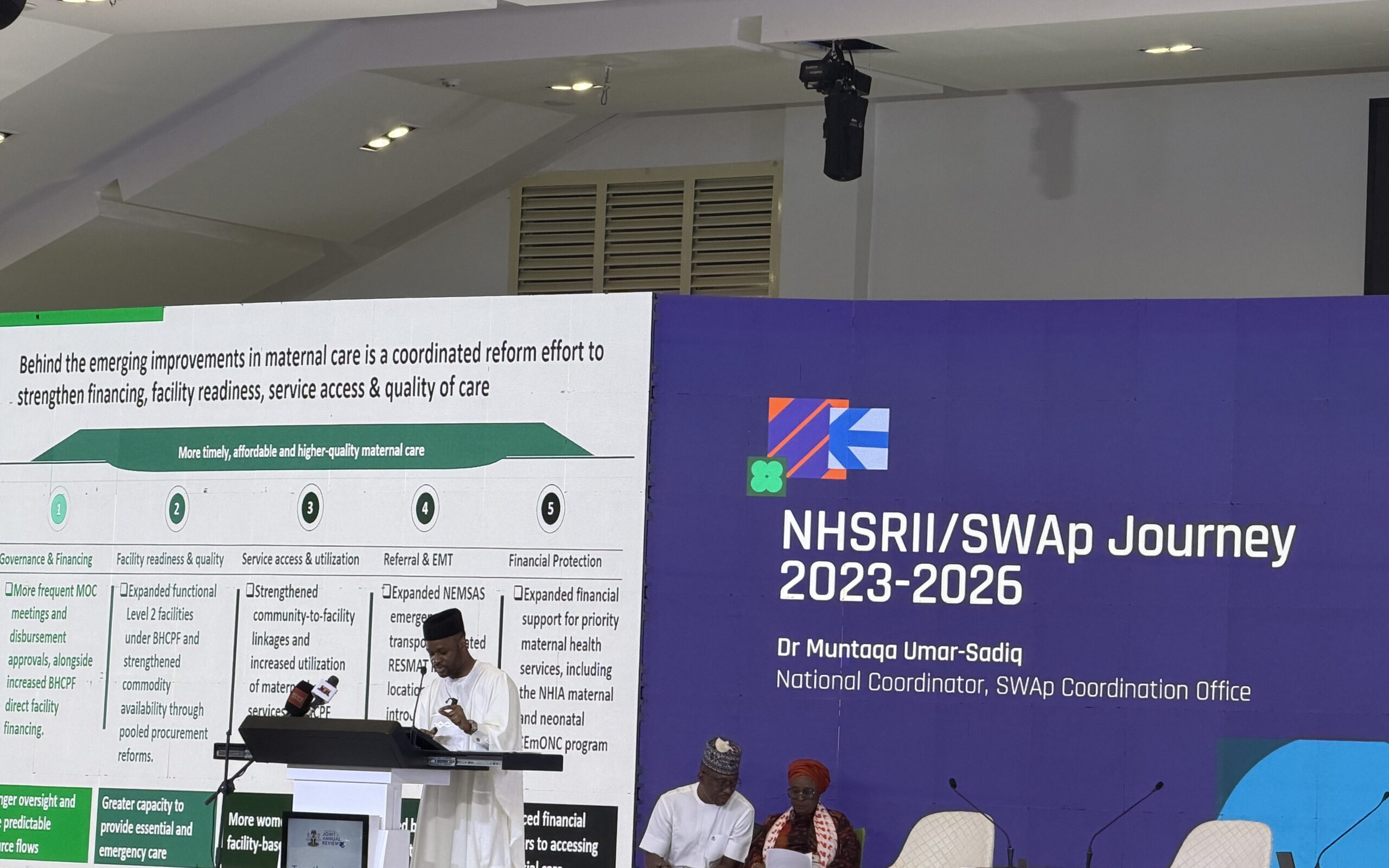
The Minister of State for Health and Social Welfare, Iziaq Salako, shared these targets on Tuesday at the 2026 Nigeria Health Sector Joint Annual Review (JAR) in Abuja.
Mr Salako mentioned that the government is also looking to cut out-of-pocket healthcare spending to below 50 percent by 2031. This is part of efforts to make healthcare more affordable for everyone.
He explained that these targets are part of the government’s long-term plans to improve access to healthcare, strengthen funding, and reduce preventable deaths.
The plan to expand maternal and newborn healthcare services will be carried out through the Maternal and Newborn Mortality Reduction Innovation Initiative (MAMII). This initiative aims to cut down deaths among pregnant women and newborns.
Out-of-pocket spending means money that patients pay directly for healthcare services. This includes payments for consultations, medicines, and treatments that are not covered by insurance or other funding arrangements.
These targets come as Nigeria still faces many challenges like poor healthcare funding, lack of health workers, and unequal access to essential services, especially in rural areas.
Speaking about progress in the health sector reforms, Mr Salako said almost eight million more Nigerians have signed up for health insurance since the current government took over. This includes more than three million vulnerable people.
He stated that the government is directly supporting more than 8,000 PHCs. Over 3,000 facilities have reached Level 2 readiness, which shows their ability to provide essential healthcare services.
The minister also reported improvements in maternal and child health. He noted a nearly 60 percent drop in facility-reported maternal deaths compared to 2024.
He added that neonatal and under-five deaths reported by facilities have fallen by 22 percent and 25 percent, respectively.
Mr Salako highlighted progress in local drug manufacturing. He said the number of active pharmaceutical companies has increased by about 10 percent.
According to him, local production's share of the pharmaceutical market rose from 30 percent in 2023 to 50 percent in 2026. This is based on figures from the Manufacturers Association of Nigeria’s pharmaceutical group and the National Agency for Food and Drug Administration and Control (NAFDAC).
The minister announced that the government will launch the National Sexual and Reproductive Health Policy 2026, 2030. They will also share updated guidelines for task-shifting and task-sharing during the three-day review.
These guidelines aim to create a plan for sharing healthcare responsibilities among different trained health workers.
Mr Salako said the review will also present the Nigeria Mini Demographic and Health Survey report. This report will provide more evidence to see how healthcare delivery is progressing.
He stressed the need to look at regular health facility data alongside survey findings. This will help identify gaps and improve decision-making.

"Survey and routine data answer different questions, so we shall read them side by side. Where they differ, we will treat that as a sign to look deeper, not a reason to look away," he said.
Mr Salako said the Joint Annual Review should go beyond discussions and produce specific commitments for government and development partners to follow.
He explained that the resolutions should name responsible agencies, individuals, and partners, with clear timelines for including agreed actions into the 2027 annual operational plans.
The minister said 2027 will be the last year of the current Health Sector Strategic Blueprint. This makes it important to assess what has been achieved and address any remaining issues.
"This year's theme, 'Make the Data Count', means that every number must be reliable enough to guide us, and every number must be used to change lives," he said.
He added that health data should help track patients' care, from antenatal visits to delivery and childhood immunizations.
The Chairperson of the Senate Committee on Health, Ipalibo Banigo, called for stronger accountability and sustainable funding to meet the government's healthcare goals.
"With competing national priorities and less external support, boosting local resource mobilization is no longer optional. It is a must," she said.
Ms Banigo said the legislature will keep supporting healthcare reforms through funding and oversight. They will ensure that funds are released on time and used well to improve services, especially for women, children, and underserved communities.
Meanwhile, the Permanent Secretary of the Federal Ministry of Health and Social Welfare, Daju Kachollom, admitted that big challenges still exist despite the progress in health sector reforms.
Ms Kachollom said under-five and neonatal death rates are still far from the government's targets. She noted that shortages of health workers continue to affect service delivery across the country.
She also revealed that only 22 percent of public health events met the seven-day early response target during the review period. This shows weaknesses in the country’s emergency response system.
The Permanent Secretary urged stakeholders to fill in the gaps and make sure health investments lead to better services for Nigerians.
The 2026 Joint Annual Review, themed "Make the Data Count", is bringing together government officials, development partners, and others to review progress under the Nigeria Health Sector Renewal Investment Initiative.
This initiative is being carried out through a Sector-Wide Approach. This aims to improve coordination, funding, and accountability in healthcare delivery.
Mr Salako said all states and the Federal Capital Territory have conducted their reviews. This allows the national meeting to build on findings from across the country.
The three-day review is expected to highlight remaining challenges and agree on priorities for 2027.



Comments
No comments yet.