Nigeria spends ₦422.3 billion on basic healthcare since 2019, ₦249.5 billion under Tinubu
Nigeria has invested ₦422.3 billion in basic healthcare since 2019, with significant funding under President Tinubu. The government aims to enhance healthcare access nationwide.

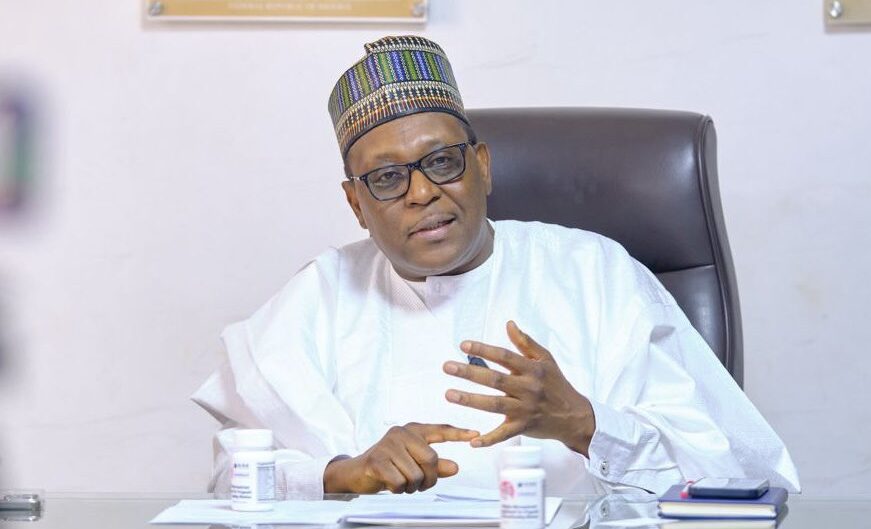
The Coordinating Minister of Health and Social Welfare, Muhammad Pate, said that Nigeria has spent a total of ₦422.3 billion from 2019 to October 2026 under the Basic Health Care Provision Fund (BHCPF).
Mr Pate mentioned that ₦323.6 billion of this amount has been handed over to the fund’s implementing gateways. Out of this, ₦249.5 billion was given during President Bola Tinubu’s time in office.
He revealed this information on Tuesday while speaking at the 2026 Nigeria Health Sector-Wide Joint Annual Review (JAR) in Abuja.
“By October 2026, cumulative Basic Health Care Provision Fund releases since 2019 had reached approximately ₦422.3 billion. Of the ₦323.6 billion disbursed to the gateways, ₦249.5 billion was disbursed under this administration,” he said.
The minister also noted that the government has signed an agreement with the Independent Corrupt Practices and Other Related Offences Commission (ICPC) to improve tracking of BHCPF resources and enhance accountability.
The BHCPF is a government funding plan designed to give people better access to basic healthcare services, especially at the primary healthcare level.
Mr Pate said all states and over 8,000 BHCPF-supported facilities have created plans linked to budget priorities for the third year in a row.
“We are strengthening the connection between planning, expenditure and the services people receive,” he stated.
Over 3,500 health centres revitalised
The minister also shared that 3,526 primary healthcare centres have been revitalised nationwide, with work ongoing at another 900 facilities.
He called this a “substantial progress,” but admitted that many facilities still need improvement.
Mr Pate said the government has hired 19,758 skilled birth attendants in 22 states and 4,747 community health workers in 10 states.
He added that 78,054 frontline health workers have received training to help improve healthcare delivery.
The minister noted that more people are using services at BHCPF-supported facilities. Skilled deliveries increased from 4.8 million in 2023 to 7.9 million by the second quarter of 2026.
He said fourth antenatal care visits went up from six million to 8.7 million, while outpatient attendance rose from 32.4 million to 43 million.
Calls for accountability, timely funding
Despite the increased funding, Mr Pate admitted that financing is still a big challenge for Nigeria’s health sector.
He stated that the government is working to improve how healthcare funds are released and used. They are also pushing for the BHCPF allocation to increase to two percent of the Consolidated Revenue Fund.
The minister also talked about plans to change the excise duties on sugar-sweetened drinks, suggesting that the revenue could be used for healthcare.
“We cannot sustain ownership of our priorities without financing them. We must mobilise domestic resources, release them on time and use them effectively,” he said.
Muhammed Lecky, speaking for civil society organisations, called on the government to make sure that the increased healthcare funding leads to better services for the communities.
“A renovated facility is only a beginning. It must have the staff, medicines, power and systems needed to deliver care,” he said.
Mr Lecky also asked for transparent and timely financing, stronger community involvement, and independent checks on reported improvements.
Ipalibo Banigo, the Chairperson of the Senate Committee on Health, also highlighted the need for accountability in healthcare spending.
“It is one thing to make provisions in the budget and another thing to get the funds released on time, effectively utilised and institutions held accountable,” she said.
About JAR
The 2026 Joint Annual Review, themed “Make Reform Data Count,” brings together federal and state government officials, development partners and other stakeholders to look at progress under the Nigeria Health Sector Renewal Investment Initiative.
The initiative is being carried out using the Sector-Wide Approach, which aims to improve coordination, financing and accountability in healthcare delivery.
The three-day review is expected to identify remaining challenges and agree on priorities for 2027.






Comments
No comments yet.