Nigeria's Environment Minister Attends Biodiversity Conference in Armenia
Balarabe Lawal, Nigeria's Minister of Environment, is in Armenia for the UN Biodiversity Conference. Key discussions focus on global biodiversity actions.
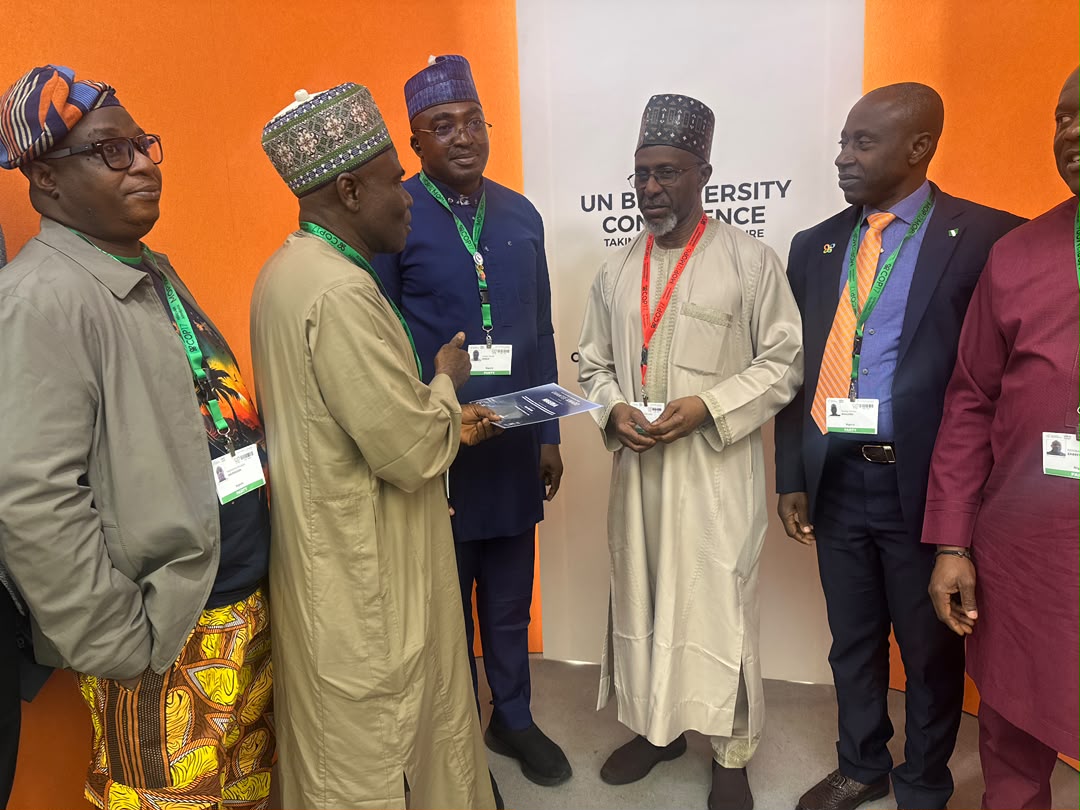
Nigeria's Minister of Environment, Balarabe Lawal, has landed in Yerevan, the capital of Armenia, for the ongoing 17th session of the United Nations Biodiversity Conference (CBD COP17).
Mr Lawal arrived on Monday, ahead of the high-level segment set for 27 and 28 October. During this time, ministers and senior government officials will discuss challenges in implementing the Kunming-Montreal Global Biodiversity Framework (KMGBF), which was adopted in 2022.
The Convention on Biological Diversity (CBD) Secretariat expects around 1,500 participants, including 140 ministers and deputy ministers of finance and environment, at the high-level segment.
As negotiations move into the final phase, delegates aim to turn global biodiversity promises into real actions before the conference wraps up.
The CBD Secretariat reports that negotiators made headway in the first week, adopting four decisions under COP17 related to invasive alien species, gender, education, and knowledge management.
Eight important decisions were also made under the Cartagena Protocol on Biosafety, focusing on monitoring and reporting, compliance, and enhancing national processes for effective implementation.
Additionally, two decisions were adopted to advance the Nagoya Protocol on Access and Benefit-sharing, focusing on monitoring, reporting, and compliance.
One key issue to discuss is the global review of progress towards the biodiversity framework. This will consider findings from the State of Biodiversity Action report, launched by UN Secretary-General António Guterres before COP17. The report showed that while there is strong national commitment, there are still big gaps in ambition and implementation.
“COP17 is enabling a total mobilisation of more than $1.8 billion from all sources, governments, philanthropic organisations, and investors, in support of strong biodiversity action,” said COP17 President Hambardzum Matevosyan.
“The first week has shown that cooperation can deliver progress. The second week must show that political commitment can deliver action.”
Since the beginning of negotiations last week, biodiversity financing has been a hot topic. Developing countries are particularly keen on securing significant financial support to implement the global framework.
Talks have focused on raising additional public and private funding, improving access to existing resources, and redirecting harmful subsidies to support nature conservation.
A major point of discussion is the Cali Fund, set up after COP16 to support benefit-sharing from the commercial use of digital sequence information (DSI) on genetic resources.
This fund aims to ensure that companies benefiting from such information contribute to biodiversity conservation and its sustainable use.
For African countries, this debate connects closely with issues of equity, resource ownership, and the continent's ability to finance conservation efforts.
African negotiators argue that the continent's rich biological resources support global commercial activities, but the benefits do not adequately reach the countries and communities that provide these resources.
They are advocating for benefit-sharing arrangements that provide real financial resources for biodiversity protection, community development, and the implementation of national conservation plans.
Negotiators are also looking into ways to attract private investment and redirect harmful subsidies. The global biodiversity framework calls for eliminating or redirecting at least $500 billion in harmful incentives by 2030.
Upon his arrival at the COP17 venue, Mr Lawal was welcomed by Nigerian delegates and national focal points.
The minister also officially presented certificates for the $50,000 Rapid Deployment Mechanism (RDM) grants won by Nigeria and six other countries to Joseph Onoja, director-general of the Nigerian Conservation Foundation (NCF), and his team.
PREMIUM TIMES previously reported that Nigeria and six other countries in the High Ambition Coalition (HAC) for Nature and People received $50,000 seed grants each under the RDM to carry out projects that will speed up progress towards their 30×30 conservation targets.

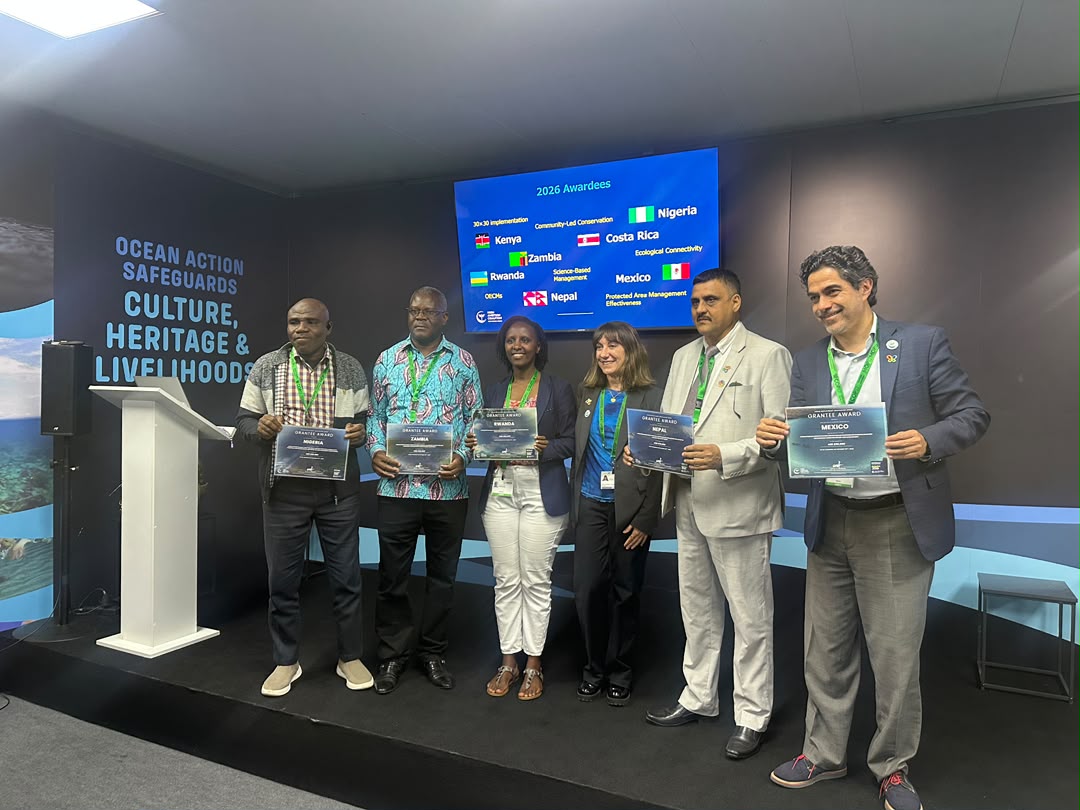
The 30×30 target aims to ensure that at least 30 percent of the world’s land and sea areas are effectively conserved and managed by 2030.
Mr Lawal is expected to deliver Nigeria’s national statement during the high-level segment.
As the UN Biodiversity Conference enters its last week, governments must address outstanding disagreements over biodiversity financing and economic incentives that drive nature loss.
The conference includes COP17, the 12th Meeting of the Parties to the Cartagena Protocol on Biosafety, and the sixth Meeting of the Parties to the Nagoya Protocol on Access and Benefit-sharing. It is scheduled to conclude on Friday.
The CBD Secretariat stated that the second week of negotiations must show that political commitments can lead to real action.
Conference organisers said meaningful results would require governments to prioritize biodiversity in economic and financial decision-making. This is highlighted by the involvement of finance ministers.
“Nature is not a luxury we protect when economies can afford it. Nature is what makes economies possible. The arrival of finance ministers at COP17 sends an important signal,” said Inger Andersen, United Nations under-secretary-general and executive director of the United Nations Environment Programme (UNEP).
“Biodiversity loss is not just an environmental problem. It is an economic problem, and the solutions must reach into the heart of economic decision-making.”
The scale of the challenge is shown by financial incentives that continue to harm biodiversity, often undermining investments in conservation and restoration.
“Financing the destruction of nature with 30 dollars against every dollar spent restoring it is like paying 30 people to tear down your house for every one hired to rebuild it,” said Astrid Schomaker, executive secretary of the CBD.
Ms Schomaker outlined three priorities for turning commitments into results: accountability, alignment, and acceleration.
Accountability means using national reports, scientific evidence, and the first global review to find shortcomings and guide stronger actions.
Alignment requires that public budgets, private investments, economic policies, and financial incentives support global biodiversity goals, not undermine them.
Acceleration means speeding up the implementation of the framework’s 23 targets by 2030.
“The global review showed us where we are making progress and where we are lagging behind,” she said. “Yerevan focuses all Parties on closing those gaps.”
But closing these gaps will take effort from governments to overcome major differences in negotiations.
Big questions remain about which countries and stakeholders should contribute to international biodiversity financing, how much funding should be raised, and how resources should be distributed.
Parties are also divided over reducing or phasing out harmful incentives, including agricultural subsidies.
Other unresolved issues include which commercial users of digital sequence information should contribute to the Cali Fund, arrangements for a new permanent body on Indigenous Peoples and local communities under Article 8(j) of the Convention, and how biodiversity action should align with climate commitments and other international responsibilities.

Comments
No comments yet.