Osun's Political Journey: Past Governors and Their Impact
Osun State has evolved since its creation in 1991. This article reviews past governors and their influence on the state's politics and development.
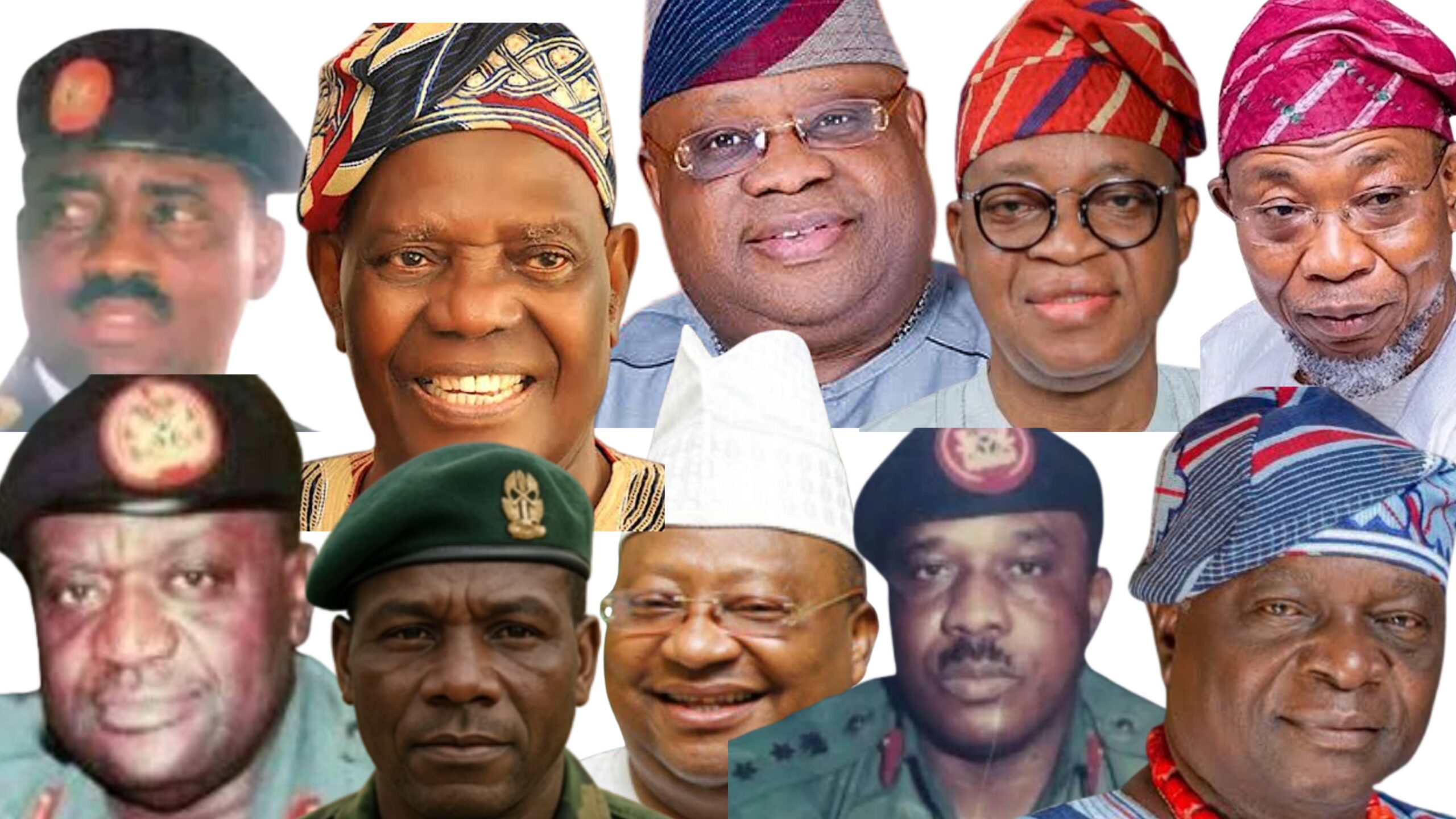
Osun State came from the old Oyo State in August 1991. This was during the military rule of General Ibrahim Babangida. Since then, the state has seen both military rulers and elected governors, each leaving their mark on its politics and development.
Leo Ajiborisha, a colonel, was the first administrator of Osun State. He worked on setting up the institutions needed for the new state before handing over power to its first elected governor, Isiaka Adeleke, in January 1992.
After Nigeria returned to civilian rule in 1999, Osun saw a series of elected governors: Bisi Akande, Olagunsoye Oyinlola, Rauf Aregbesola, and Gboyega Oyetola. The current governor, Ademola Adeleke, took office in 2022 amid various political issues.
Over the last thirty years, these leaders have taken different paths in governance. Some focused on fiscal responsibility, social programs, and infrastructure, while others faced criticism for debt, labor issues, political fights, and financial misconduct. This analysis looks at the key achievements and failures of each administration as Osun prepares for another gubernatorial election on Saturday.
Leo Ajiborisha: Laying the Groundwork
Leo Ajiborisha, a military officer, was appointed as the first administrator of Osun State in 1991. His leadership mainly dealt with building the basic framework for the new state and getting it ready for civilian governance.
Notable actions during his time included setting up the Osun State Civil Service Commission in September 1991. He also founded the Osun State Broadcasting Corporation, with its radio station in Ile-Ife starting in November 1991. Ajiborisha handed over to Isiaka Adeleke in January 1992, marking the start of elected governance.
His time in office was short, reflecting the military administration's transitional phase. Later, he held senior military roles, including Director of Operations at the Defence Headquarters and Principal Staff Officer to former Head of State Abdulsalami Abubakar.
Isiaka Adeleke: The First Elected Governor
Isiaka Adeleke became Osun State's first elected governor in January 1992 under the Social Democratic Party (SDP). As the first civilian governor, he had to strengthen the institutional foundations set during the state's early days.
One key initiative was setting up the Osun State Polytechnic, Iree, which added to the state's higher education. Unfortunately, Adeleke’s time was cut short by the military takeover in November 1993, ending Nigeria’s Third Republic.
His term lasted only about two years, not enough for many of his plans to come to life. He later served as a senator for Osun West from 2007 to 2011 as a member of the PDP. He returned to the Senate under the APC in 2015 but passed away in April 2017.
Military Administration Returns
After the 1993 military takeover, Nigeria, including Osun, went back to military rule. Anthony Udofia became the second military administrator under Sani Abacha. His focus was mainly on keeping government operations running and pushing social development.
Udofia was replaced by Anthony Obi, who served from August 1996 to August 1998. Obi's time was marked by one of Nigeria's most uncertain political periods. He later moved to Abia State, where he stayed until civilian rule returned in May 1999.
Theophilus Bamgboye: Preparing for Democracy
Theophilus Bamgboye took over as the fourth military administrator of Osun State under General Abdulsalami Abubakar’s government. He worked during the last phase of military rule, mainly maintaining government institutions while preparing for the return to democracy in 1999.
Bamgboye, from Omu-Aran in Kwara State, handed over to Bisi Akande, who became the first elected governor of Osun State in the Fourth Republic.
Bisi Akande: Fiscal Discipline and Tough Changes
Bisi Akande was elected governor from 1999 to 2003 under the Alliance for Democracy. His administration is known for its fiscal discipline and reforms aimed at cutting government waste. Akande’s government promoted free education and healthcare, reflecting the Alliance for Democracy's social-democratic approach.
His attempt to downsize the civil service faced significant pushback from organized labor. These changes, deemed necessary, led to political challenges for Akande in the 2003 elections. He lost to Olagunsoye Oyinlola, serving just one four-year term. Before this, he was the secretary to the defunct Oyo State Government and deputy governor under the late Governor Bola Ige.
Olagunsoye Oyinlola: Focus on Infrastructure and Education
Olagunsoye Oyinlola, a retired brigadier-general and former military administrator of Lagos State, governed Osun from 2003 to 2010 under the PDP. His administration prioritized infrastructure, agriculture, education, healthcare, water supply, transportation, security, and job creation.
One of his major achievements was founding Osun State University, designed as a multi-campus institution to broaden access to university education. He also rolled out various welfare programs, especially for rural areas.
The Low Points
Oyinlola was involved in a long legal and political battle over the 2007 governorship election. This battle ended with the Court of Appeal nullifying his election in 2010, leading to Rauf Aregbesola taking over. This incident highlighted the increasing role of electoral litigation in Nigeria’s politics. Oyinlola’s removal led to off-cycle elections in Osun.
Rauf Aregbesola: Ambitious Changes Amid Financial Issues
Rauf Aregbesola was Osun State's longest-serving elected governor from 2010 to 2018. His time was marked by big infrastructure projects, social welfare programs, and major education reforms.
Supporters often highlight his government’s wide-ranging public works and social initiatives as lasting legacies. The administration set up the Osun Youth Empowerment Scheme, known as O-YES, which created jobs for many young people.
In education, Aregbesola introduced the “Opon Imo” (Tablet of Knowledge) digital learning initiative, giving students access to electronic learning materials. His government also built mega schools to improve public education.
Another major program was the O-MEALS school feeding scheme, providing meals to children in public primary schools. Infrastructure development was also a key focus, with extensive road construction across urban and rural areas.
Aregbesola also promoted cultural identity, adopting the title “Ogbeni” and making Isese Day a public holiday.
The Low Points
Aregbesola's administration faced criticism for worsening financial conditions that affected workers and pensioners. With declining federal funds and debt obligations, the government rolled out a “modulated” salary structure, leading to some workers receiving only part of their salaries. This policy sparked strong backlash from labor unions and caused hardship for many.
His education reforms stirred controversies, including school restructuring and merging some single-sex schools, which led to protests and religious tensions over uniforms and hijab use. The administration’s borrowing and debt issues became hot topics, with critics claiming loans for infrastructure created a heavy financial burden for future governments.
Aregbesola's relationship with his successor, Gboyega Oyetola, soured, causing divisions within the Osun APC chapter.
Gboyega Oyetola: Financial Management and Political Struggles
Gboyega Oyetola took over from Aregbesola in 2018 after a controversial election and served until 2022. Political tensions peaked during the closely contested September 2018 election, which was declared inconclusive. This led to a supplementary rerun, marked by claims of voter intimidation between the APC and PDP.
In the September 22, 2018 election, early results showed Adeleke leading Oyetola by just 353 votes, but INEC declared it inconclusive due to over 1,000 cancelled votes. The PDP and observers criticized this status, claiming it was a tactic by federal authorities to favor the ruling party.
INEC then set a rerun for September 27 in seven polling units across four local governments. The political rivalry was evident, as the PDP mobilized current and former governors and the then Senate President, Bukola Saraki, to influence the outcome.
Iyiola Omisore, the SDP candidate, eventually allied with the APC before the rerun, despite PDP's efforts to gain his support. The rerun occurred under heavy security. PDP leaders reported harassment and restrictions for their supporters and journalists. In the end, Oyetola of the APC was declared the winner, leading to a polarized political atmosphere in the state.
Oyetola inherited major financial challenges, including salary and pension debts, while trying to maintain government services under tight finances. One of his main goals was financial management. His government stopped the modulated salaries and restored full salaries for workers.
They also began addressing the pension debts and invested in healthcare facilities.
Major Achievements
Oyetola's administration improved primary healthcare centers across the state and invested in the State Specialist Hospital in Asubiaro, Osogbo. They also built the Olaiya Flyover, one of the most notable infrastructure projects of his time.
In education, Oyetola reversed some of Aregbesola’s controversial changes, including school names and uniforms. His administration aimed to lessen the state’s reliance on new loans.
The Low Points
Oyetola’s time in office was marked by intense political rivalries within the APC, especially his worsening relationship with Aregbesola. This division weakened the party ahead of the 2022 governorship election, which he narrowly lost to Adeleke of the PDP.
His convoy was attacked during the EndSARS protests in October 2020, highlighting the security issues of the time. After leaving office, Oyetola faced allegations about resource management and certain projects from the incoming government. He and his team rejected these claims, calling them politically motivated.
Ademola Adeleke: Focus on Infrastructure and Worker Welfare
Ademola Adeleke became governor in November 2022 after defeating Oyetola. His government stresses infrastructure, worker welfare, healthcare, and education.
Adeleke's administration has focused on road construction and major infrastructure projects, including flyovers in Osogbo. Workers' welfare is also a priority. The government claims to have cleared significant parts of inherited salary and pension debts while improving pensioner benefits.
In healthcare, the administration has worked on upgrading primary healthcare centers and improving power supply at health facilities. They have also supported the University of Ilesa and initiatives to boost the state's digital economy.
The Low Points
Despite these efforts, Adeleke's government has faced serious political and legal issues. One major conflict revolves around local government control, with legal battles over elected local government chairpersons. This has caused tension between the state government and opposition leaders.
The government has also drawn criticism for terminating some appointments made by the previous administration, especially for teachers and health workers. Its financial management has faced scrutiny, with opposition questioning some spending and projects. The administration has denied any wrongdoing, defending its financial choices as part of its development plans.
Adeleke's public persona has sparked debate. His frequent dancing, which some see as a sign of his connection with the people, has been criticized by others who question his seriousness as a leader.
The Overview
Political analysts say the history of governance in Osun State reflects broader challenges in Nigeria's subnational governments. The state's early military rulers focused on creating institutions and ensuring stability. The return to democracy emphasized education, healthcare, infrastructure, and social programs.
However, successive administrations show a pattern of tension between ambitious development goals and the state’s financial realities. Akande’s fiscal reforms faced labor pushback. Oyinlola’s time was marked by electoral disputes, while Aregbesola’s ambitious plans led to salary crises and debt worries.
Oyetola aimed for fiscal stability but struggled with party conflicts. Now, Adeleke, known as the dancing governor, is pursuing infrastructure and welfare goals while dealing with political opposition and legal challenges. This ongoing political tension raises questions about Osun's ability to start projects and sustain them without overspending for future leaders.
As the state nears another political cycle, the legacies of its former governors will play a big part in discussions about what good governance means: infrastructure, welfare, fiscal responsibility, stability, or political inclusion.
Comments
No comments yet.